STORIES
Road to Damascus
Lebanon · Syria · March 2023 · 590nm · 720nm · IR Chrome
Beirut to Damascus, 2023 — Levantine heritage read in infrared, between what survived and what was destroyed on camera.
“I am the chief of earthly kings and king, Esarhaddon. … Sidon I overthrew, and cast its stones into the sea.” Bryusov’s line is one way to read this road. The other is older: the road to Damascus is where sight is supposed to change.
In March 2023 I drove from Beirut across Lebanon and into Syria, ending at Damascus — through Sidon and Baalbek, Maaloula, Homs, Palmyra and Bosra. I photographed in extended spectrum, at 590nm and 720nm, because these are places already photographed to exhaustion in ordinary light, and because infrared records what daylight politely omits: heat, haze, and the chlorophyll of trees now growing where buildings used to stand.
Beirut is a Middle-Eastern Paris still wearing fifteen years of civil war — shell-pocked façades, abandoned cranes, a downtown half in ruins. Its National Museum sat on the front line; the demarcation zone was known as “Museum Alley,” and its keepers saved the great anthropomorphic sarcophagi by casting them in concrete where they stood. The Crusader castle at Sidon is a tetris of reused Persian, Roman and Arab stone — whatever was hauled is worn. Baalbek raises blocks too large for the eye to scale.
Then Syria: Maaloula, where the liturgy is still spoken in Aramaic; Homs, three years and three days under siege; Palmyra, taken hostage on camera and detonated for the world to watch — its triumphal arch now rebuilt from strangers’ holiday photographs, which is exactly why I never strip the metadata from mine.
This is visual archaeology as a journey — ancient sites reread under a different instrument, in the narrow band between what survived and what was deliberately destroyed.
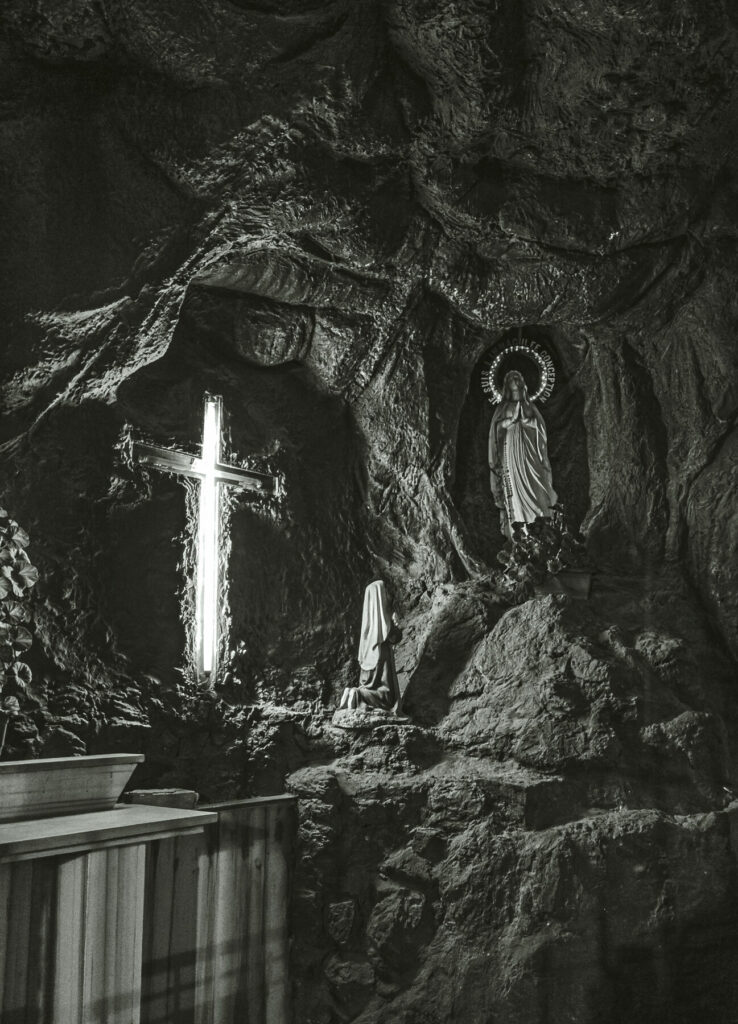
The road ends at the Church of Saint Paul — the end of one road, to begin the next.
Plates
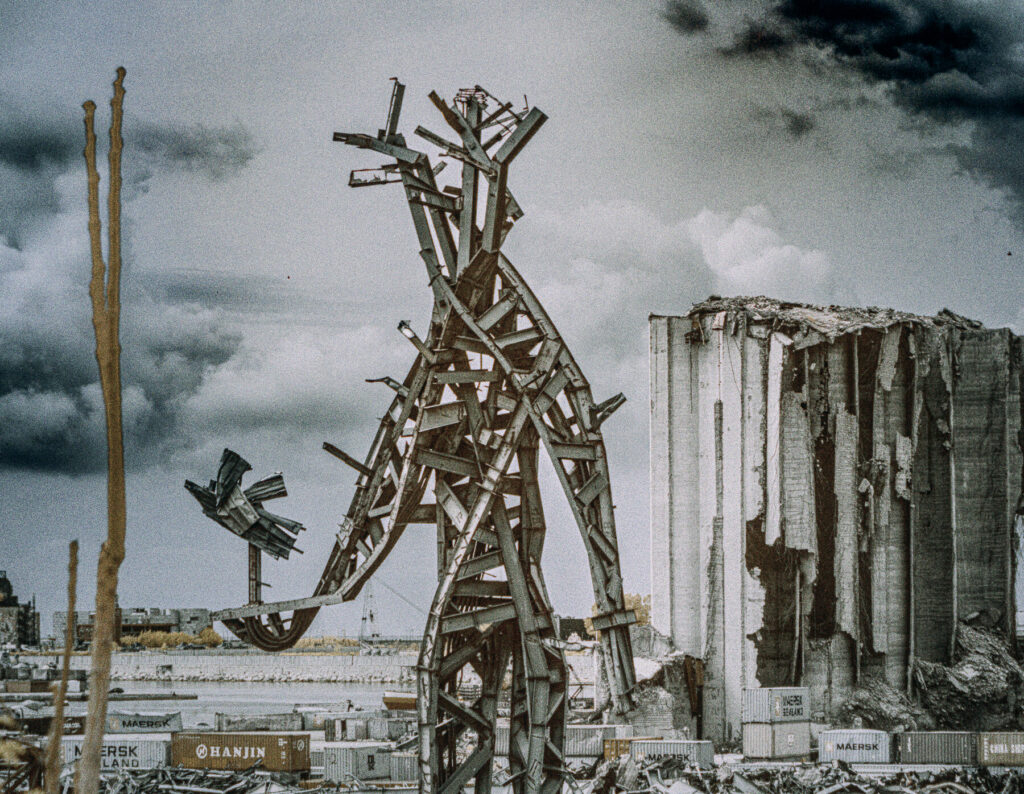
Plate I · Beirut, the port
A figure welded from steel twisted by the 2020 blast. · B&W
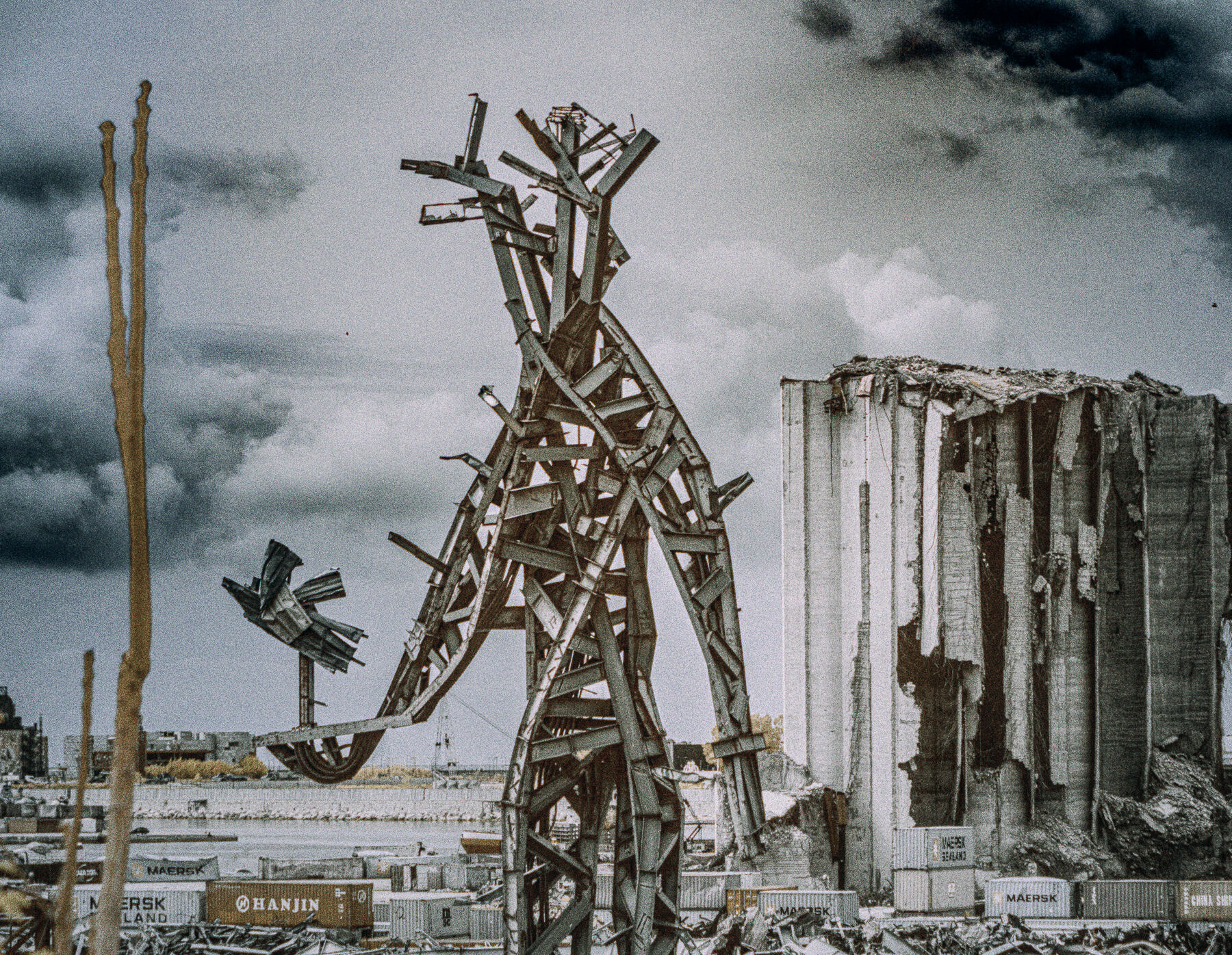
Plate II · Beirut, downtown
Cranes, billboards and open excavation over a city half-rebuilt. · 590nm
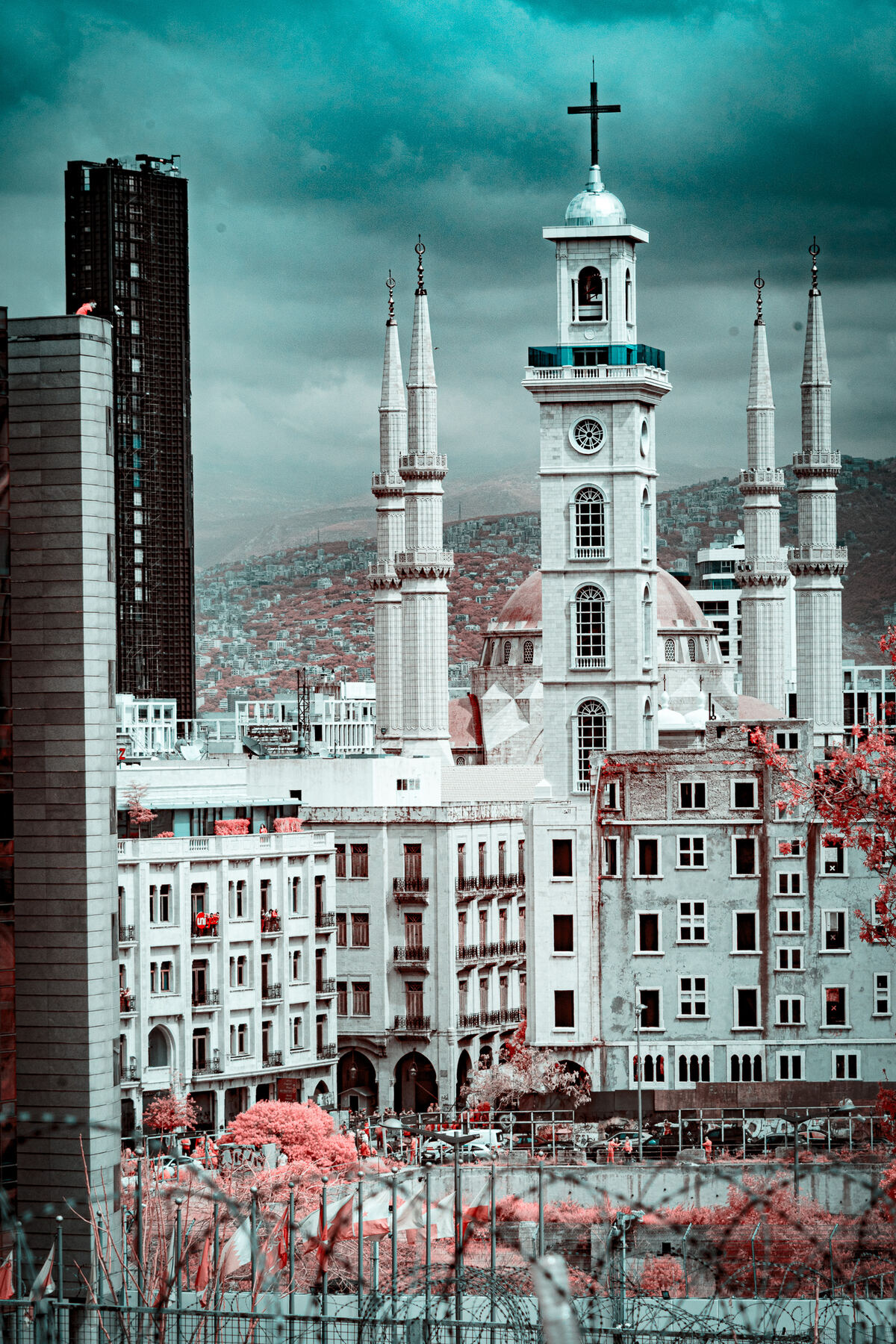
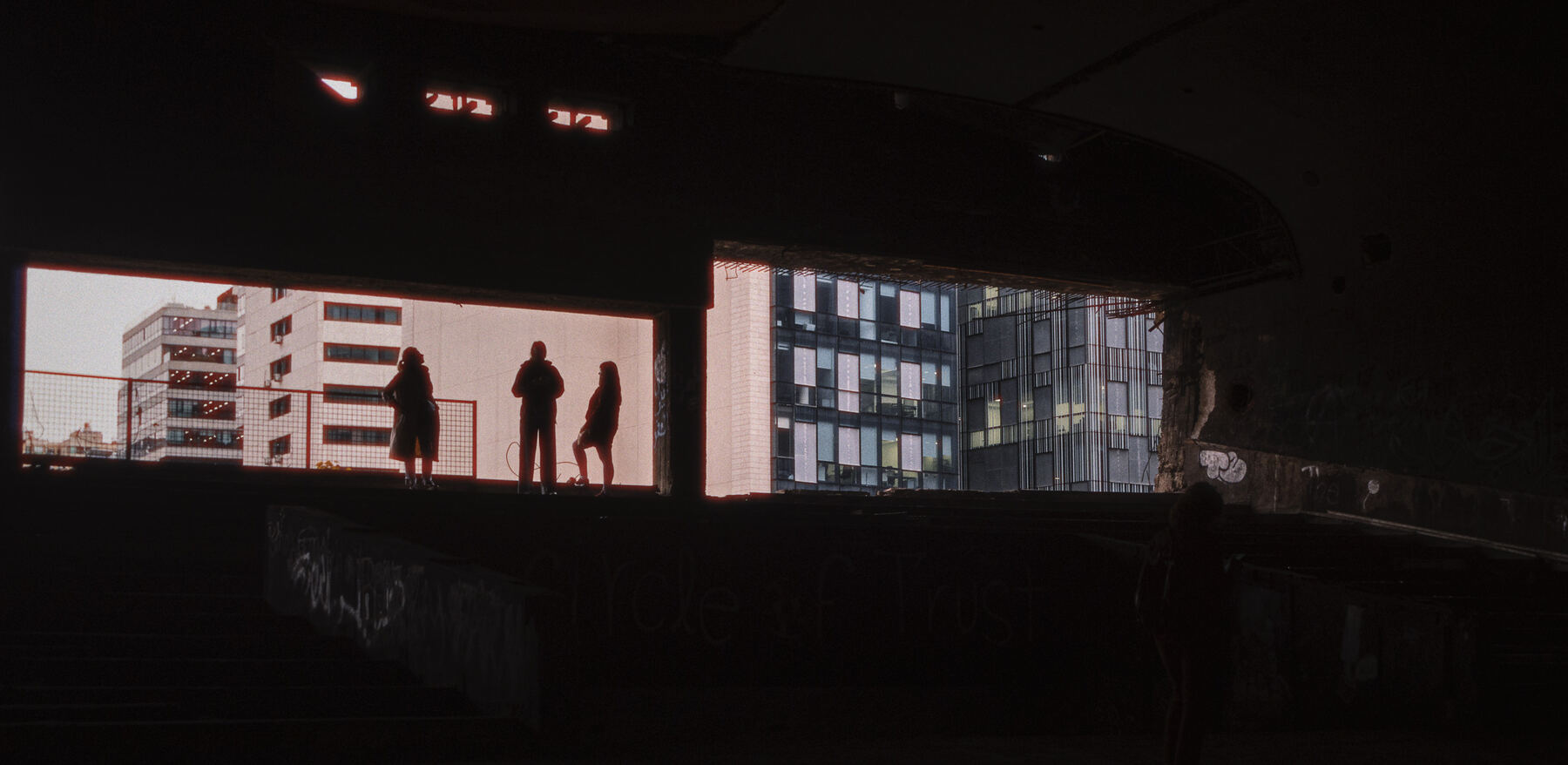
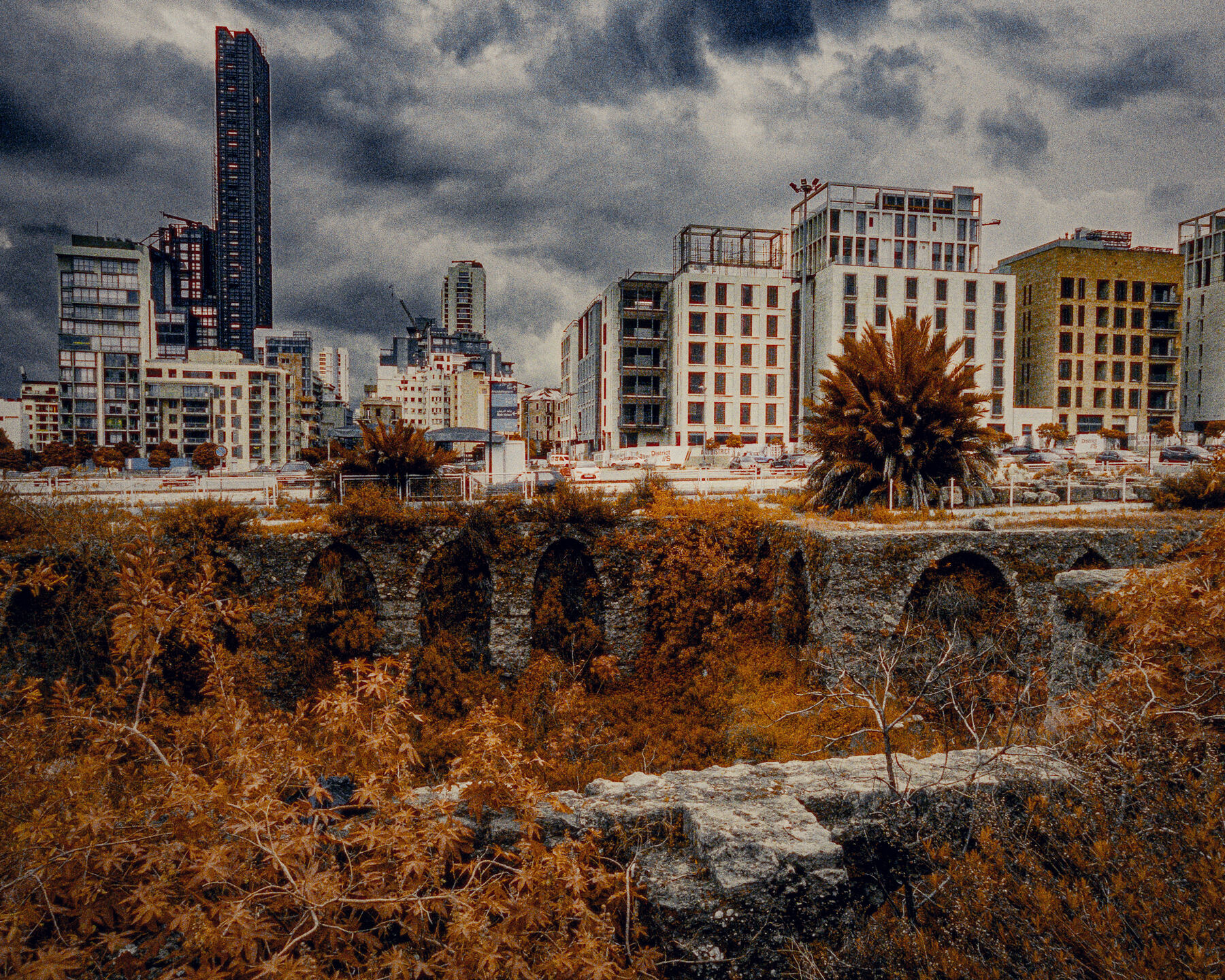
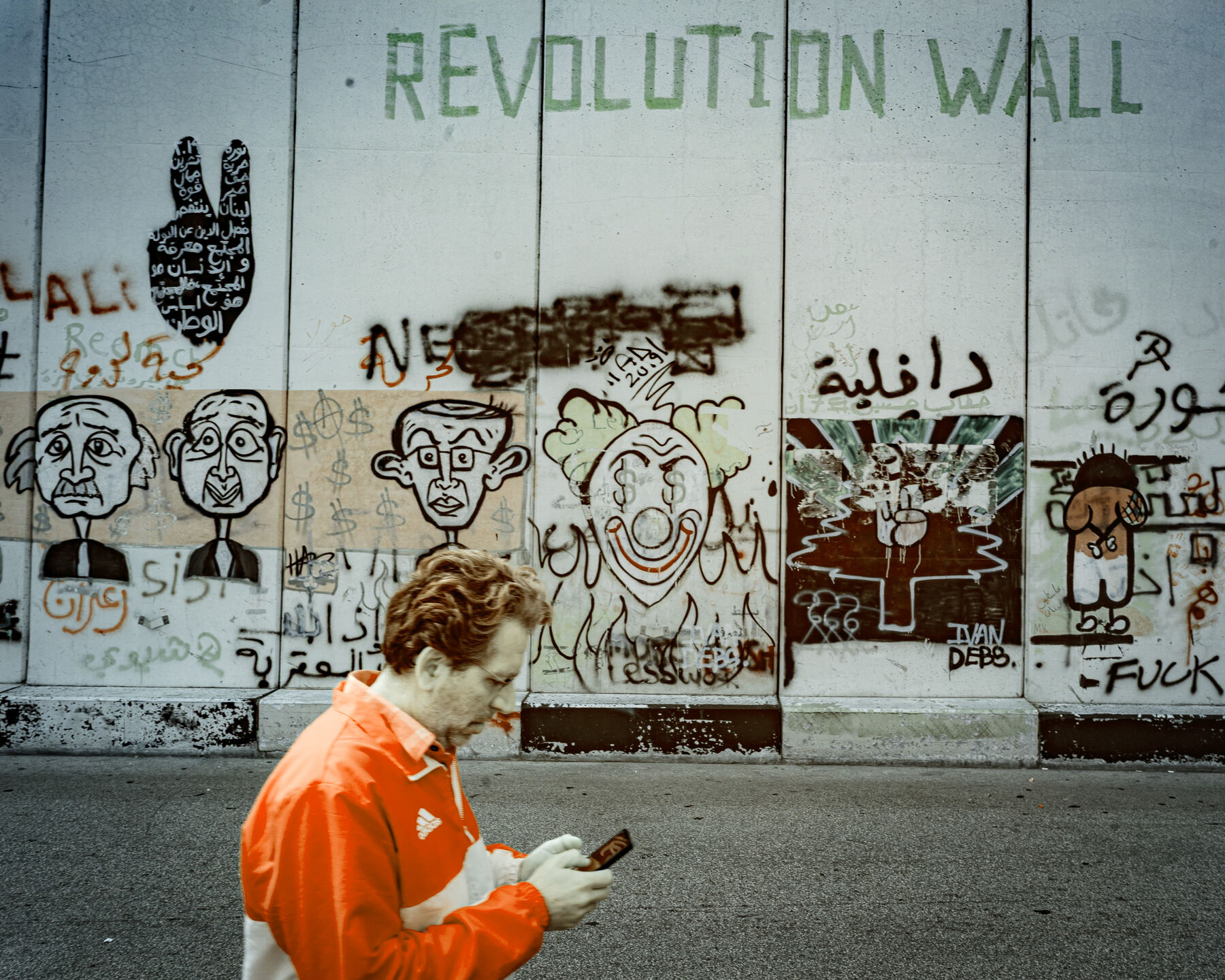
Plate III · Beirut, National Museum
The anthropomorphic sarcophagi, saved in concrete on the front line. · IR
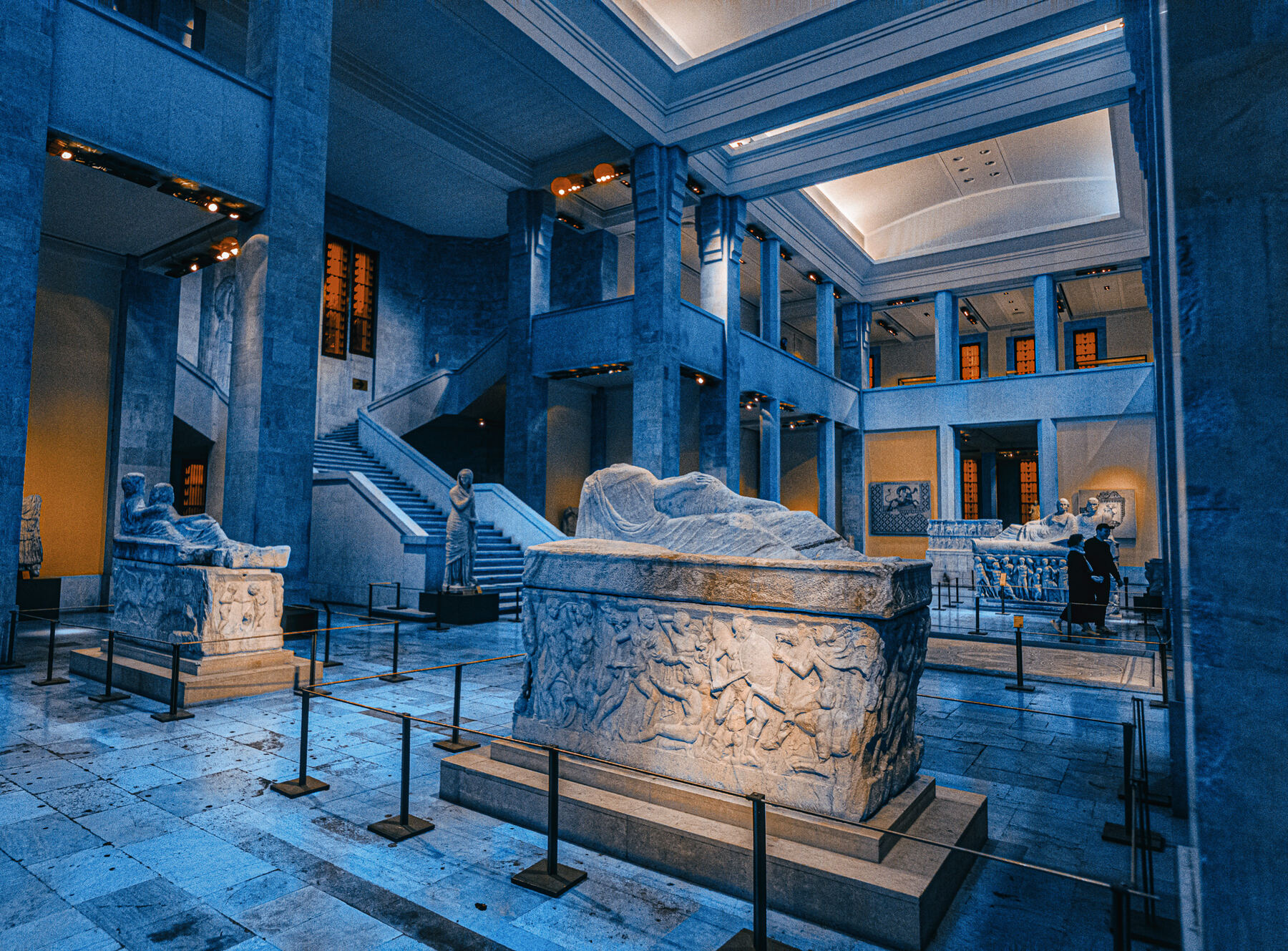
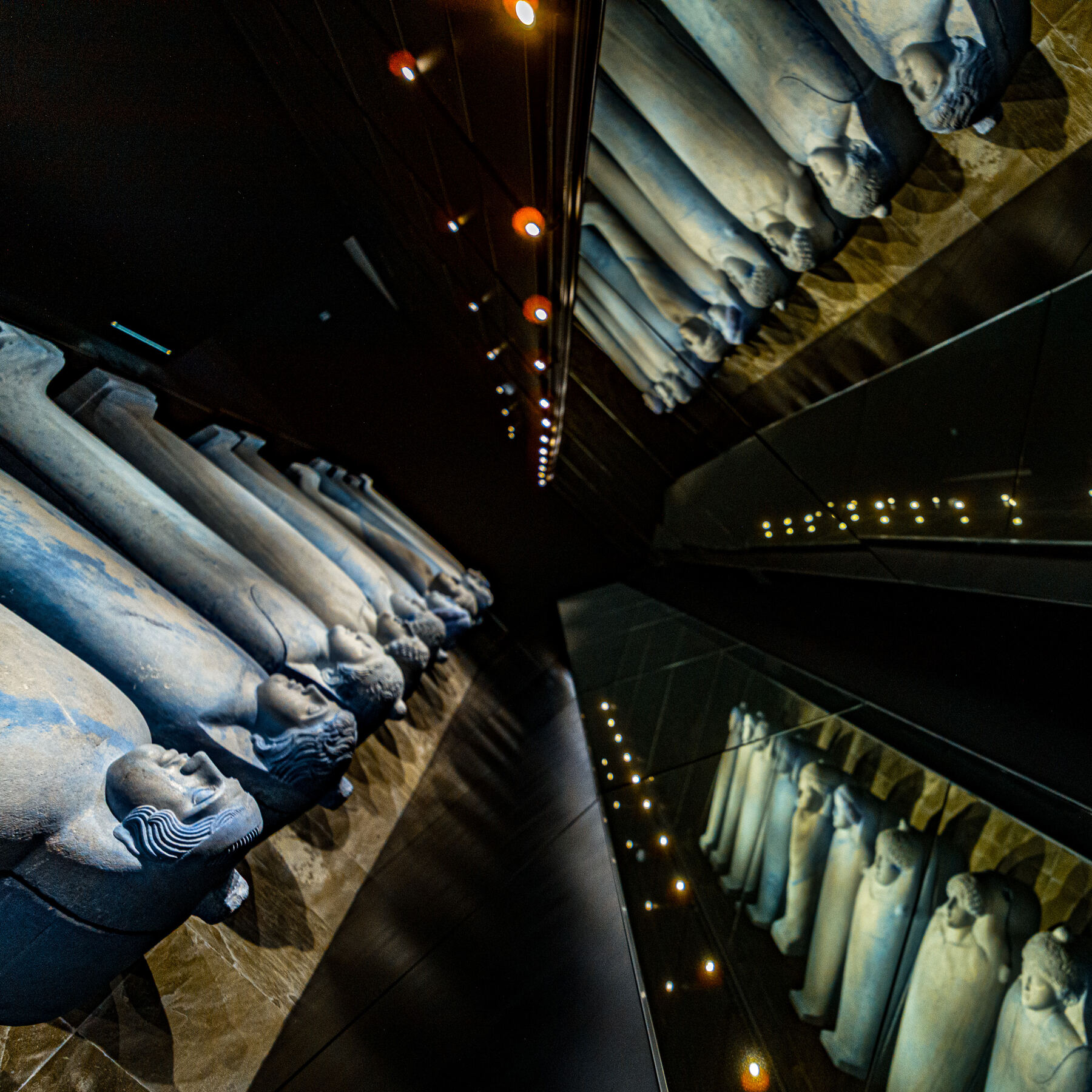
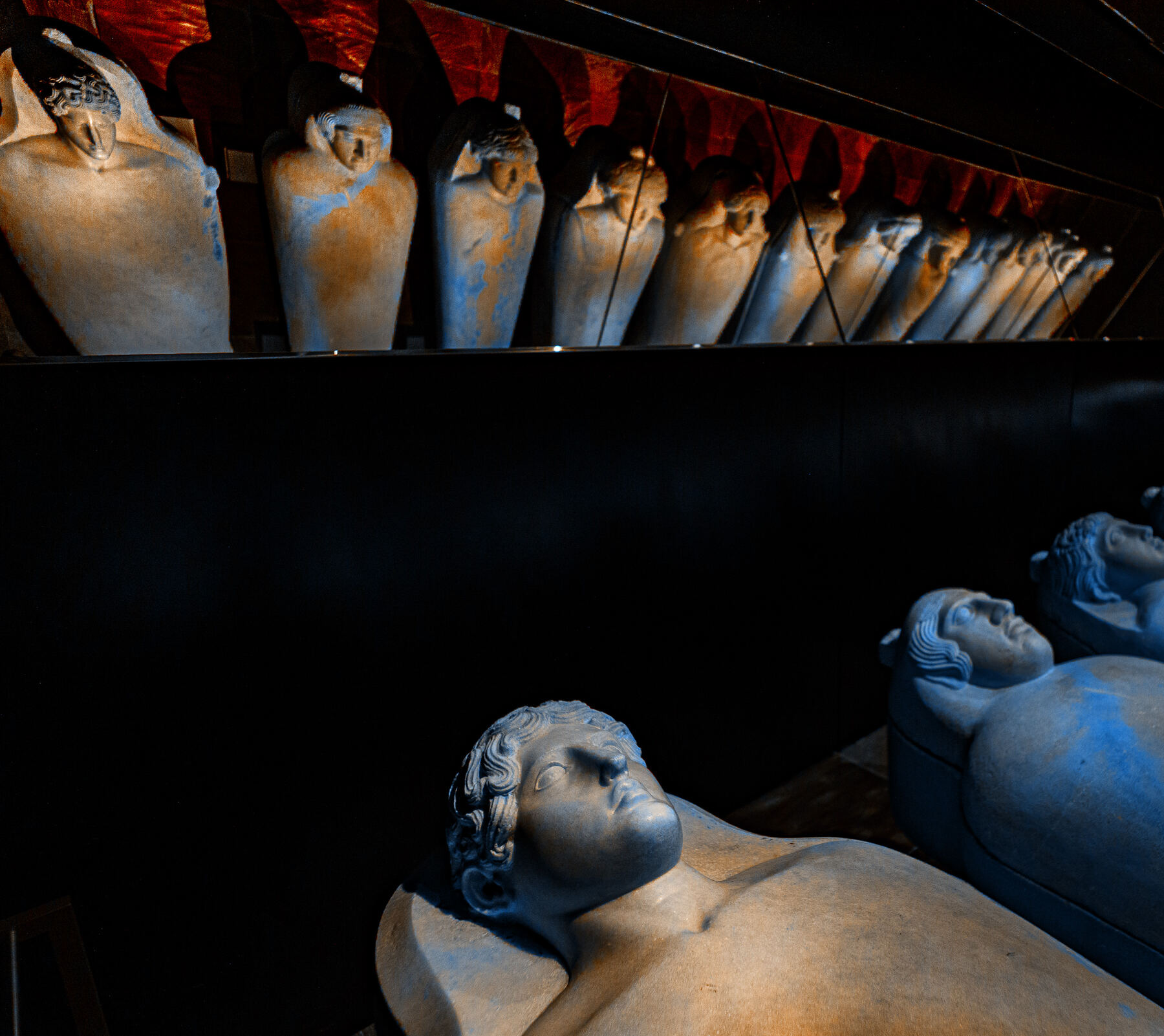
Plate IV · Sidon, the Sea Castle
A causeway built of reused antiquity; the eternal repair crew at work. · 720nm
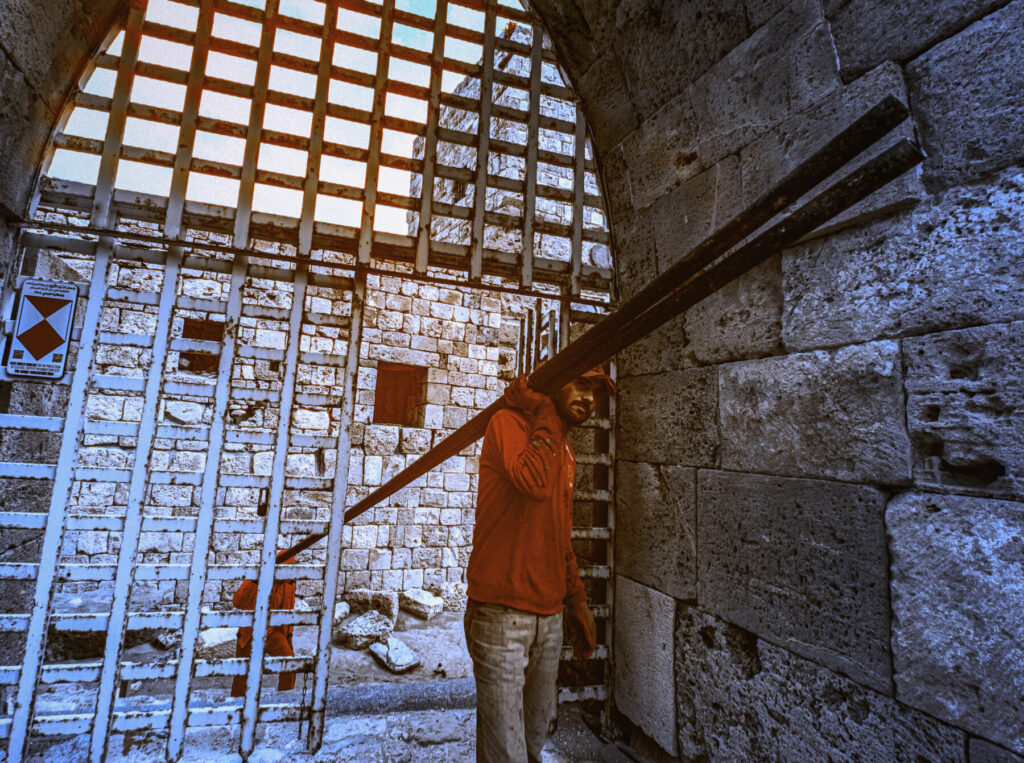
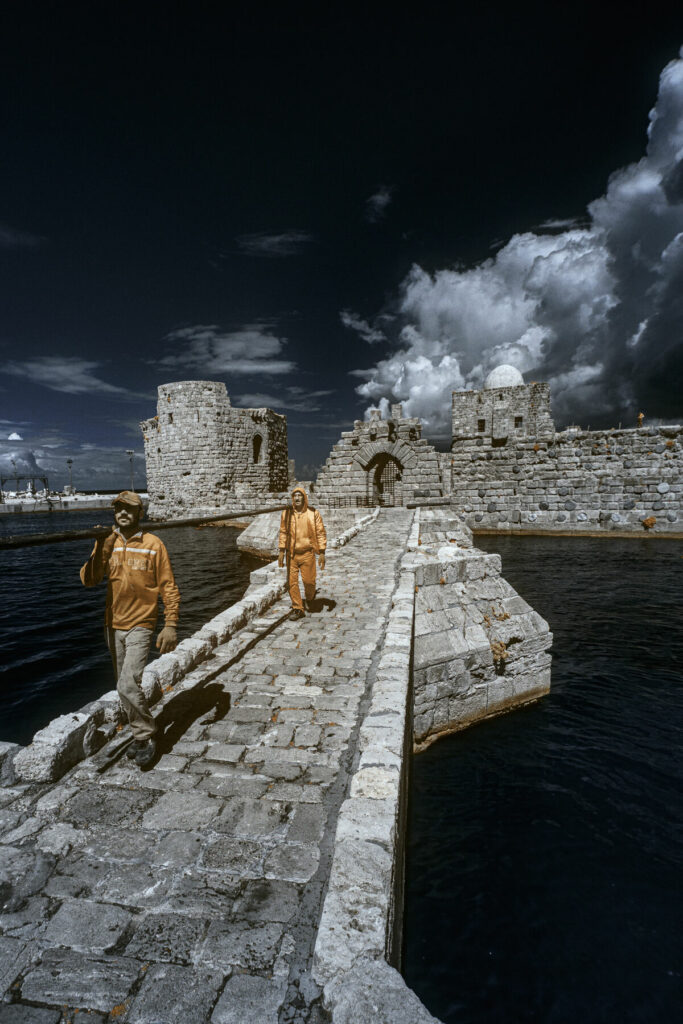
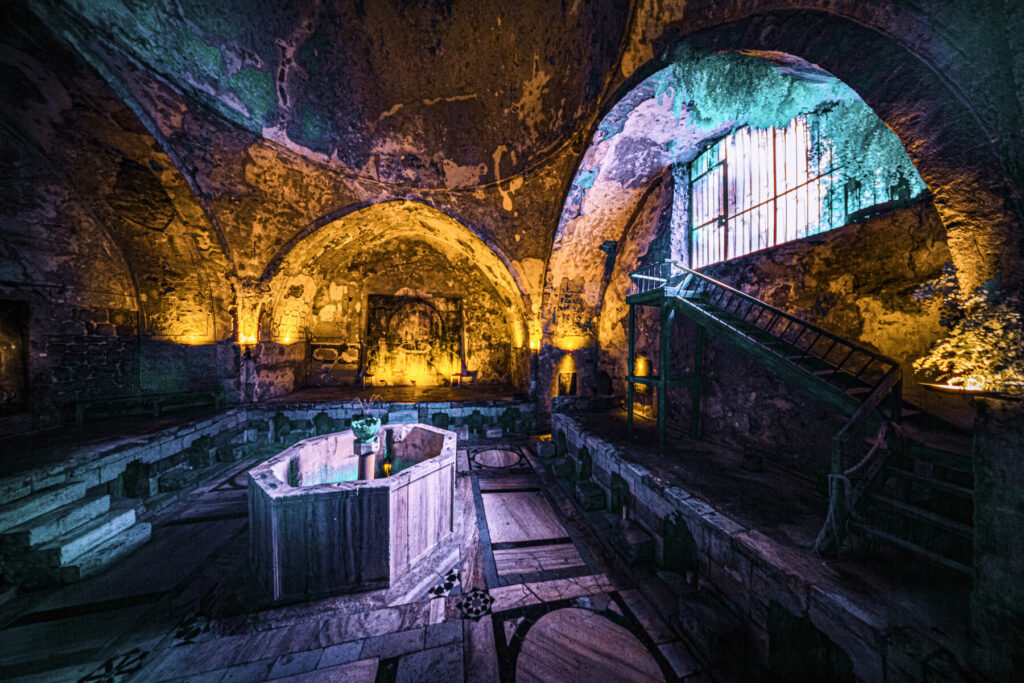
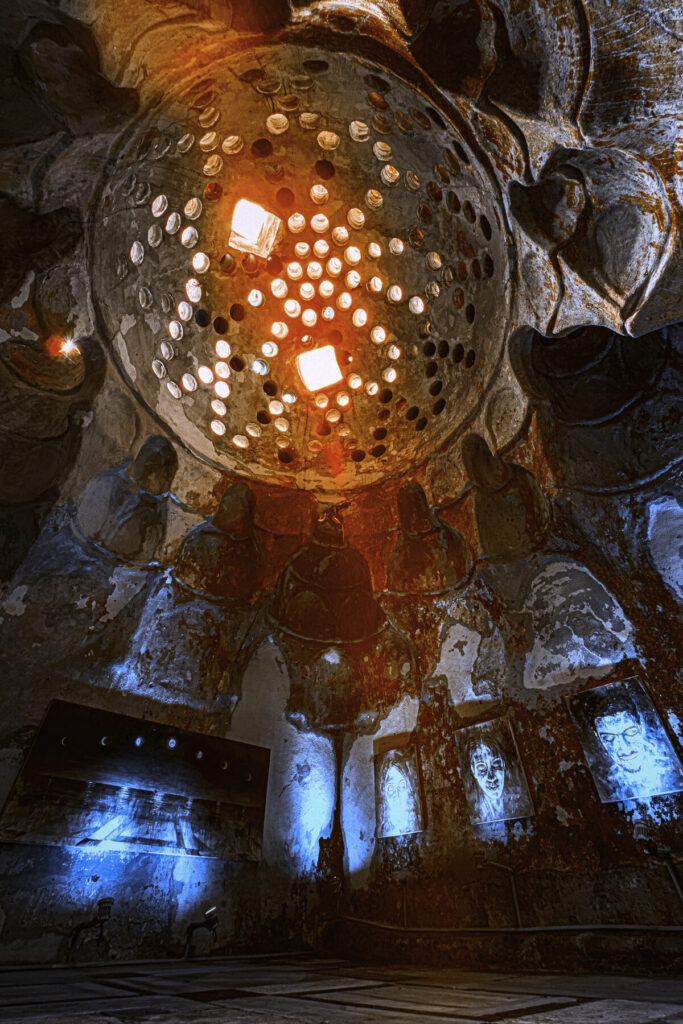
Plate V · Sidon (Saida)
The fish market that gives the city its name. · 590nm
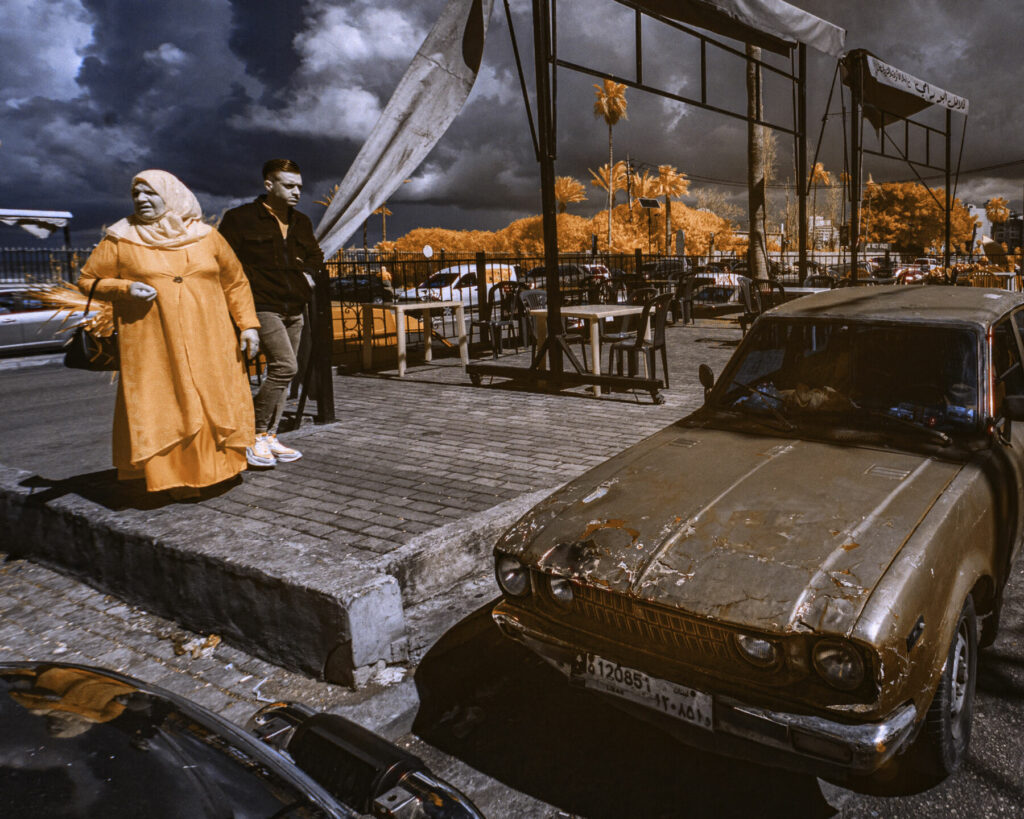
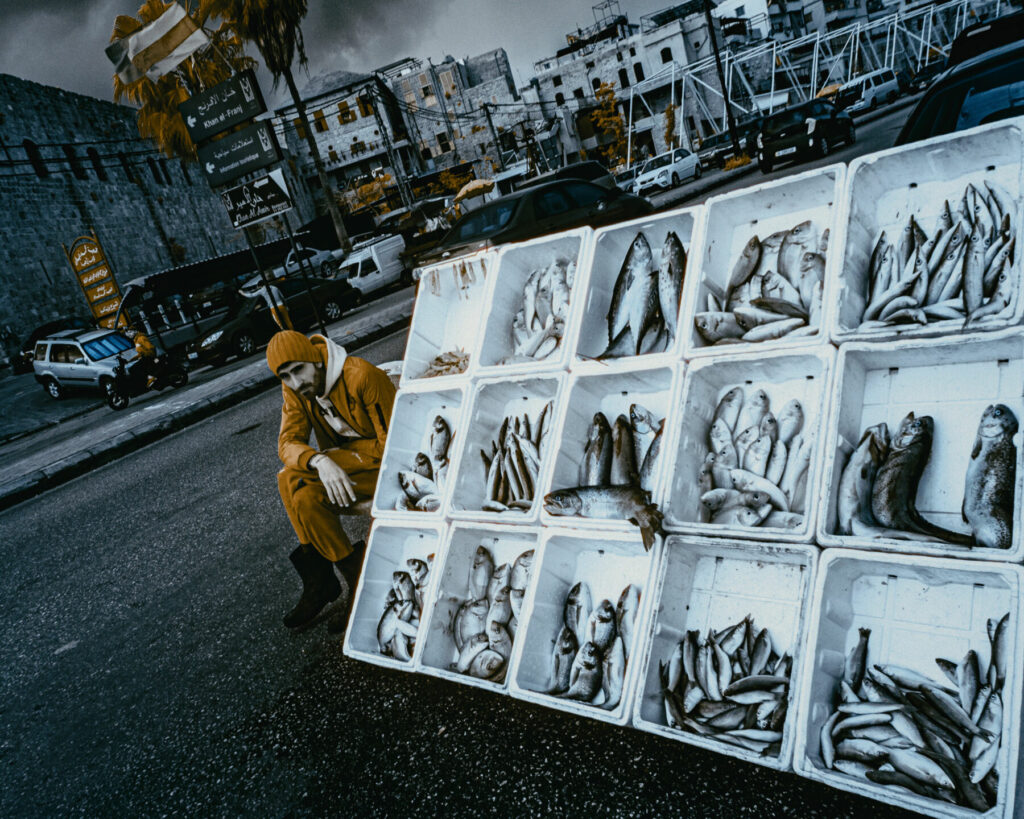
Plate VI · Baalbek
The temple colonnade; blocks too large for antiquity to scale. · 590nm
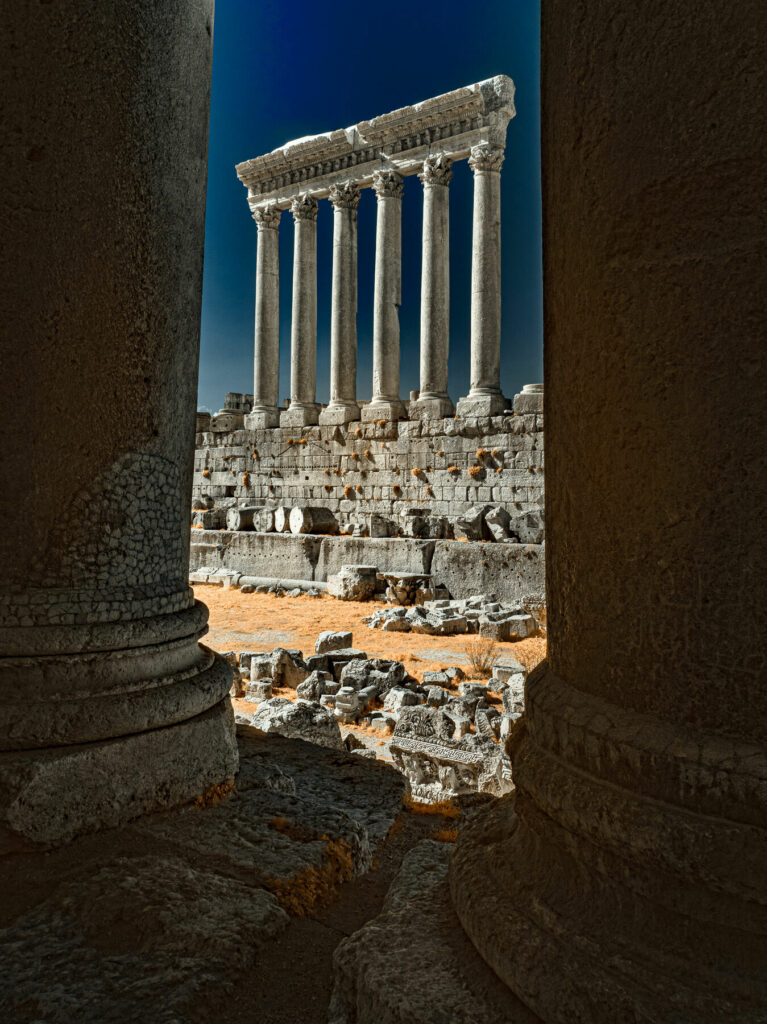
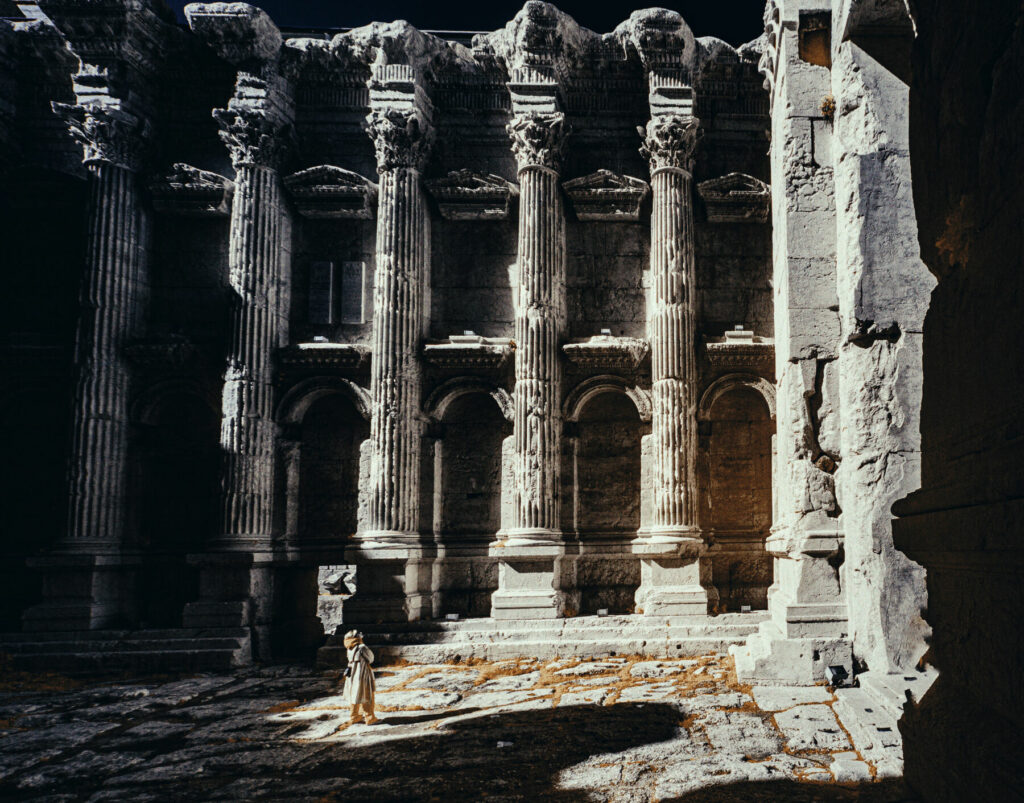
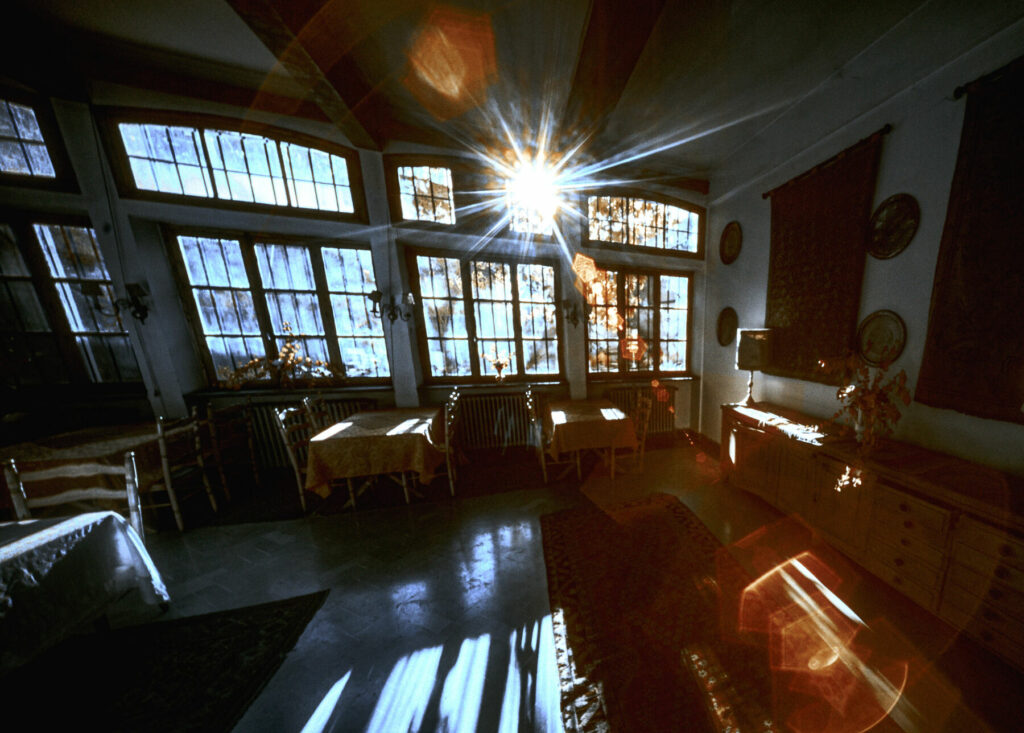
Plate VII · Mount Lebanon
A roadside war memorial, then storm light over the terraced highlands. · IR Chrome
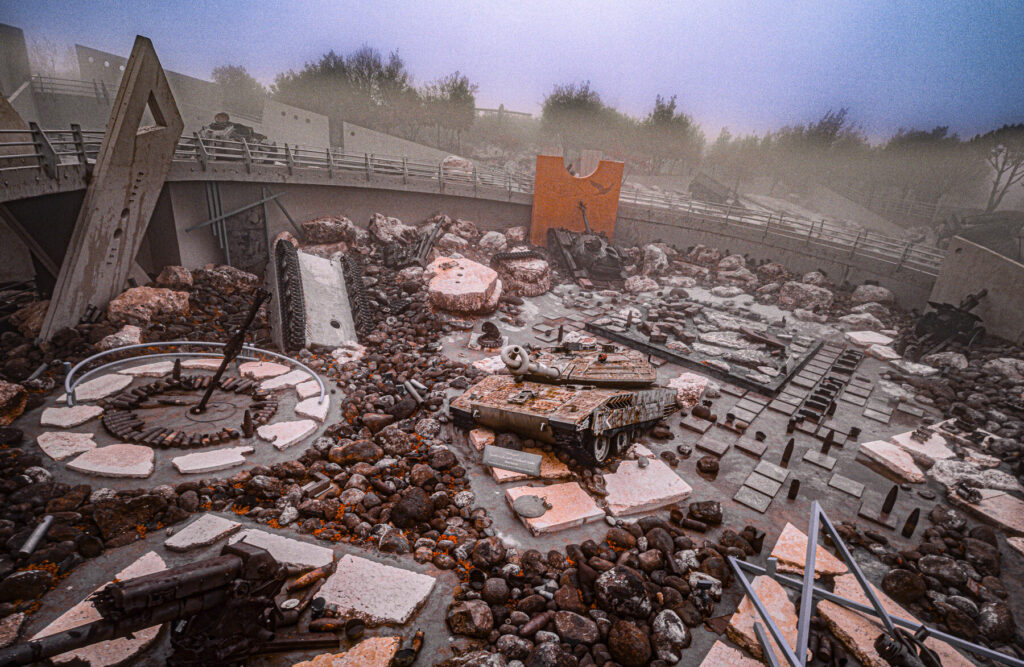
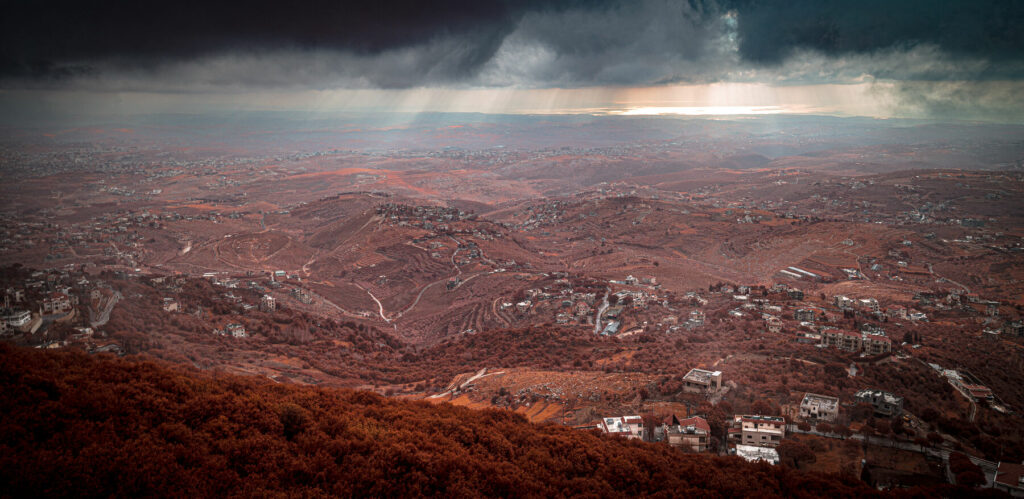
Plate VIII · Maaloula
A burnt-out car among the ruins of the Aramaic town. · IR
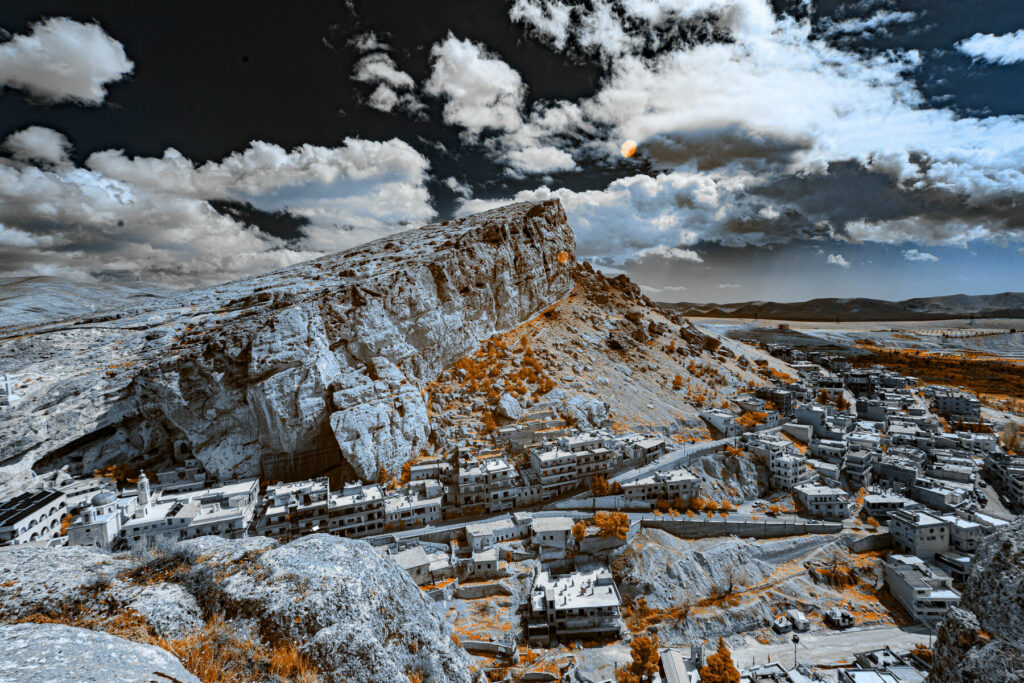
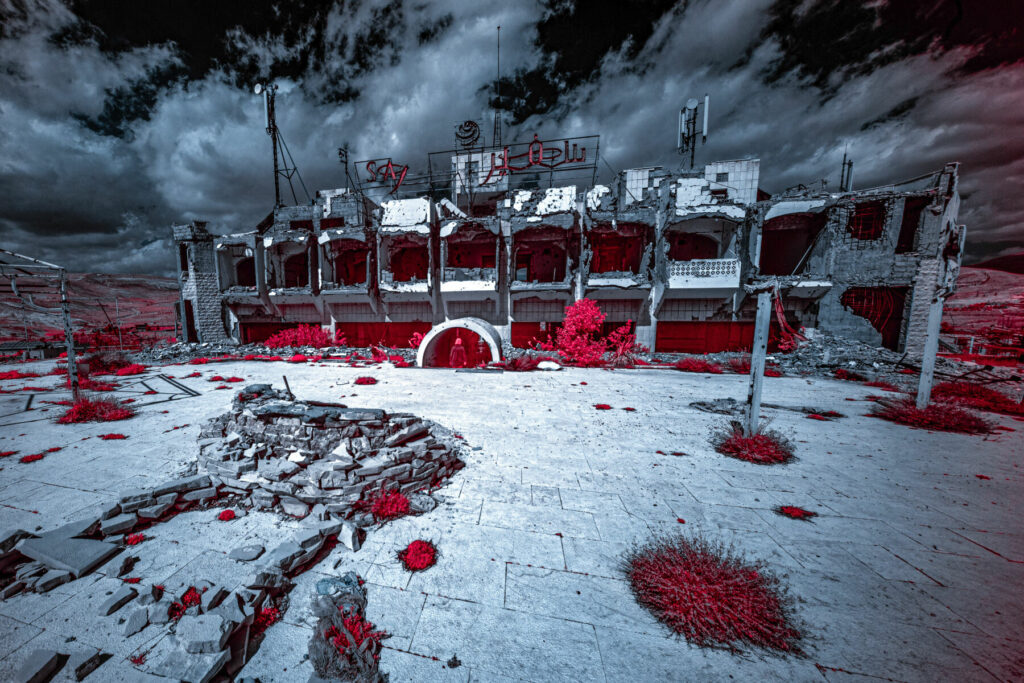
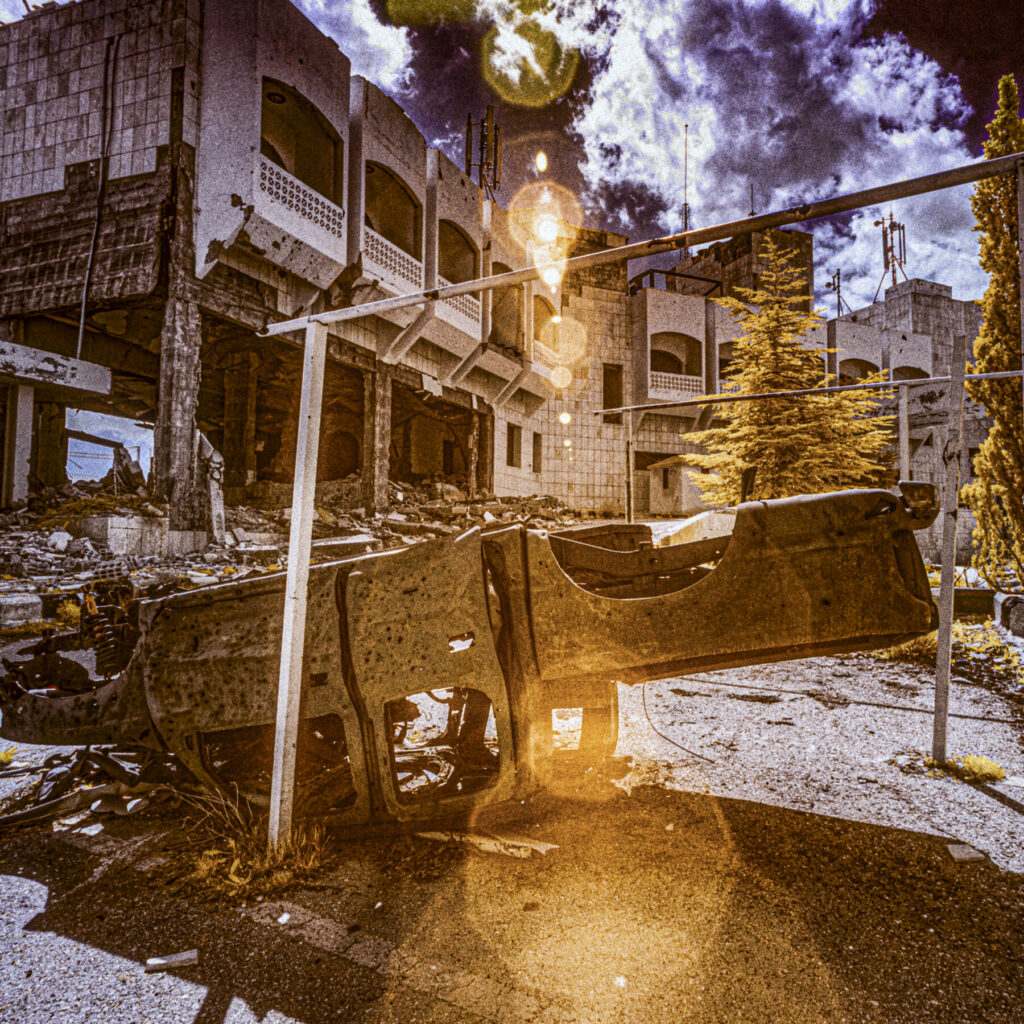
Plate IX · Homs
Apartment blocks after three years and three days of siege. · IR
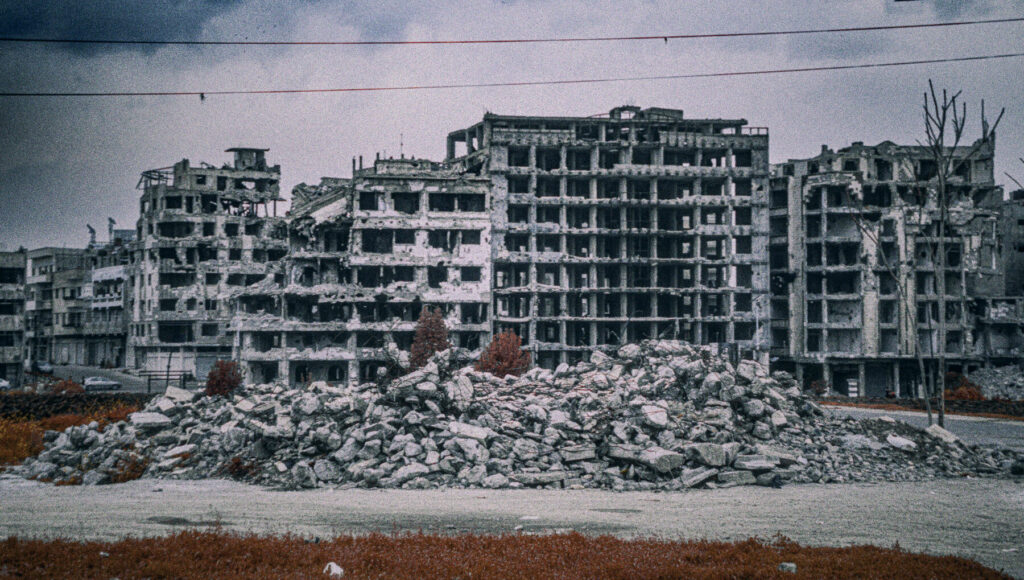
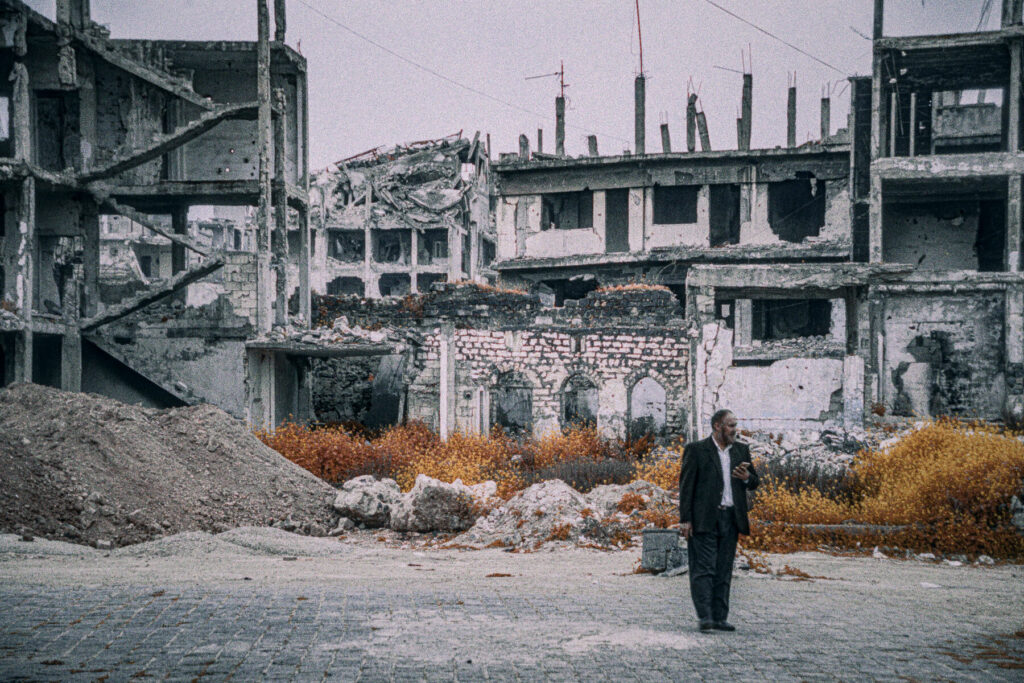
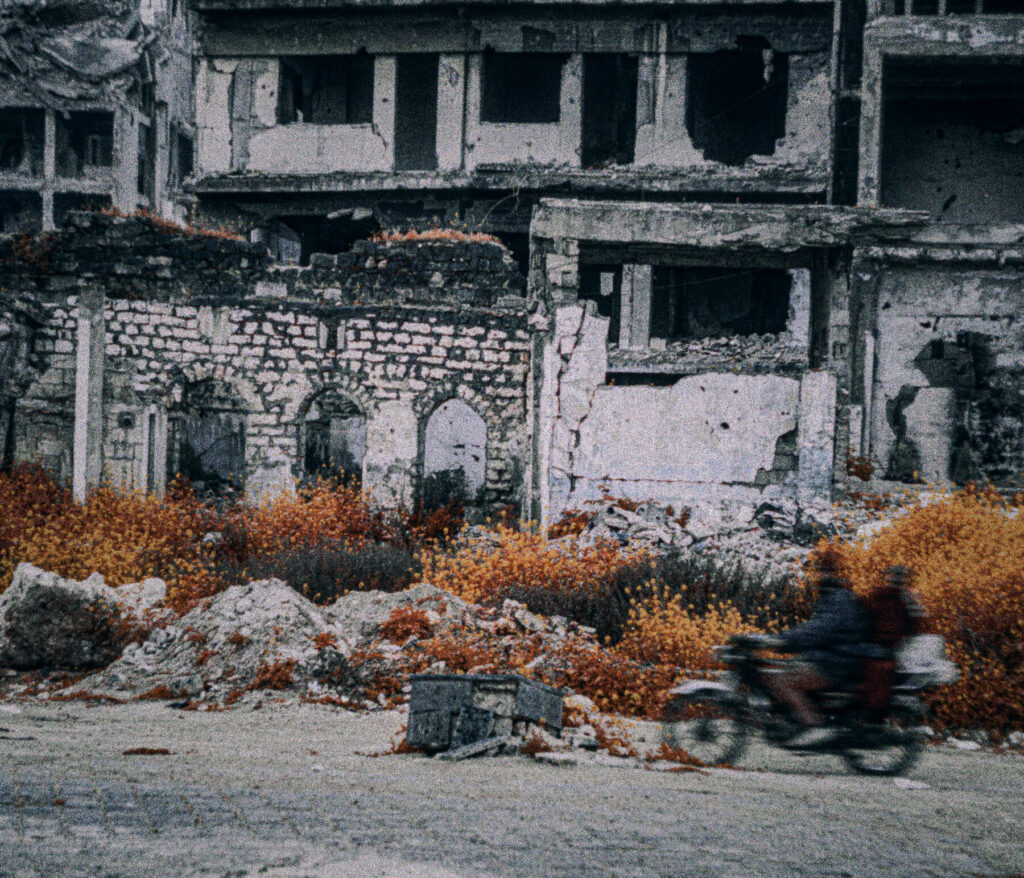
Plate X · Palmyra
The colonnade and the monumental gate of the sanctuary. · 590nm
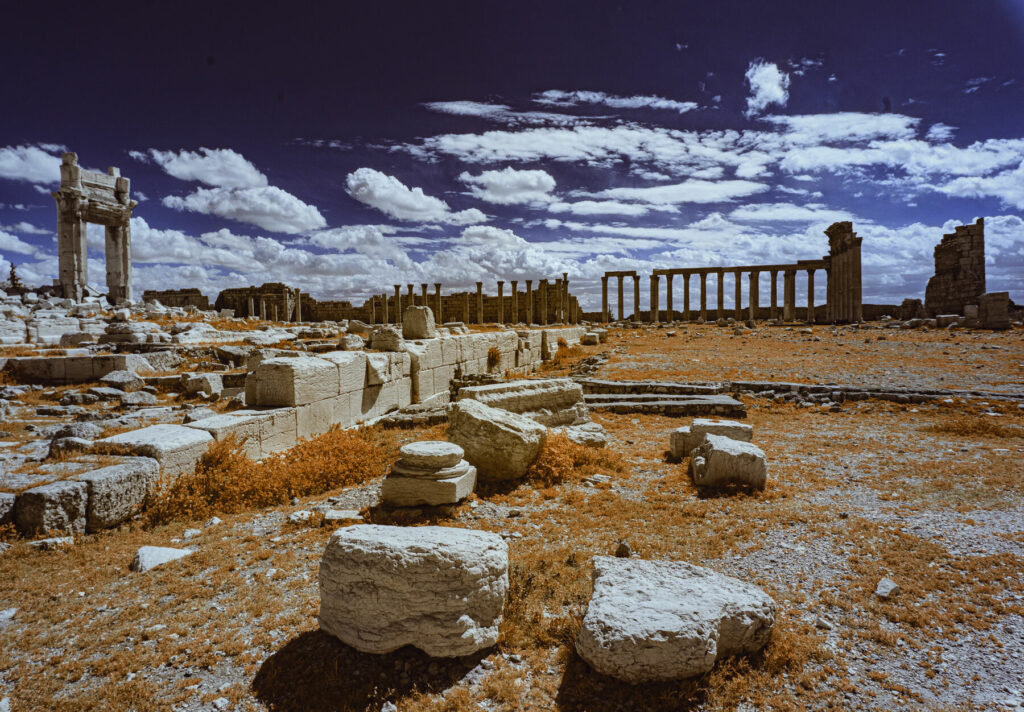
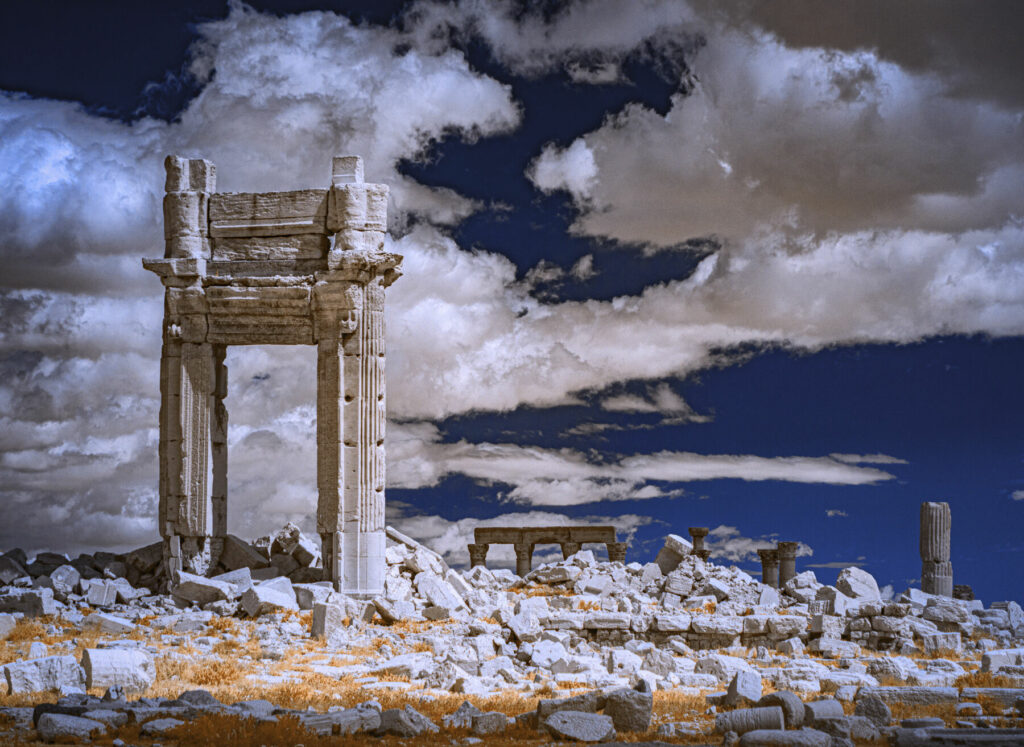
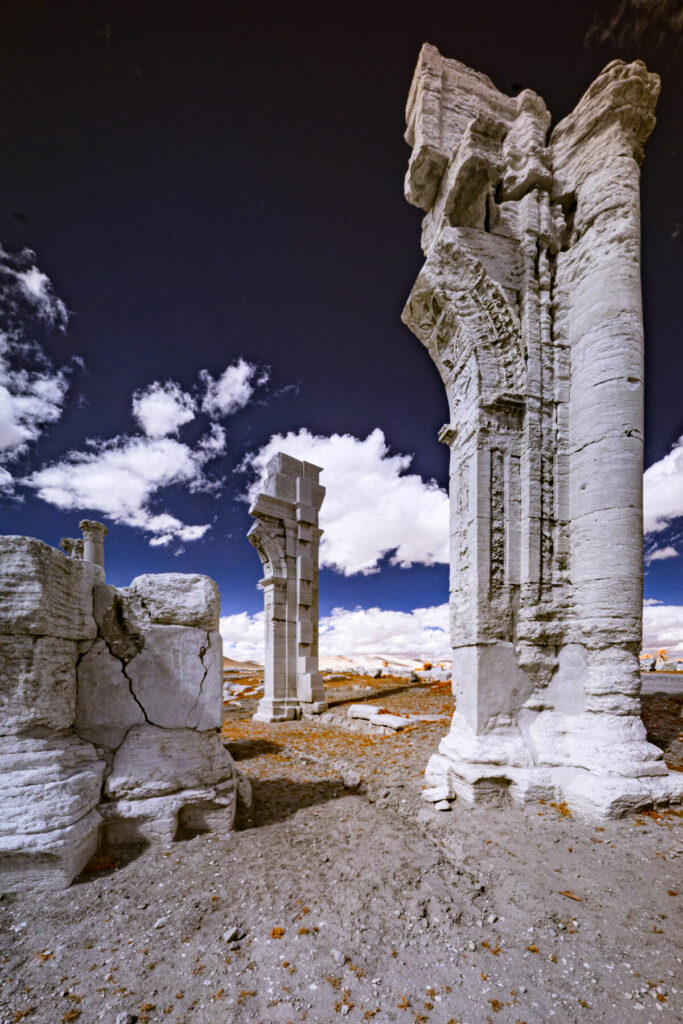
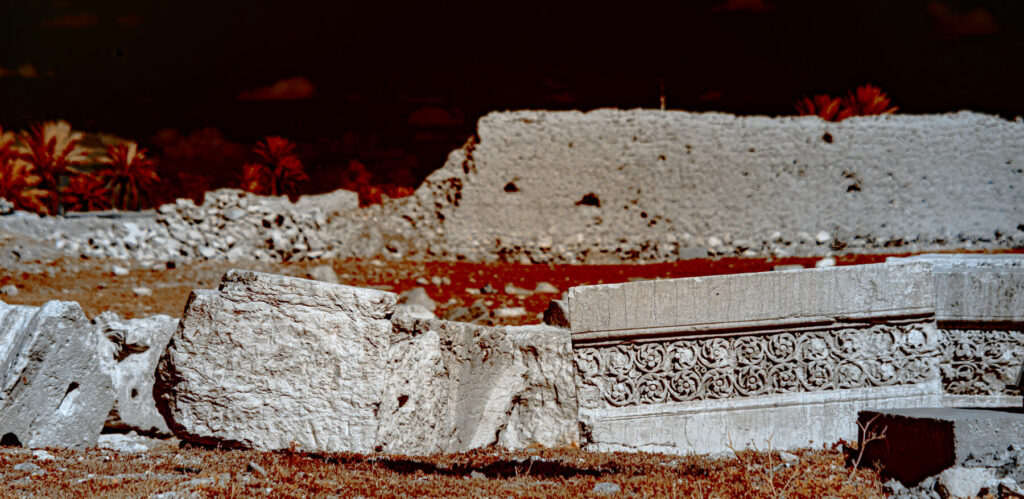
Plate XI · Palmyra, the museum
The doorway and the mural of Khaled al-Asaad, the archaeologist who hid the collection. · IR
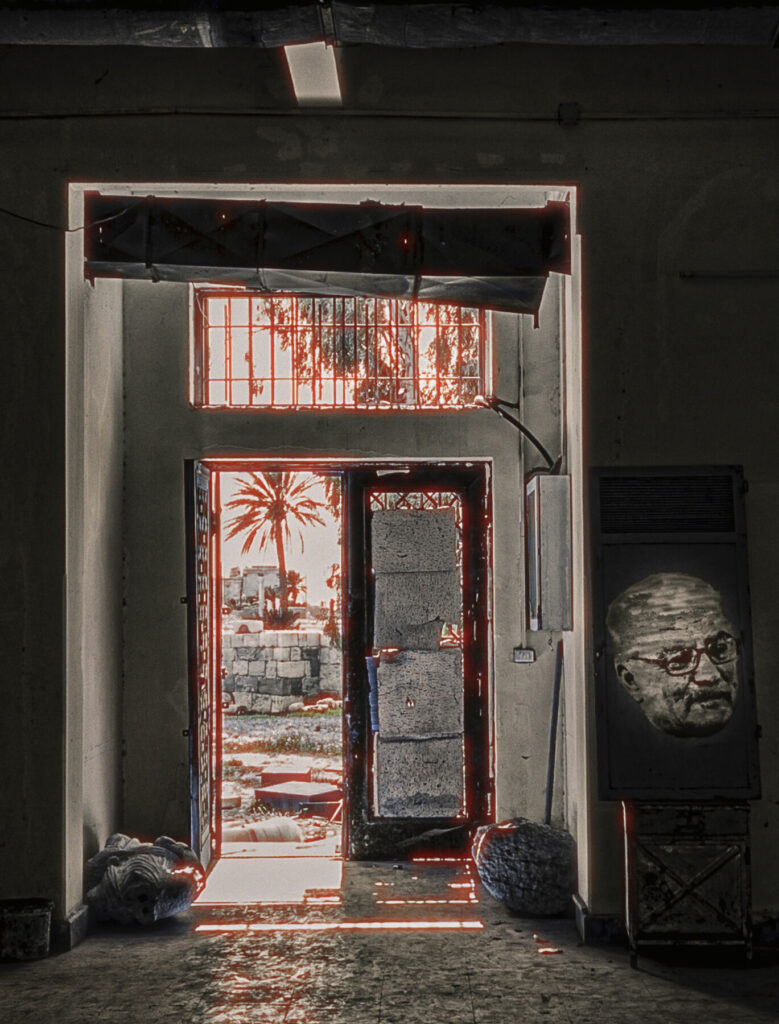
Plate XII · Bosra
Colleagues on the basalt fortress, held to the war’s end. · IR Chrome
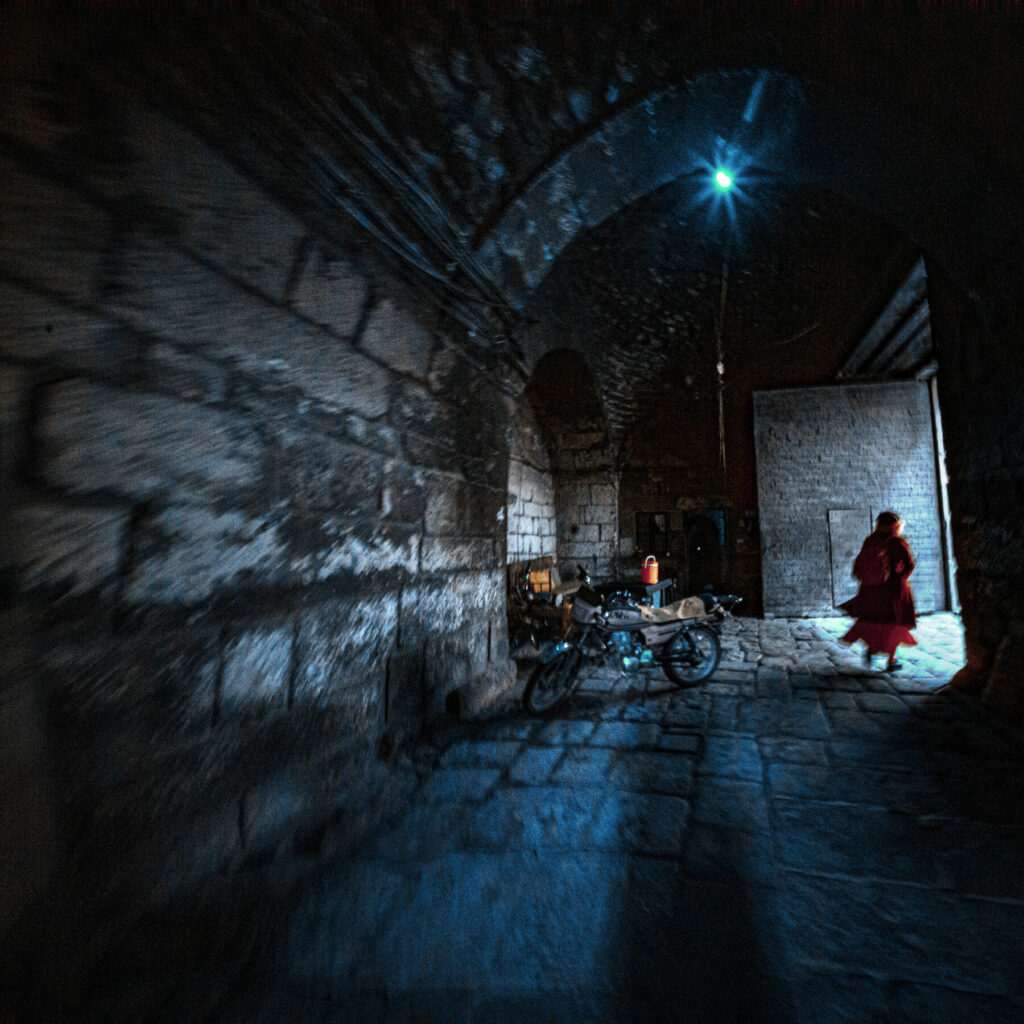
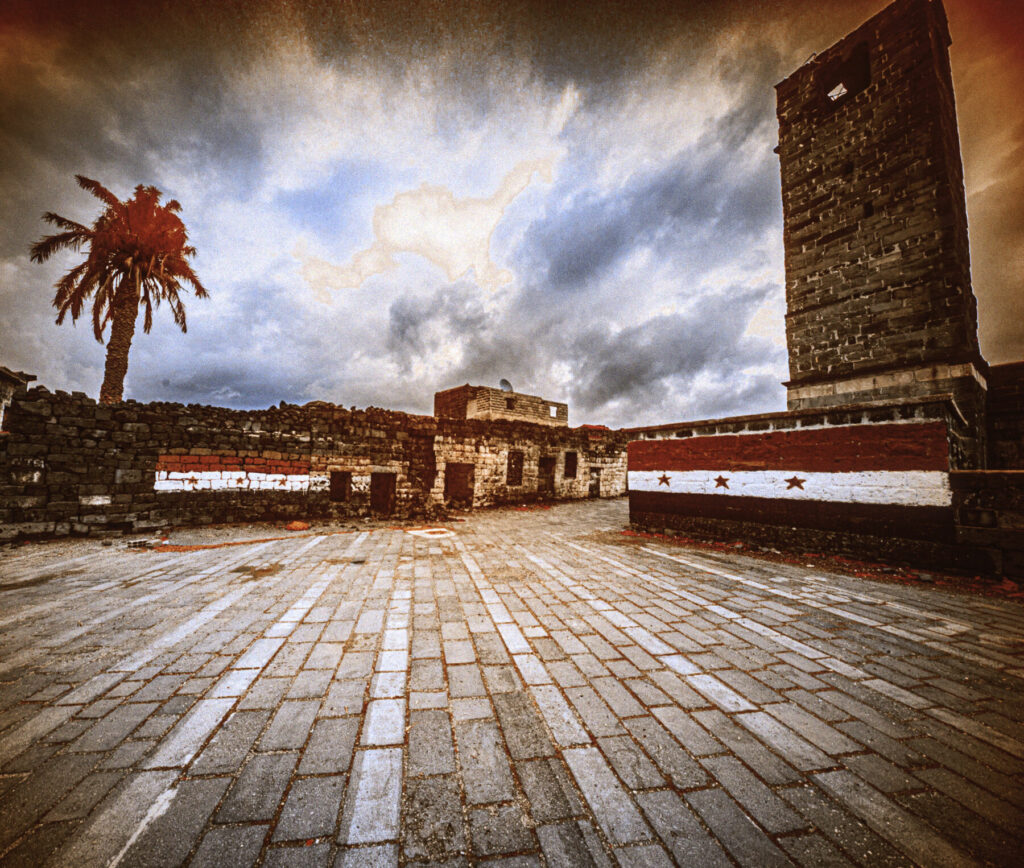
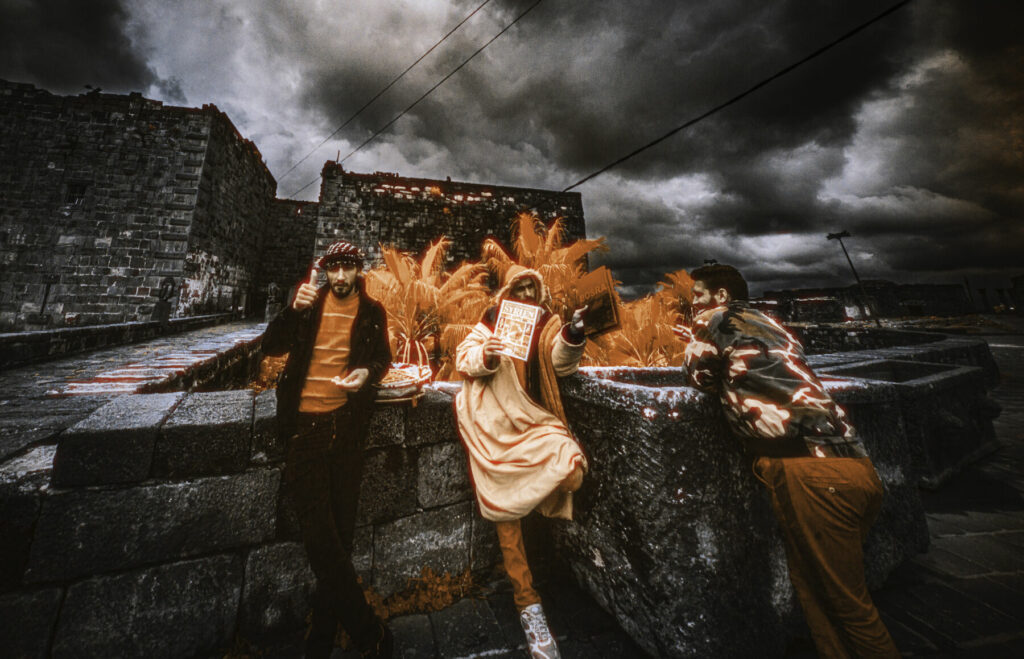
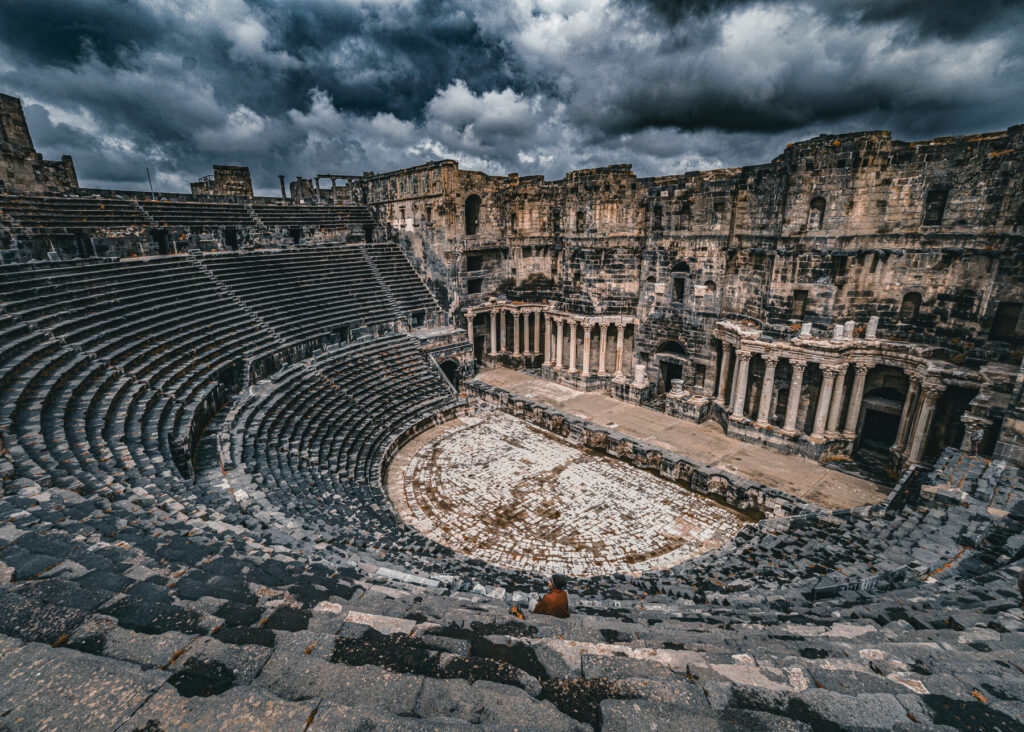
Plate XIII · Bosra
A family in a stone house among the displaced. · IR
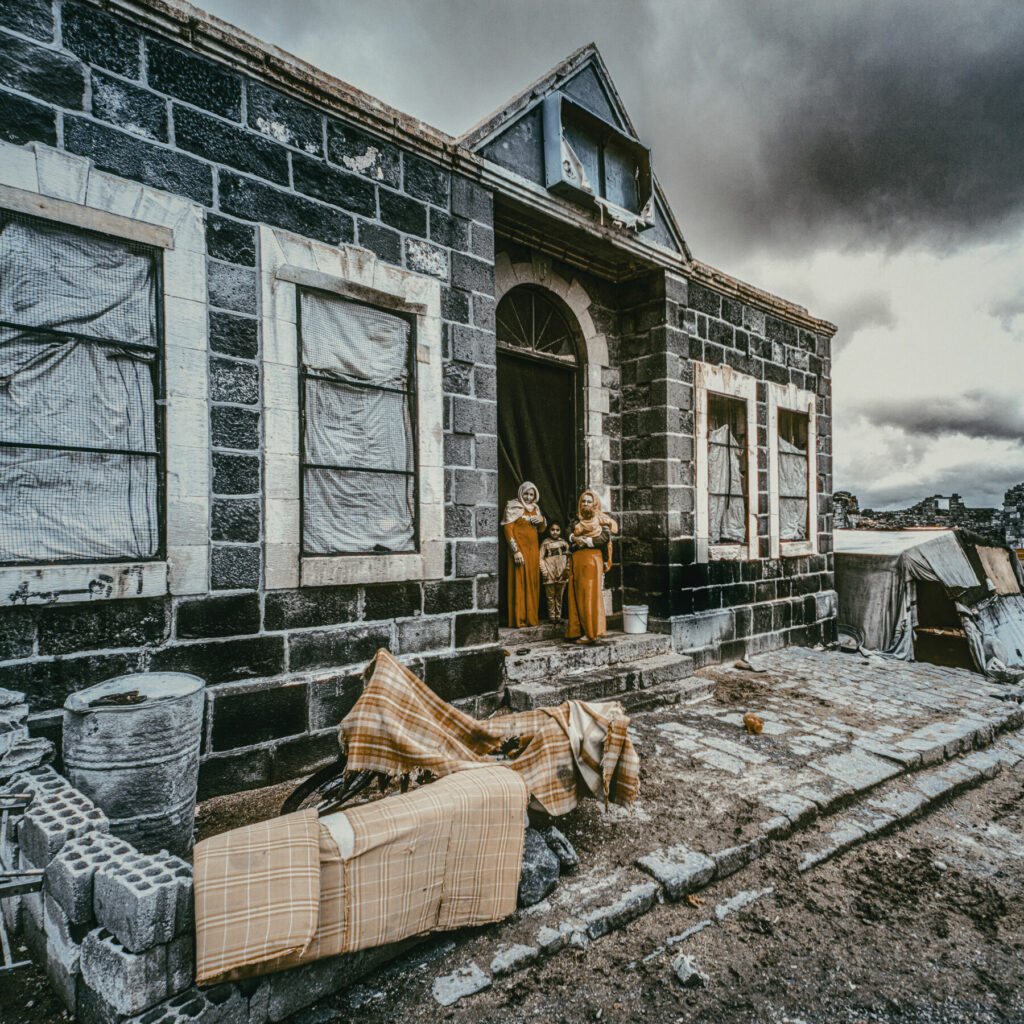
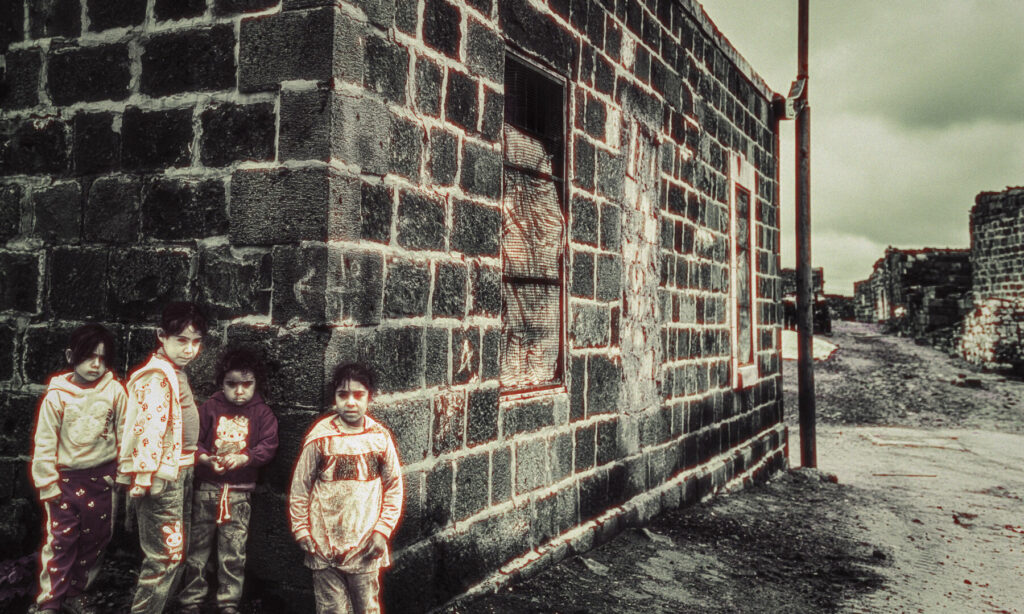
Plate XIV · Damascus
Panorama at the road’s end (two processings, documentary and postcard). · 590nm
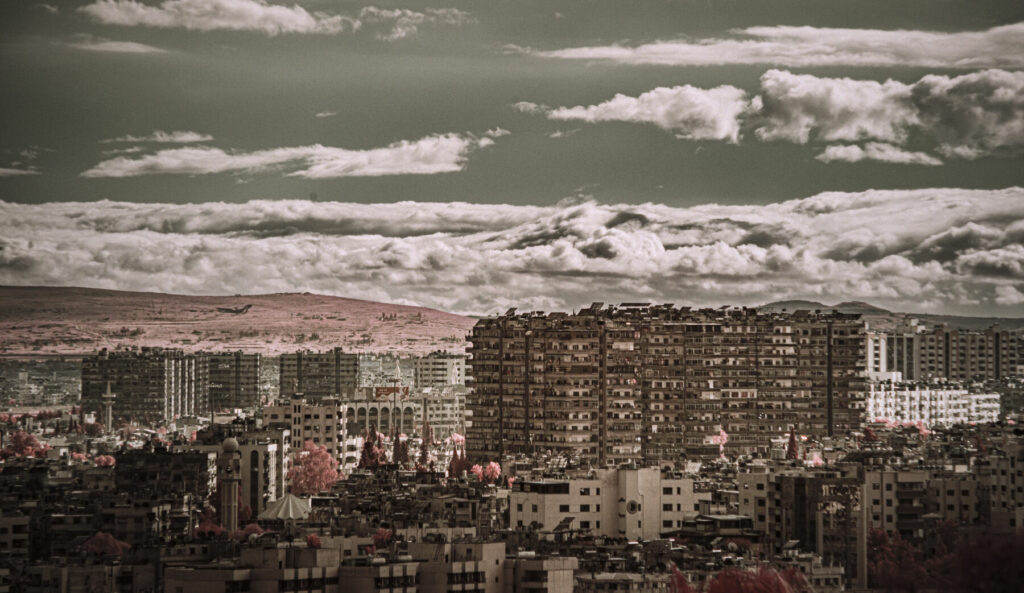
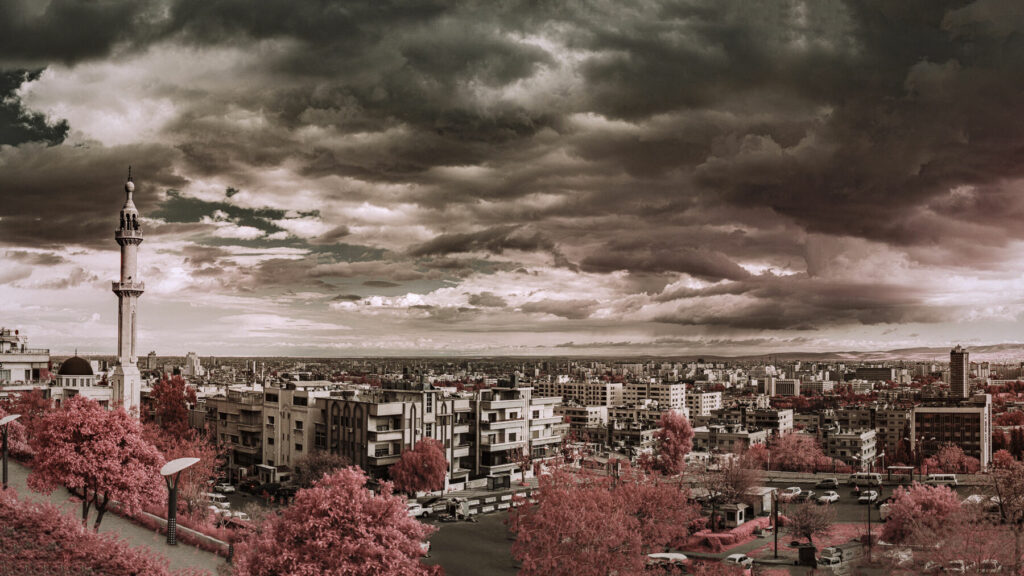
Plate XV · Damascus
The Church of Saint Paul, Bab Kisan — the end of one road, to begin the next. · B&W (phone)
Read also
Generations of Damascus · The Cradle of Civilization