STORIES · IRCHEOLOGY, PART 1
The Cradle of Civilization
Çatalhöyük · Troy · Erebuni · 2021–2025 · colour infrared · 720nm
Three hills where a beginning was excavated, invented, or simply walked away from — Neolithic Çatalhöyük, nine-layered Troy, and Urartian Erebuni.
PART I — Çatalhöyük (Konya Plain, winter 2021/22)
On the eve of the new year 2022 I went not to celebrate but to investigate. The logic was simple: New Year is a ritual of repetition, and I wanted to see the place where humanity once tried living in a new way. There was also a convenient train from Istanbul to Konya, and a winter ride across the Konya Plain. And so I stood before a twin-humped mound whose name no two people spell the same way twice: Çatalhöyük — literally, the “fork mound.”
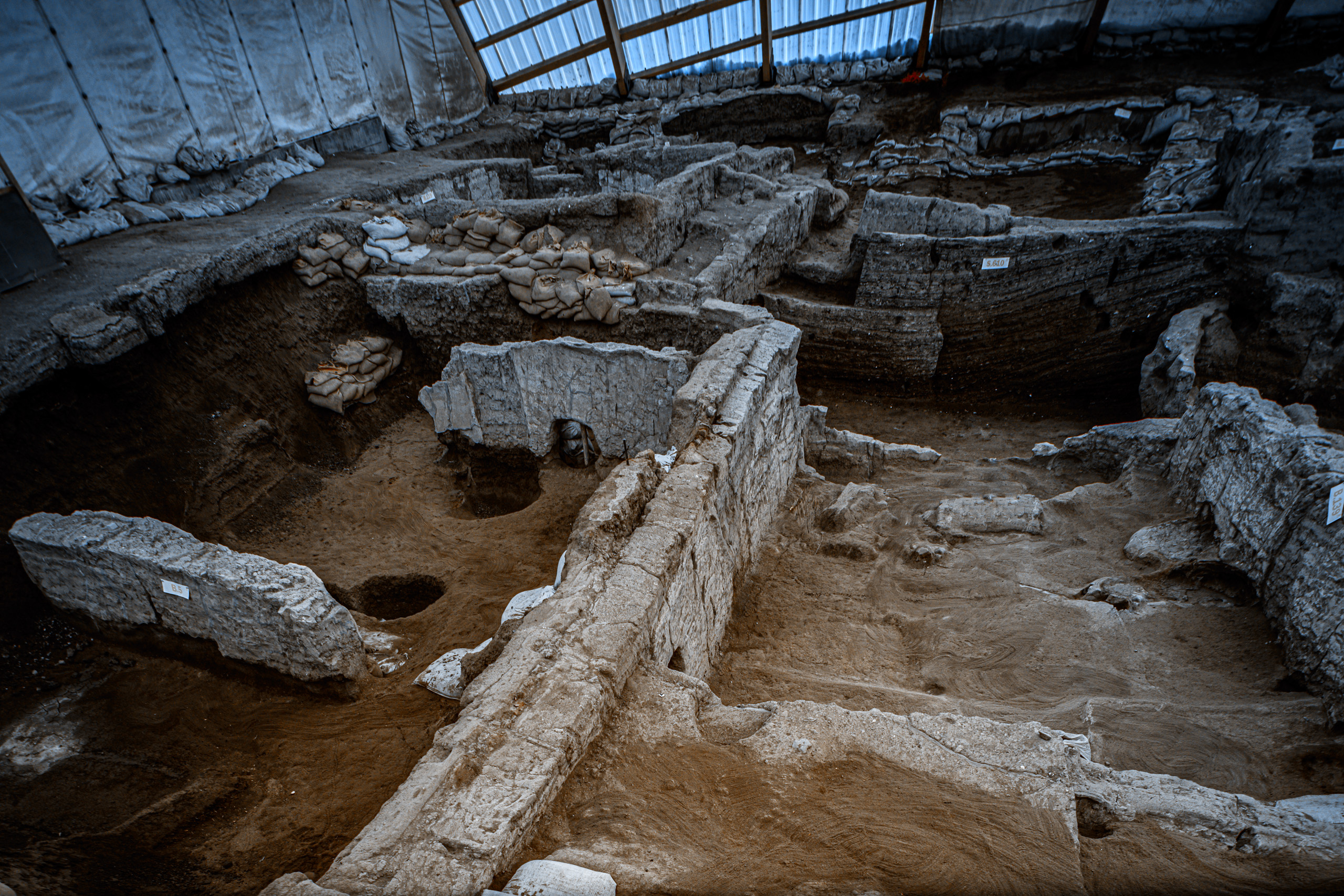
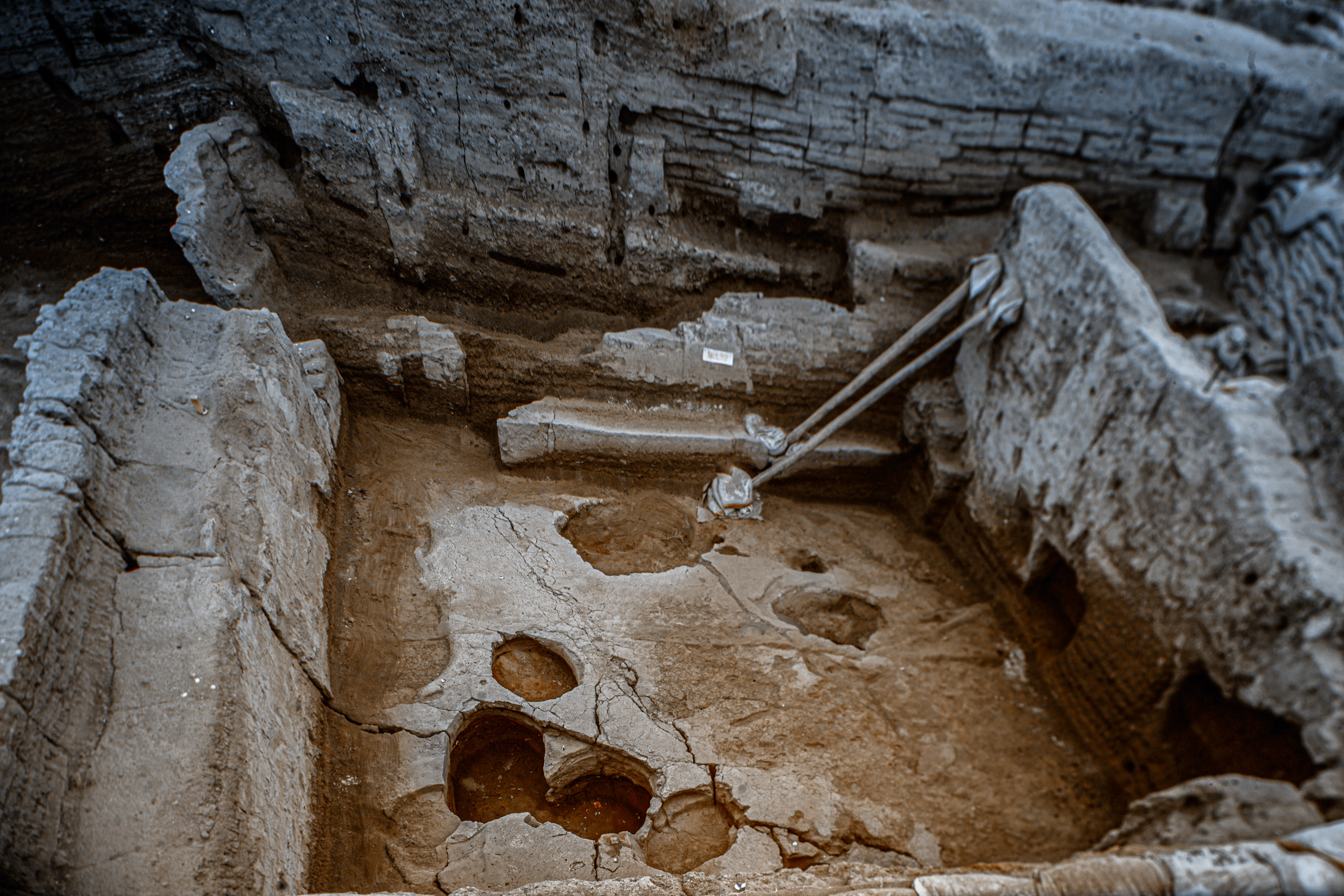
Nine thousand years ago a town stood here, home to several thousand people — before the Flood and before the first pyramids. The word “town” comes with caveats: no streets, no doors, no squares. Houses pressed wall to wall like honeycomb. You entered your home down a ladder through a hole in the roof; you left it across your neighbours’ rooftops. The dead were buried under the floor — right beneath the platforms where the living slept. A family lived above its ancestors, generation after generation. And when a house grew old, it was carefully filled with earth and a new one was built exactly on the outline of the old. Over a thousand-odd years this grew into more than twenty metres of cultural deposit — a town that methodically kept repeating itself.
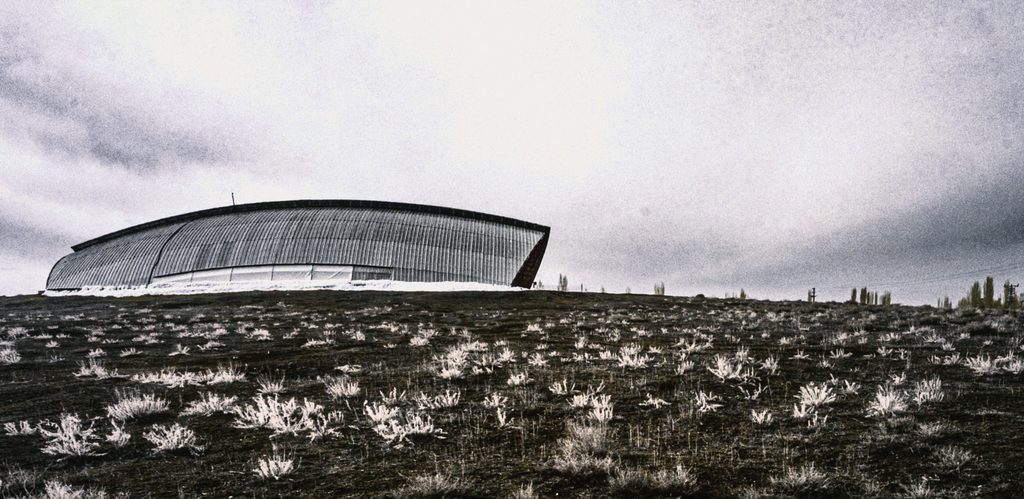
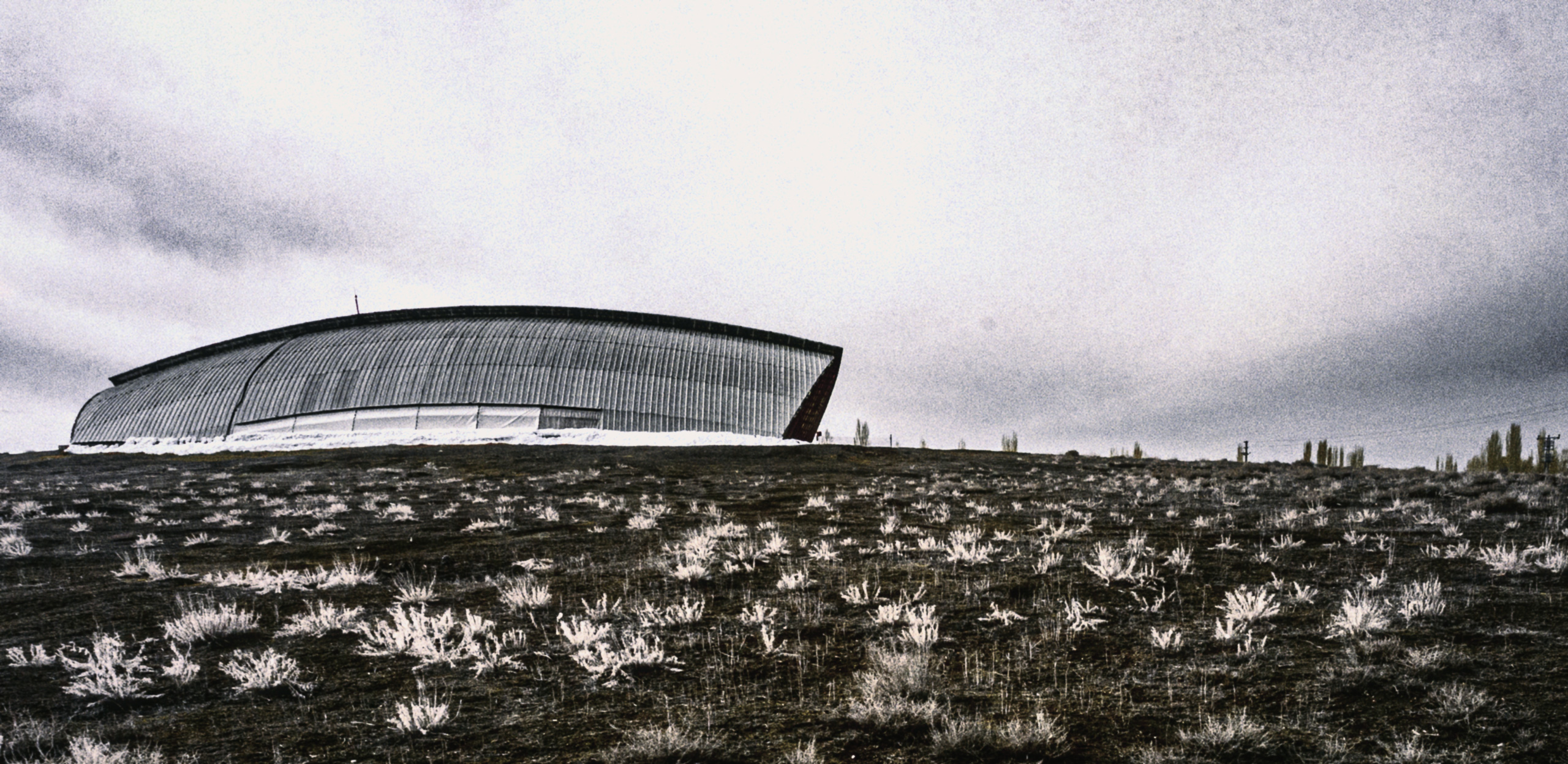
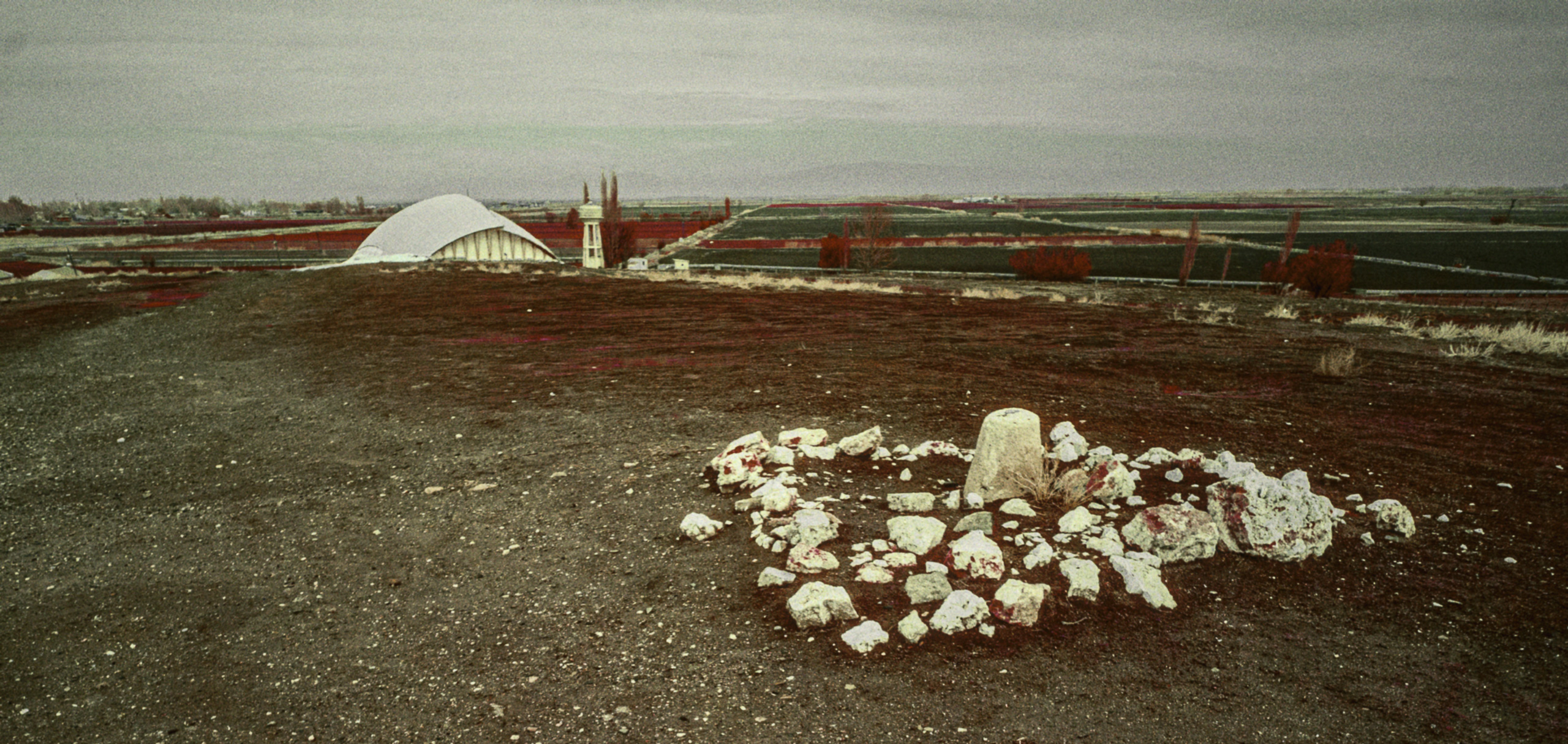
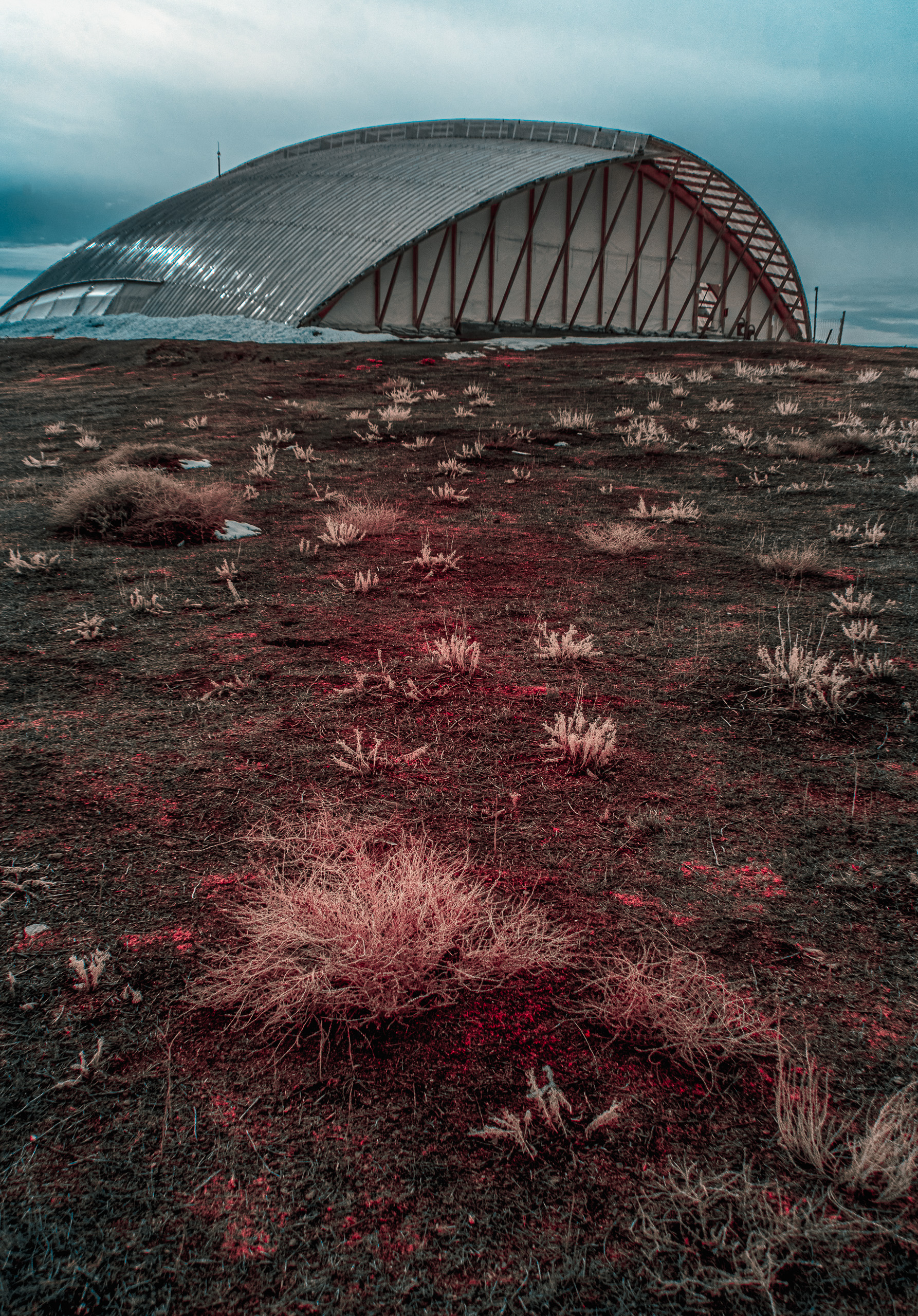
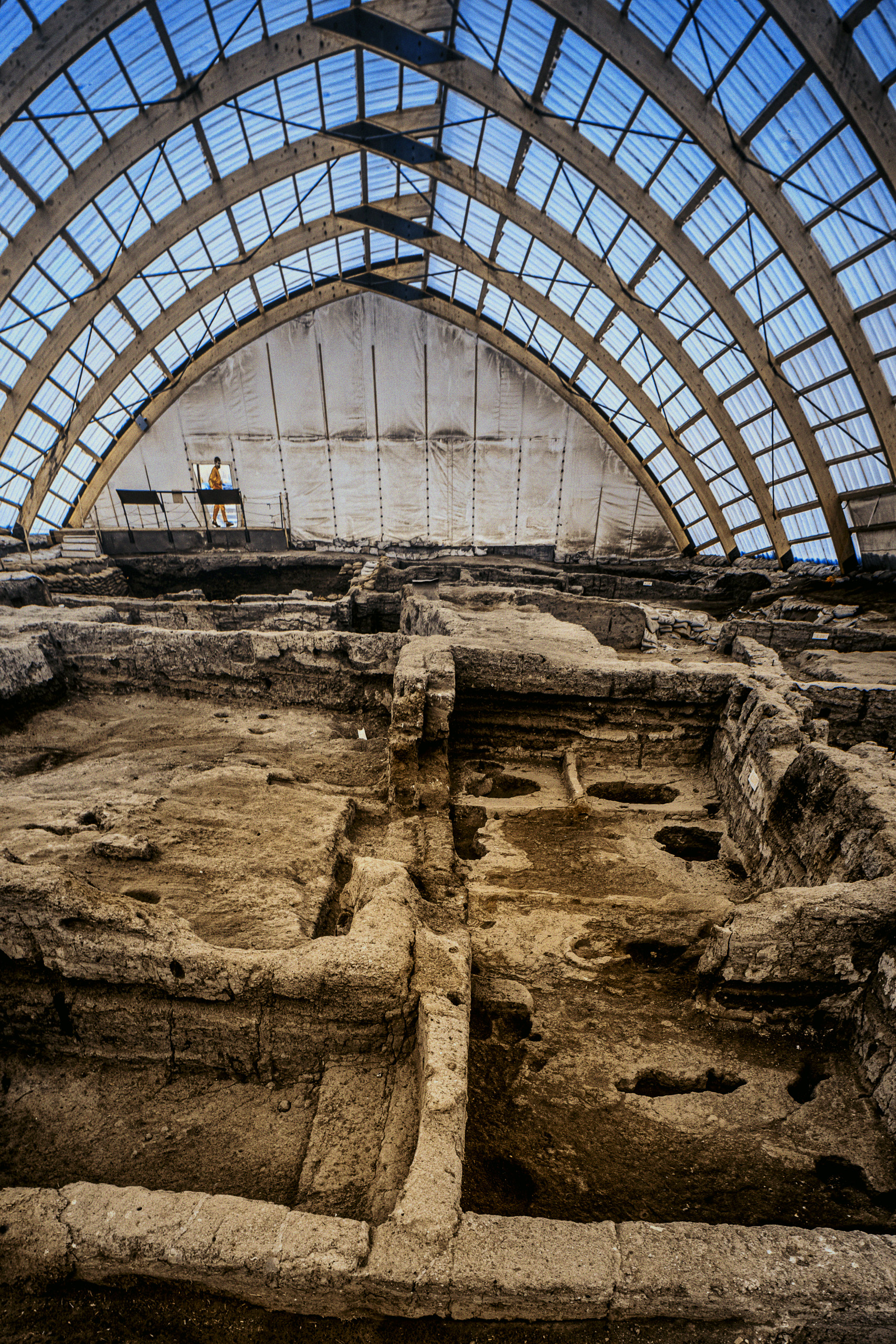
In winter the place is empty, without tourists: a caretaker, a reconstructed house, and two vast shelters over the excavations — the southern one from 2003, the northern from 2008. I photographed the mound in colour infrared, squeezing false colour out of the frozen ground.
The history of Çatalhöyük’s study is a ready-made screenplay whose genre keeps shifting. It opens as an adventure: in 1958 the Briton James Mellaart spots the mound while surveying the plain, digs four seasons in 1961–65 and hands the world sensation after sensation — wall paintings, bull skulls set into interiors, clay figurines. It continues as a crime story: next comes the Dorak affair — Mellaart claims to have seen another hoard in a private house in İzmir, but neither the house nor its owner can ever be traced; suspected of antiquities smuggling, he is banned from the dig, then from the country. The mound falls silent for twenty-eight years. In 1993 the academic saga begins: Ian Hodder unfolds here one of the most meticulous archaeological projects in history — twenty-five seasons, laboratories right on the site, a UNESCO listing in 2012. And the finale is a detective story again: after Mellaart’s death, his London flat yields “tracings” of murals and ancient inscriptions that he had drawn himself. The discoverer of a great site turned out to be its forger as well — and now every publication of his without a field photograph has to be split in two.
The museumification came out true to the town — distributed in layers. The originals have scattered: I saw only a part of them in the archaeological museum of Konya. I went on to Ankara for the Museum of Anatolian Civilizations — and got a false-positive COVID test instead.
I rang in 2022 as properly as one can: among excavations under shelters, in a reconstructed house. In a town where a new house was built inside the outline of the old one — and which now itself exists several times over: the original in the ground, a replica beside it, display cases three hundred kilometres away. No Christmas tree, no champagne at midnight — but continuity between generations has never been better kept than here.
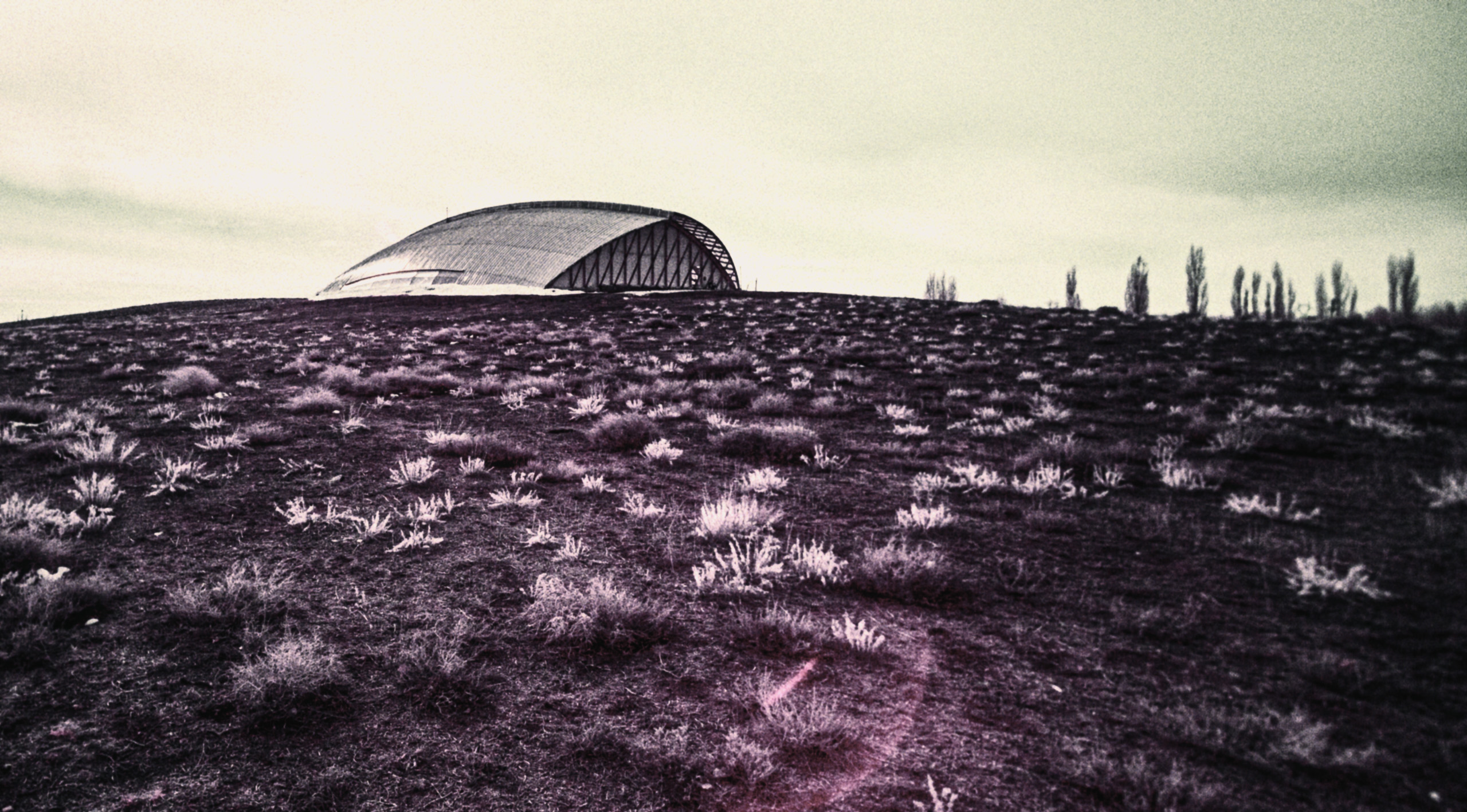
1 · The mound seen from the plain, the North Shelter’s roof against a storm sky, poplar silhouettes on the horizon.
2 · From the mound: a stone cairn marker in the foreground, the shelter and a water tower beyond, red infrared fields to the horizon.
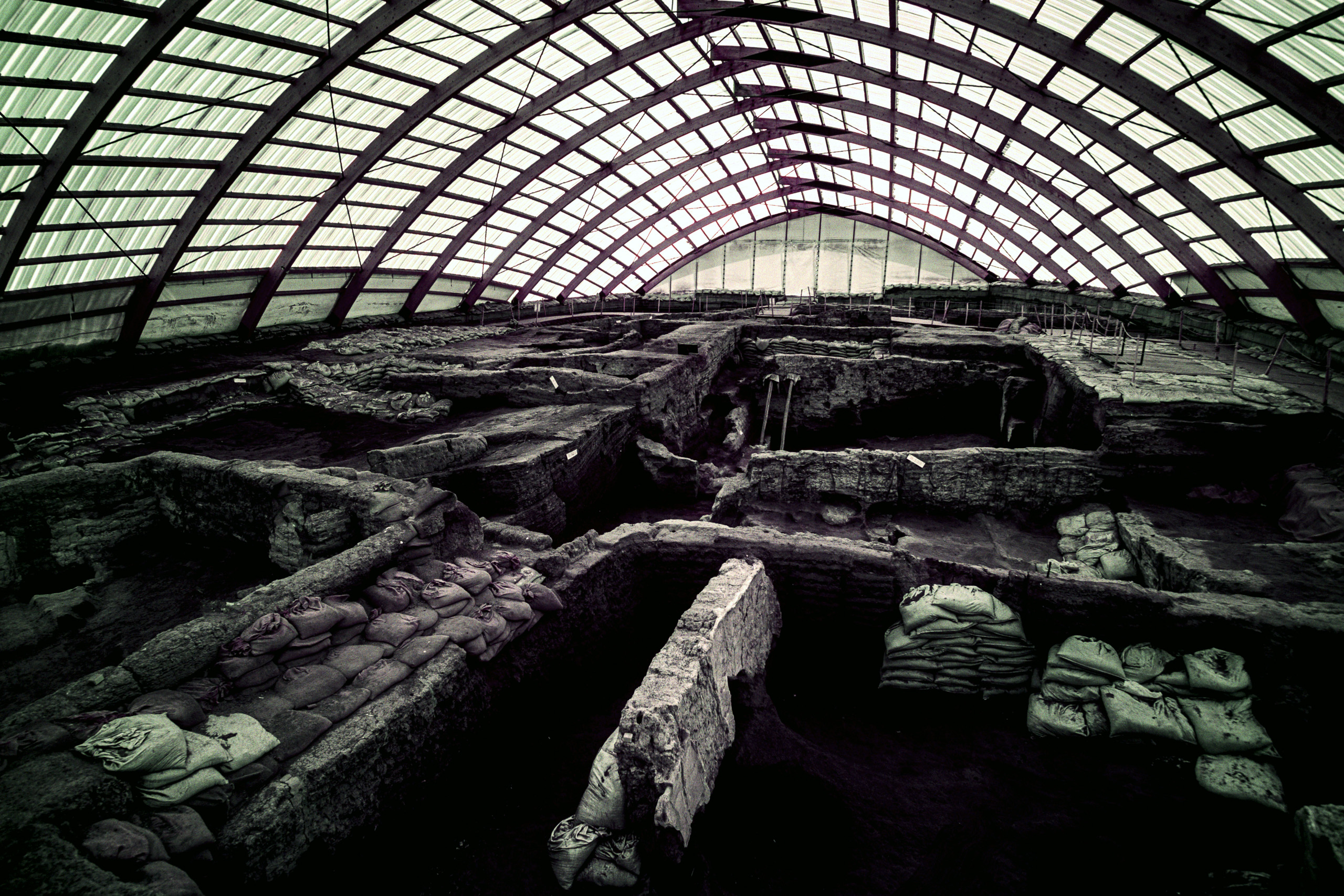
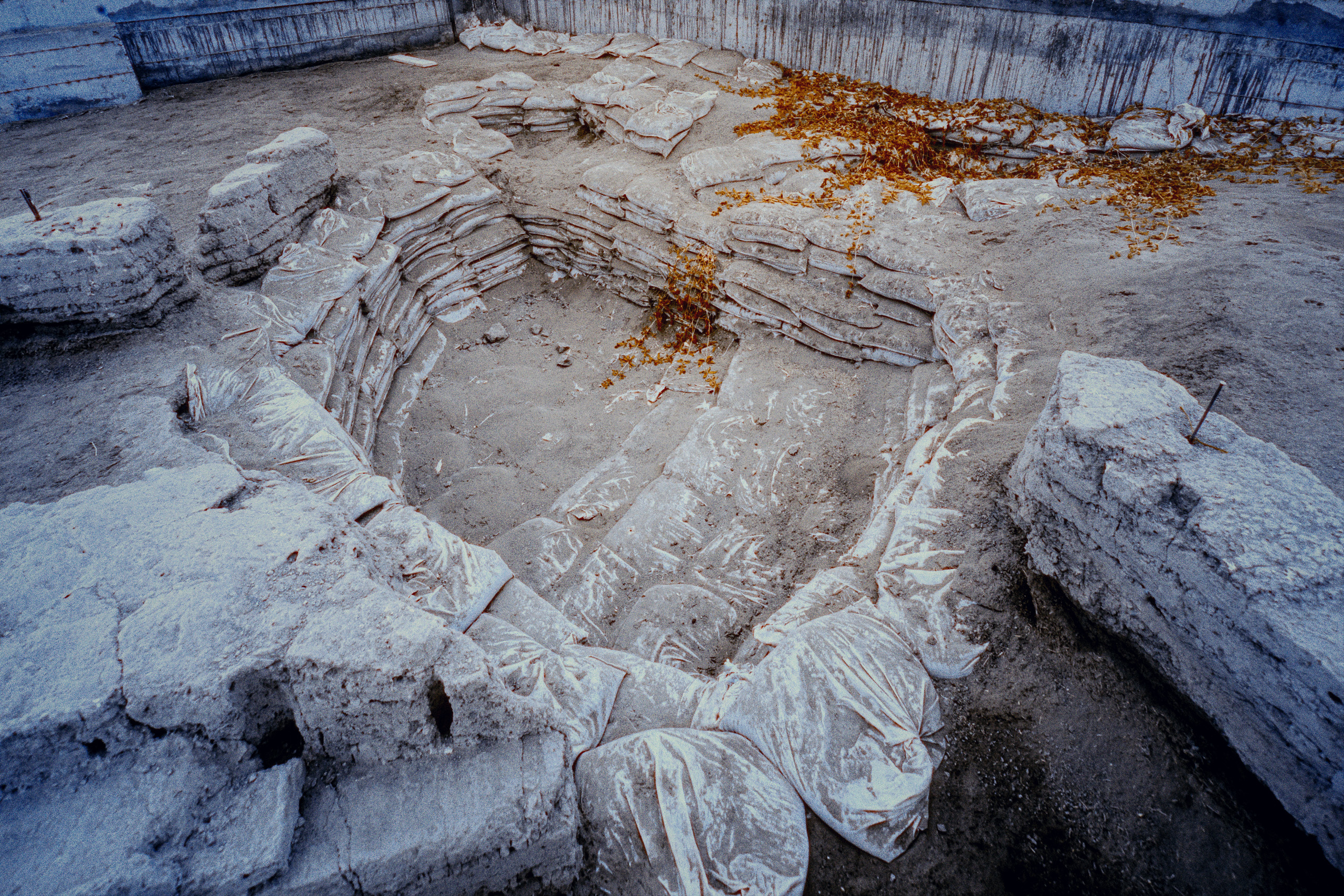
3 · Inside the North Shelter (2008): a mosaic of mudbrick house walls under a glazed roof, sandbags bracing the excavation.
4 · The trench from above: layered house walls, the shelter’s roof panels against the sky.
5 · Excavation floor, detail: the round burial platforms cut into the clay — where the dead lay beneath the living.
6 · Detail: an oval niche-platform cut into a house wall, sandbags and dry stalks around it.
7 · The mound in winter: frost-bitten grass rendered bright red by infrared, the shelter on the horizon.
8 · Inside the shelter: the caretaker, a lone figure by the display stand, beneath the roof’s arches and the floor’s burial platforms.
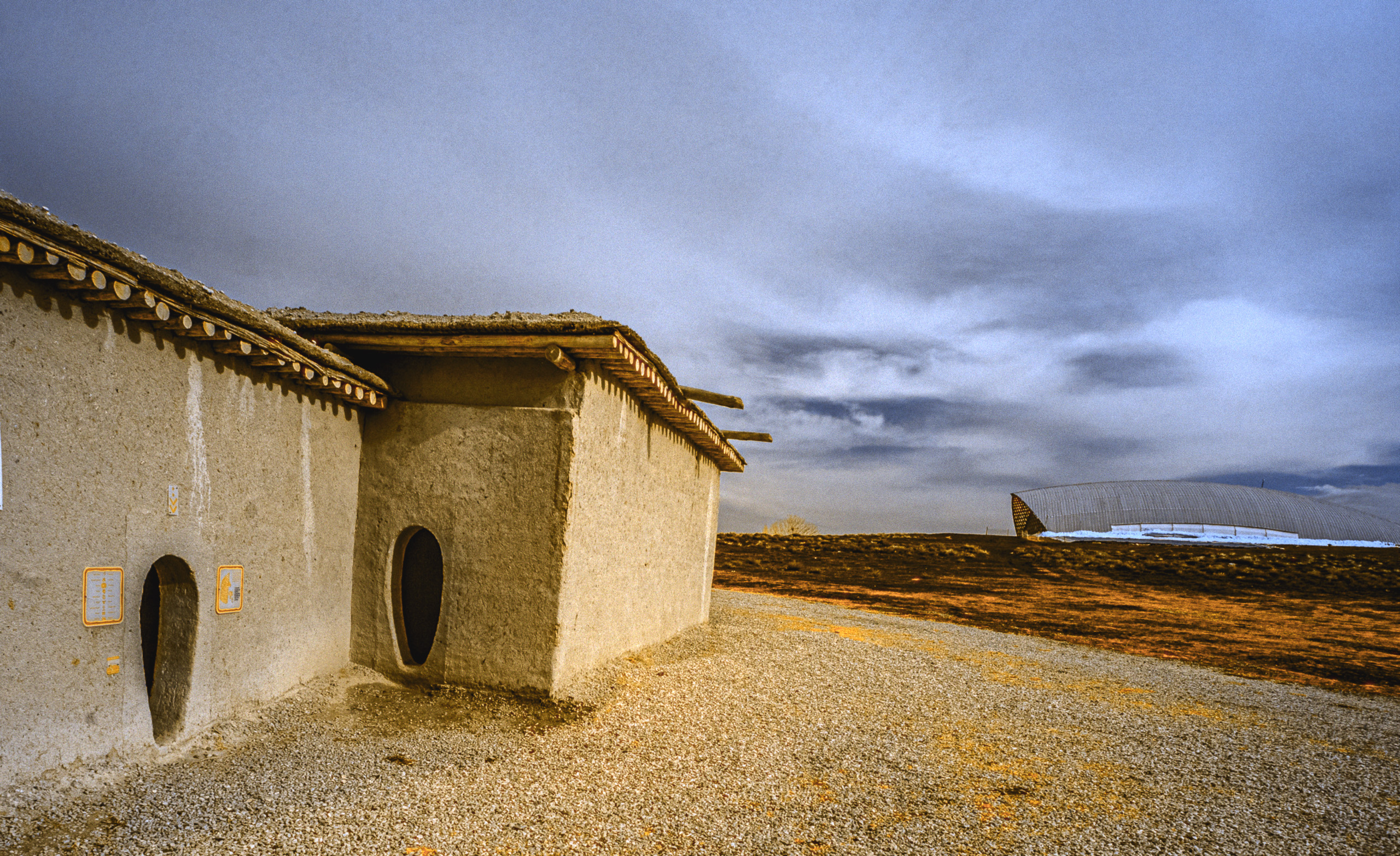
9 · The reconstructed house: two oval openings built to the pattern of the roof-entrances residents once climbed down through.
10 · The shelter seen across the empty winter plain — no one else here.
PART II — Troy (Hisarlık, Çanakkale, January 2022)
The first thing I ever learned about archaeology was the story of Schliemann’s search for ancient Troy. In my history teacher’s telling it was flawless: a self-taught merchant takes Homer literally, travels to the Turkish hill of Hisarlık with the Iliad in hand — and finds the city the professors had dismissed as a fairy tale. A beautiful story. The trouble is that almost every word of it needs a footnote.
To begin with, it wasn’t Schliemann who found Troy. He was pointed to Hisarlık by Frank Calvert — a British consul whose family owned part of the hill and had dug it long before the famous guest. What Schliemann brought was not intuition but money, obsession, and methods that would make a modern archaeologist’s blood run cold: he cut a trench through the mound as deep as a five-storey building, demolishing everything that stood between him and “Priam’s city.” Today such people are called looters, and despised.
And then comes the central irony of this biography. Hisarlık is not a city but a layer cake: nine cities, some fifty building horizons, three and a half thousand years of continuous life. Schliemann was convinced Homer’s Troy lay at the very bottom — and cut straight through the layers of Troy VI and VIIa, the very ones considered Homeric candidates today. The man who found Troy demolished it in passing.
“Priam’s Treasure” is cut from the same cloth. The gold unearthed in 1873 (by his account under dramatic circumstances, with his wife Sophia carrying the treasure out in her shawl — the account changed from letter to letter) belongs to Troy II, a city a thousand years older than any conceivable Trojan War. Priam could have worn those diadems about as plausibly as Ivan the Terrible could have doom-scrolled his morning feed on an iPhone.
The treasure’s fate is a history of cultural terrorism. Under the agreement with the Ottomans half the finds were due to Istanbul — Schliemann smuggled everything to Athens, and from there the gold moved to Berlin. In 1945 it left for Moscow in a trophy train and spent half a century officially nonexistent: Russia acknowledged it in 1994, and the Pushkin Museum put it on display in 1996. The remaining Trojan hoards scattered across the world, and a part settled in the Istanbul Archaeological Museum — where the true history of the true Troy is now being reassembled. The hill itself waited for a museum of its own until 2018 — nearly a century and a half after the first blow of the spade.
Troy keeps multiplying. The Hittite archives know Wilusa — a city the great powers of the Bronze Age corresponded and quarrelled over. In the 1990s Manfred Korfmann proved the existence of a lower city: Troy turned out to be many times larger than the citadel that bears Schliemann’s and his heirs’ name. Rüstem Aslan’s expedition is lifting, right now, from the layer dating to the turn of the twelfth century BCE, clay sling bullets, arrowheads, burnt ruins and hastily buried skeletons. There was certainly a war here. Whether it was the war is a question every generation answers with a Troy of its own.
And that is the moral my school lessons never contained. There is no Troy — there is a multitude of Troys, and every historian picks their own: Schliemann the golden one, Dörpfeld the sixth, Blegen the seventh-A, the Hittitologists Wilusa, the Turkish ministry of culture the one in the museum with the ticket gate. If you are searching for the city of your dreams, be prepared to demolish a few real ones on the way.
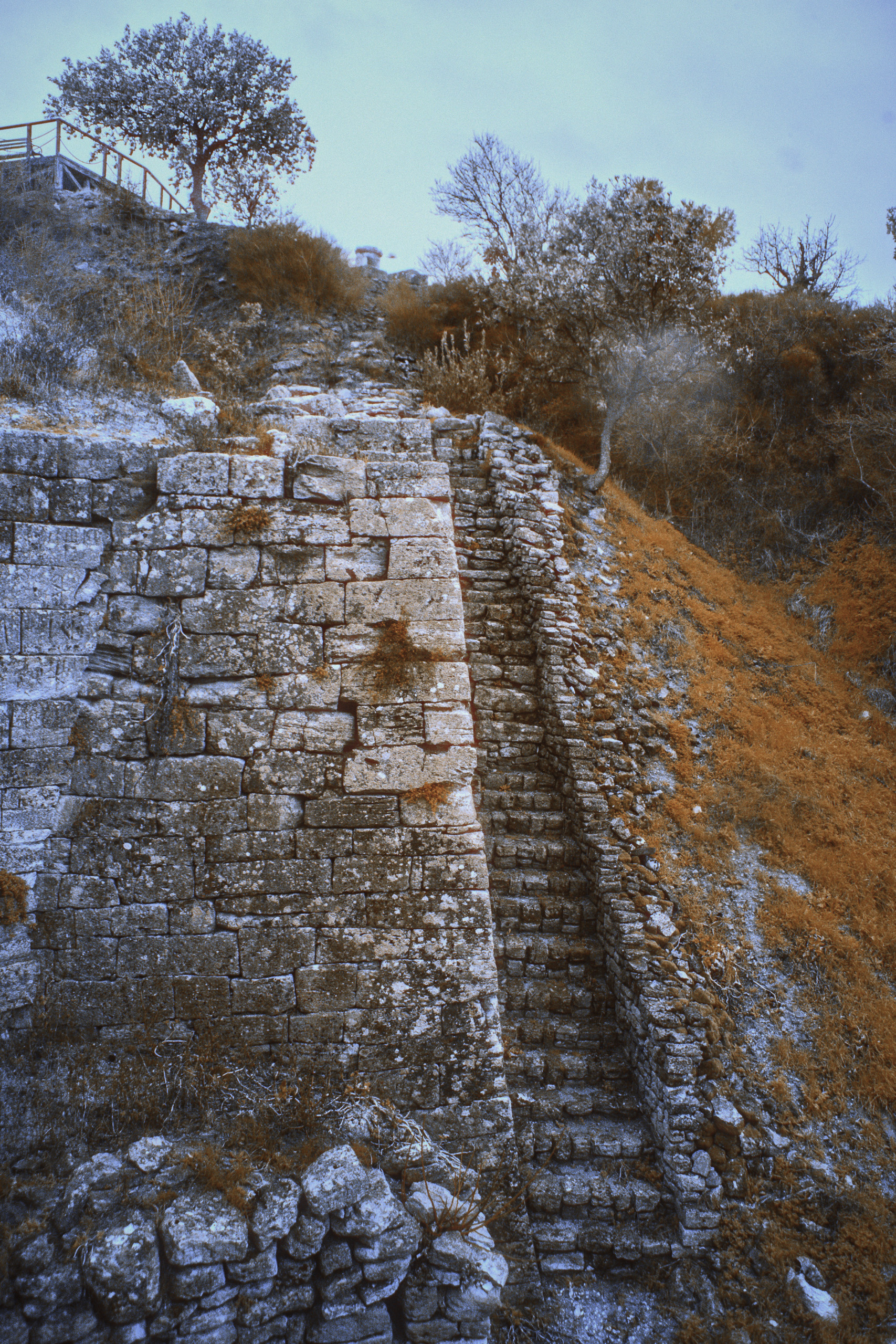
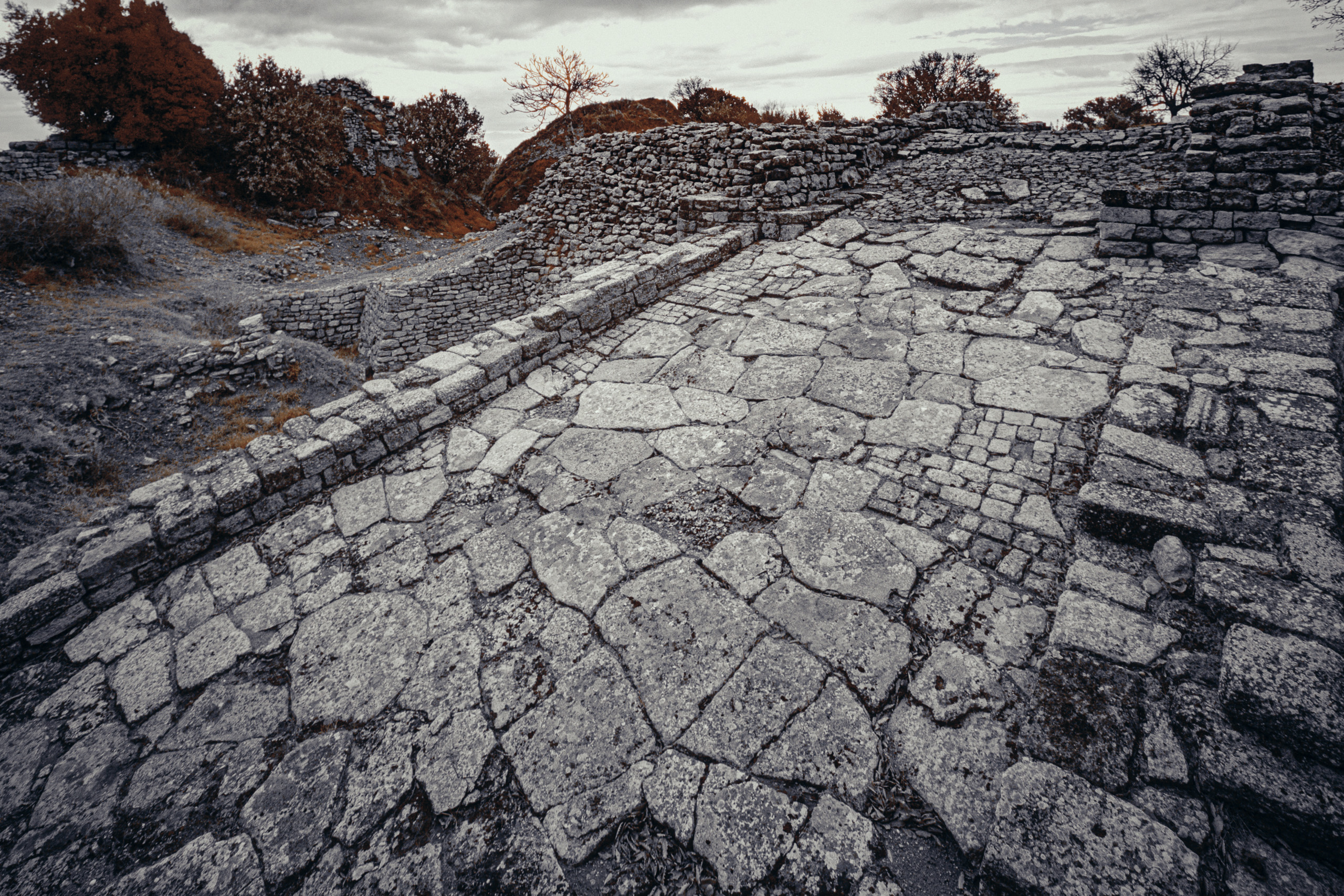
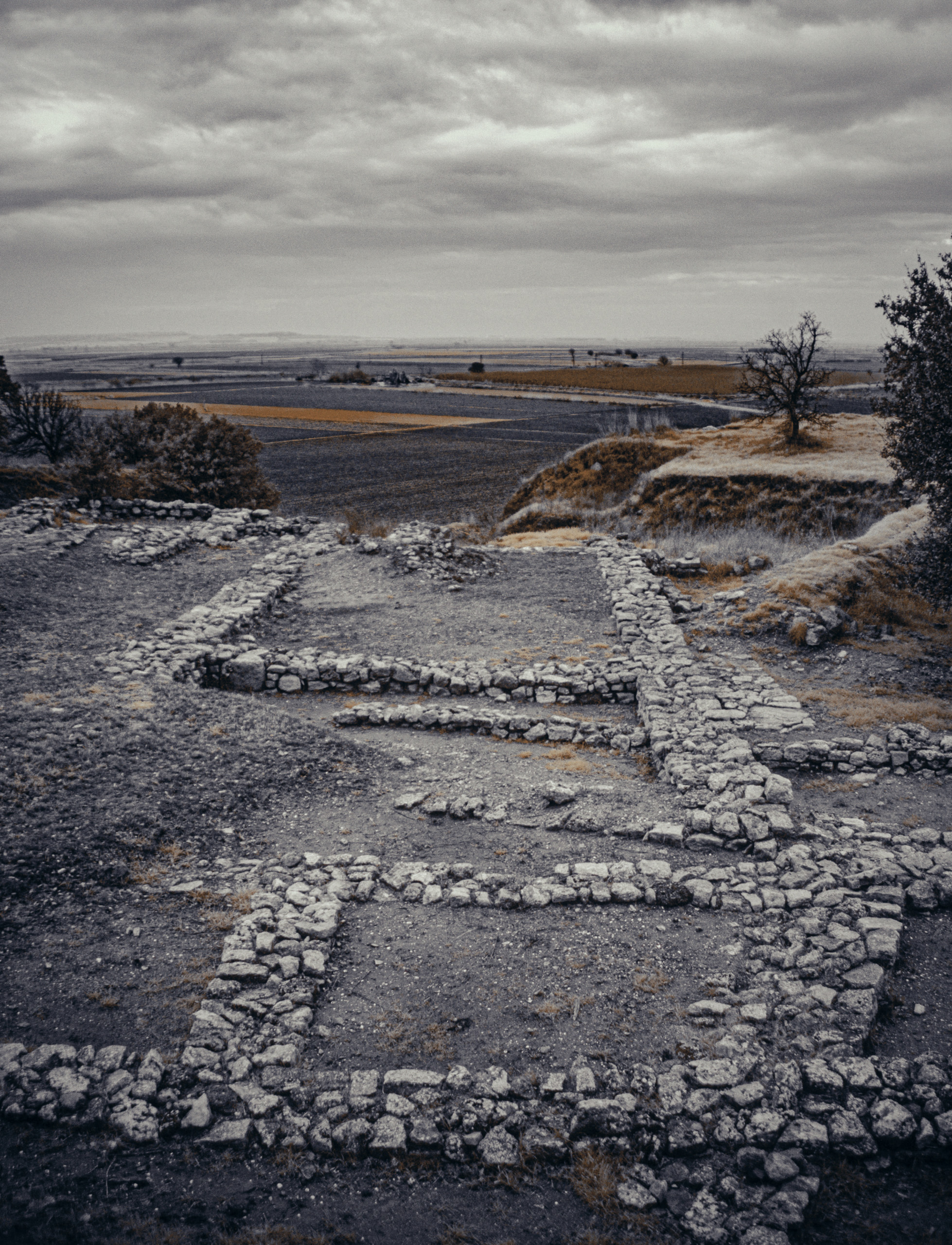
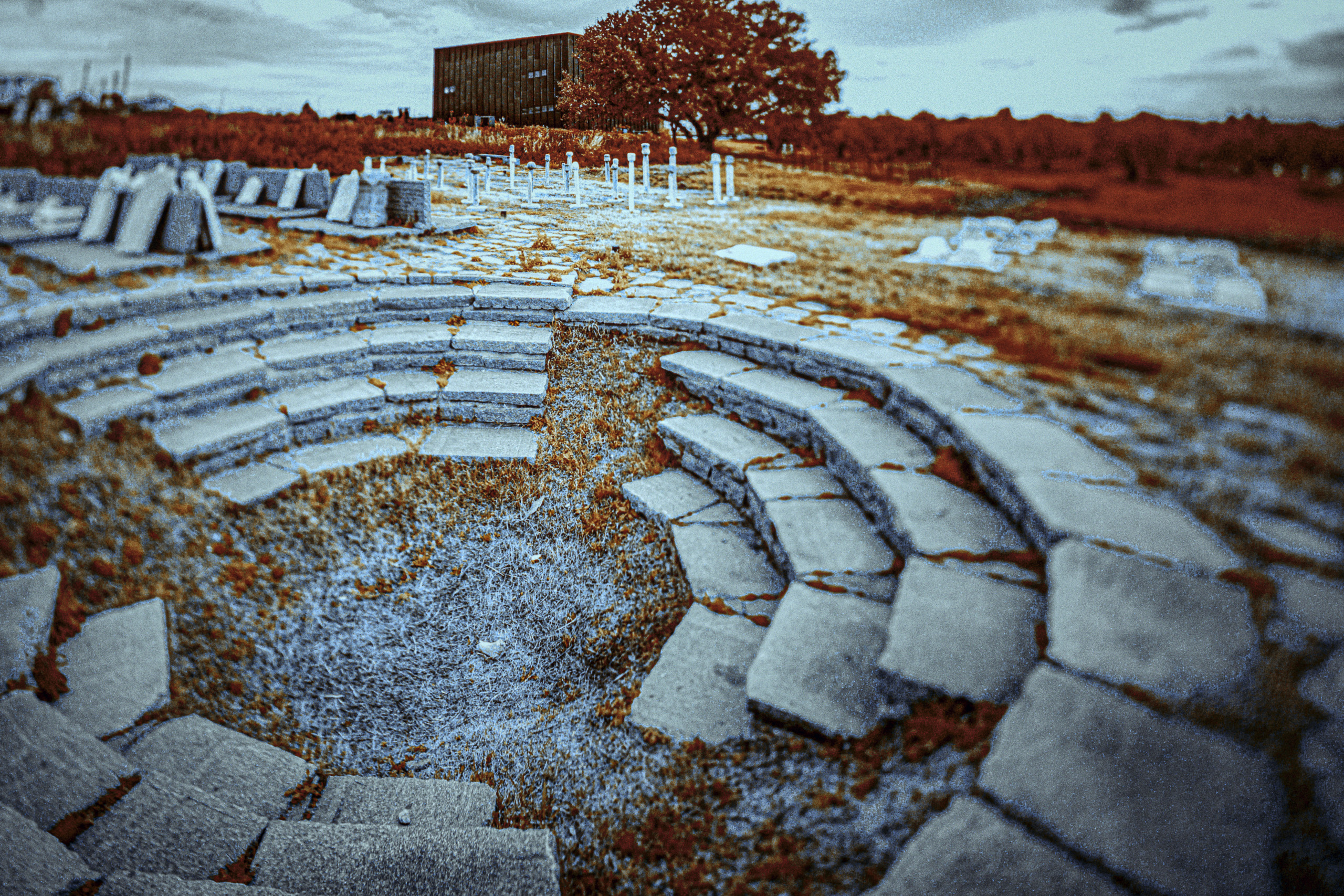
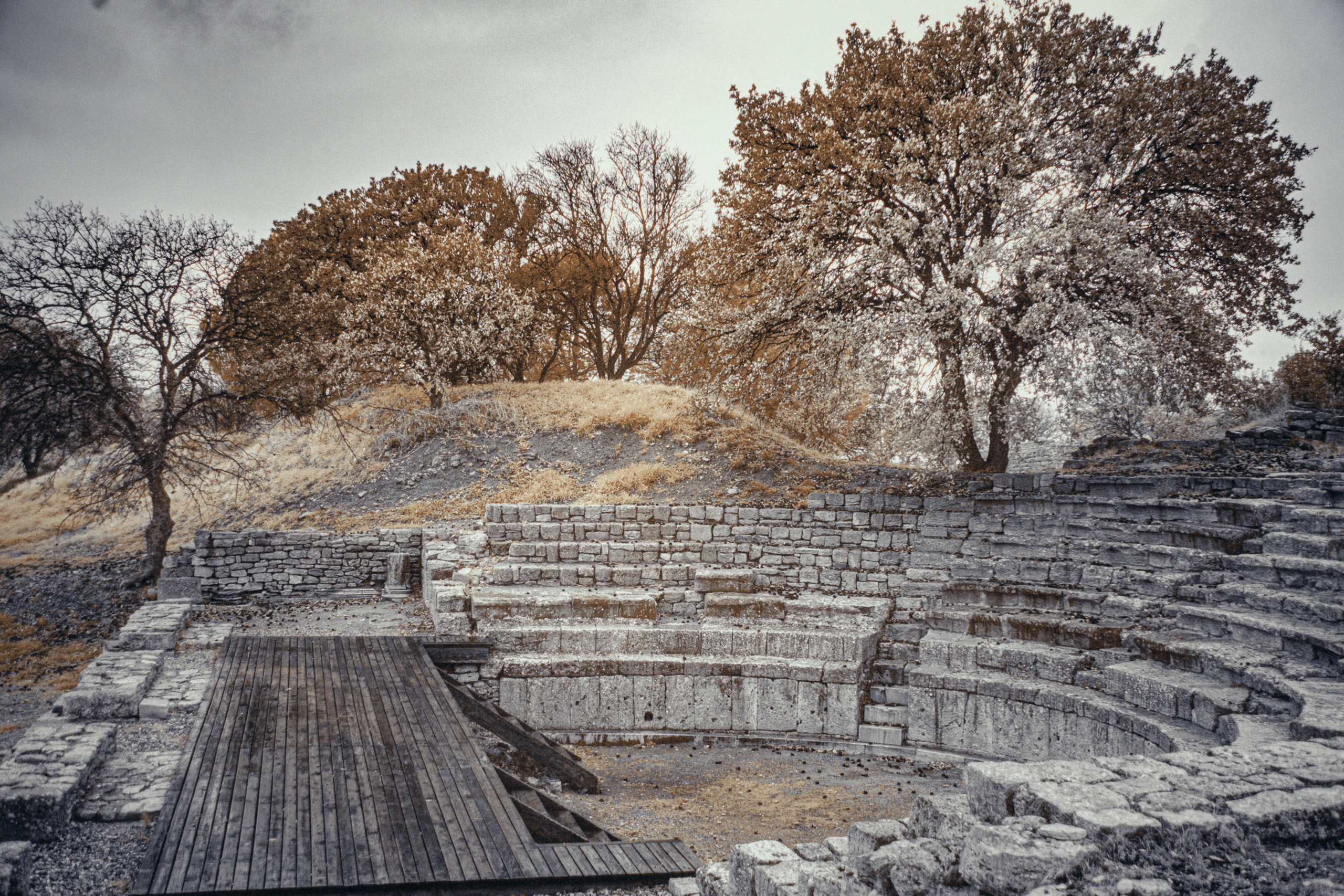
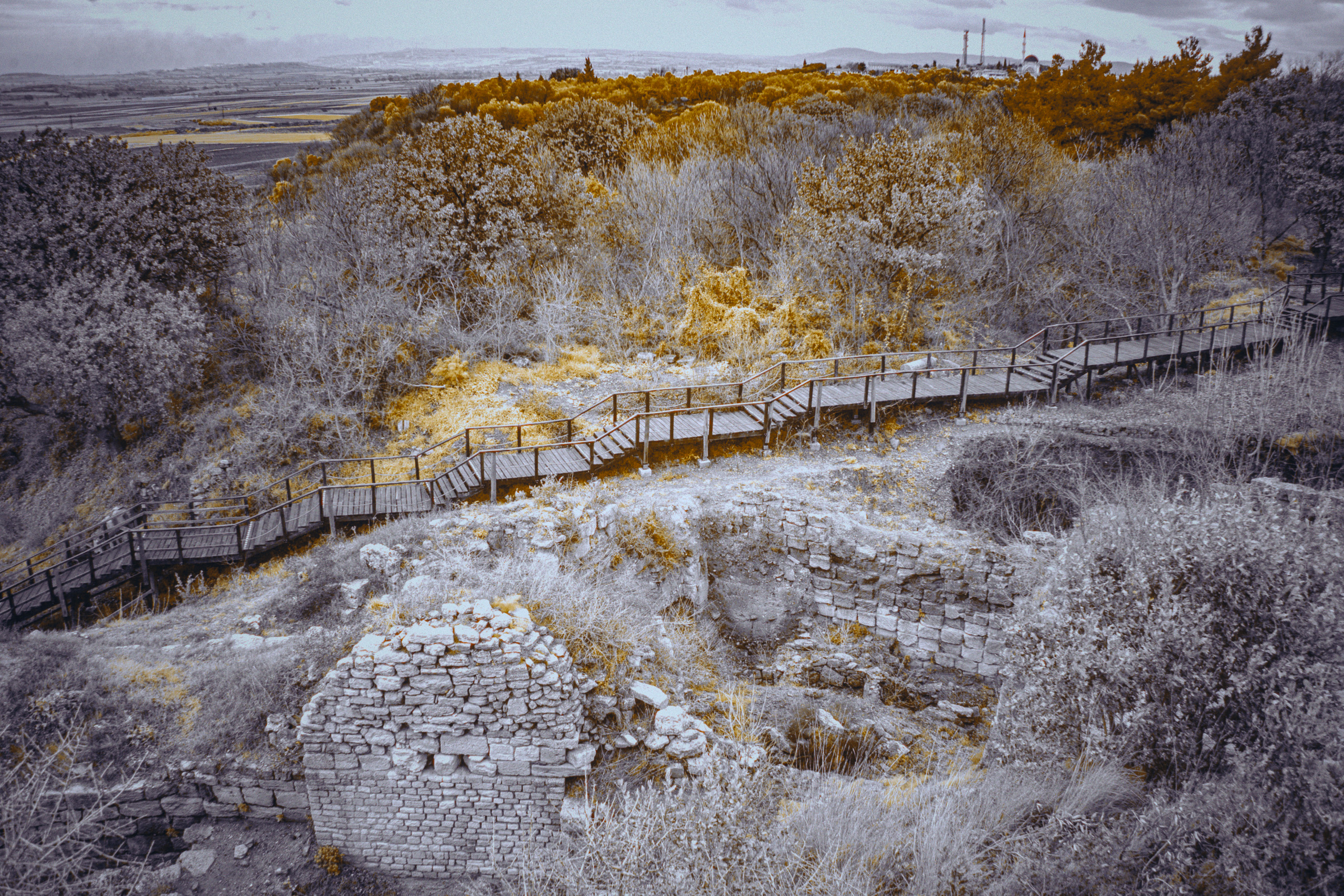
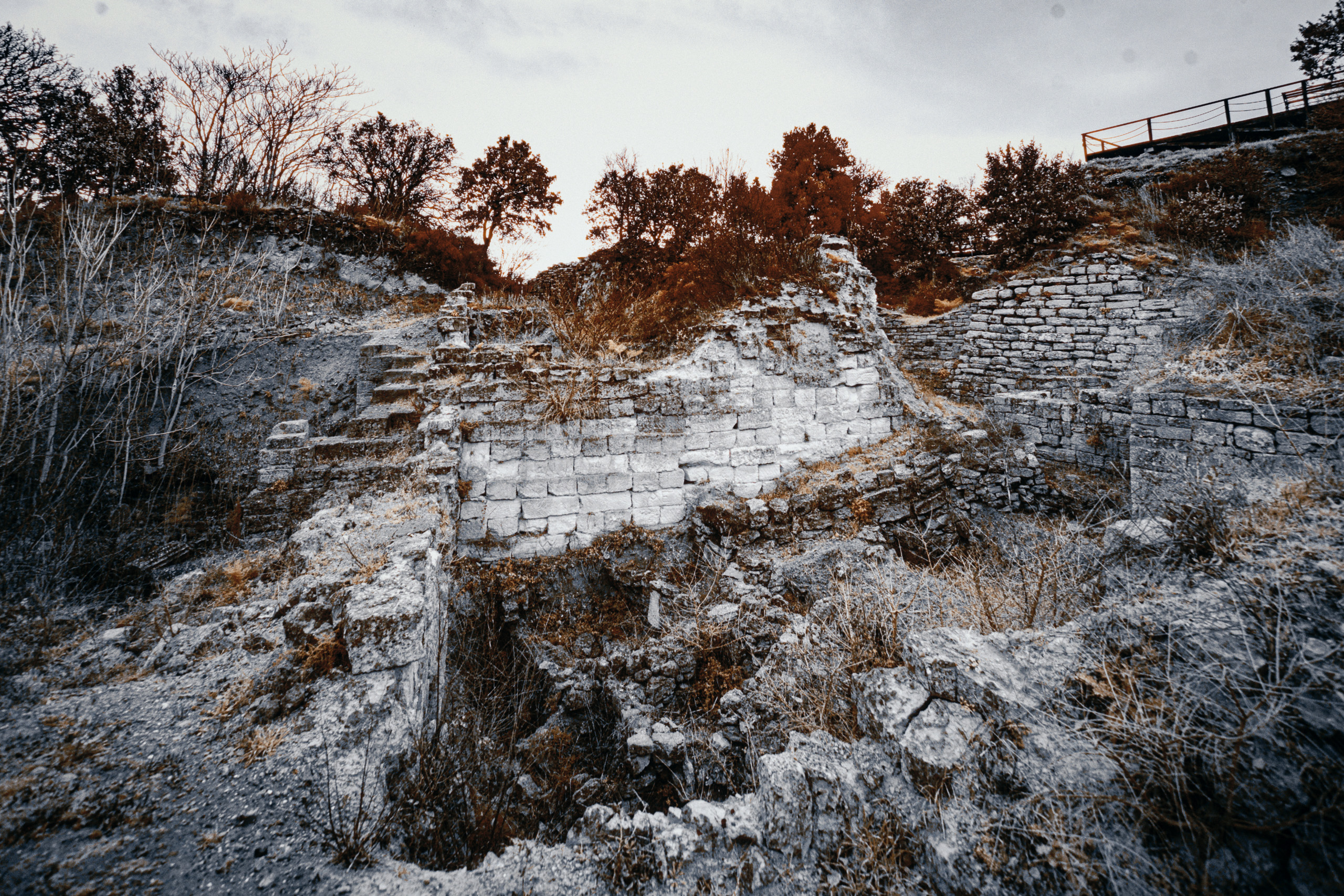
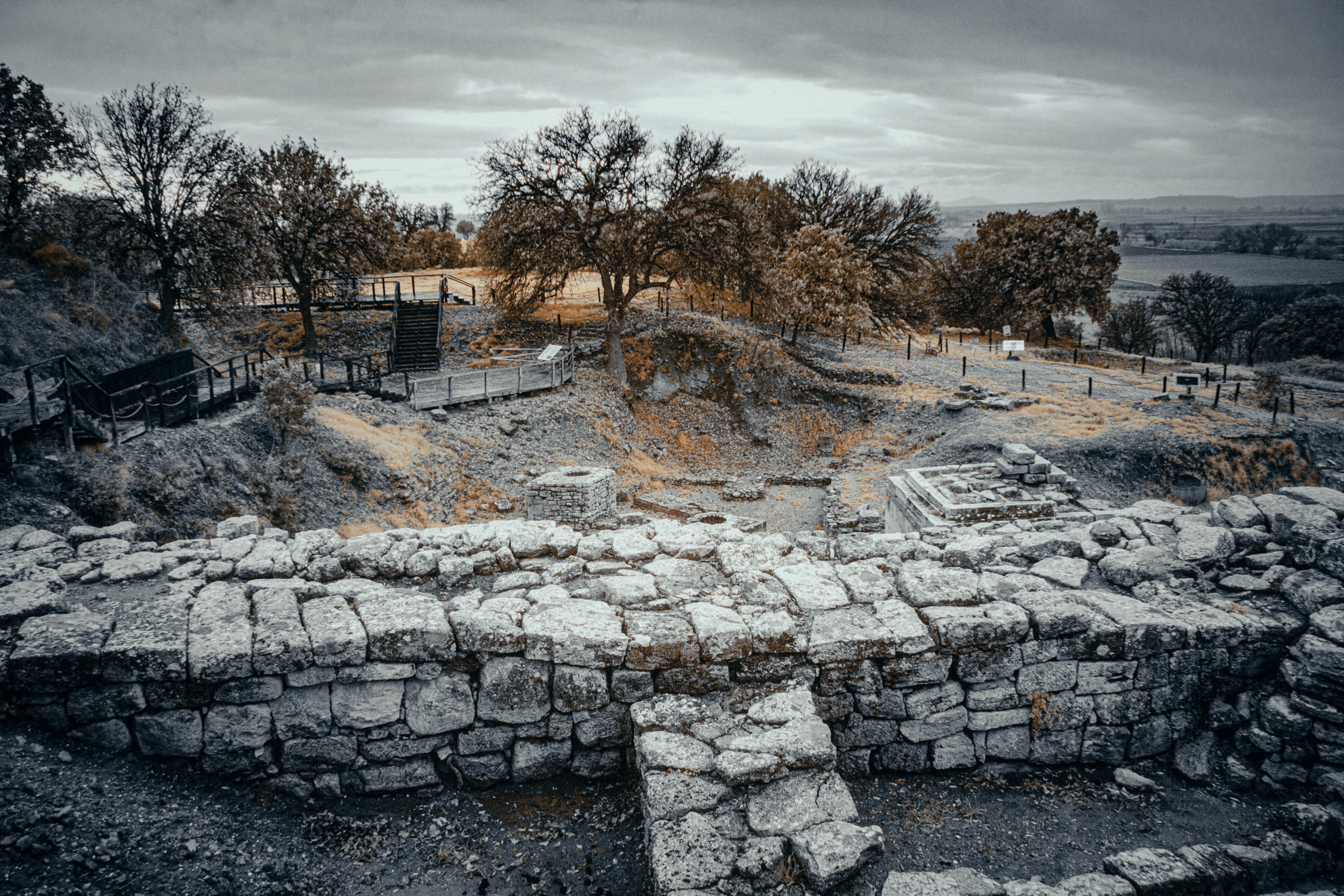
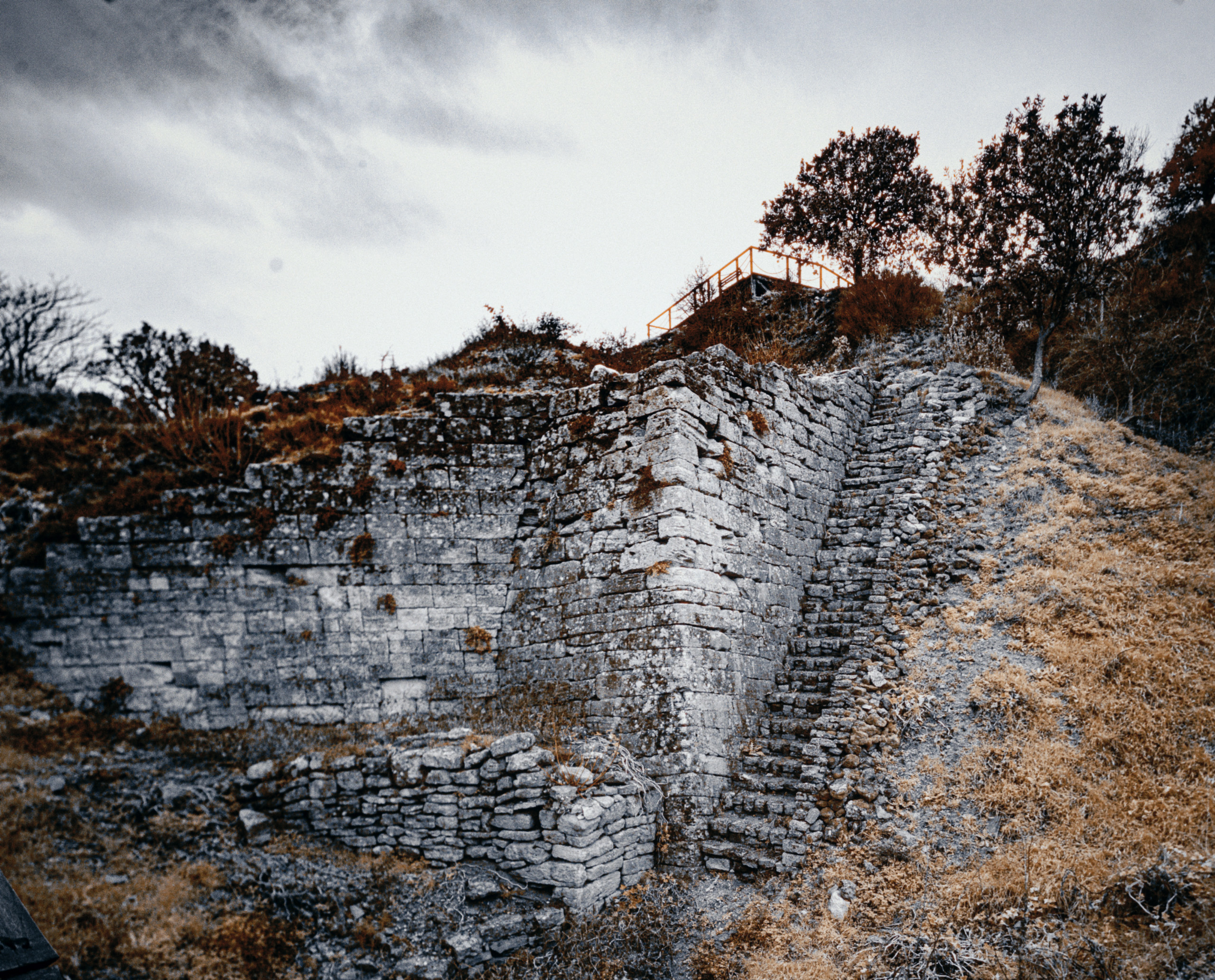
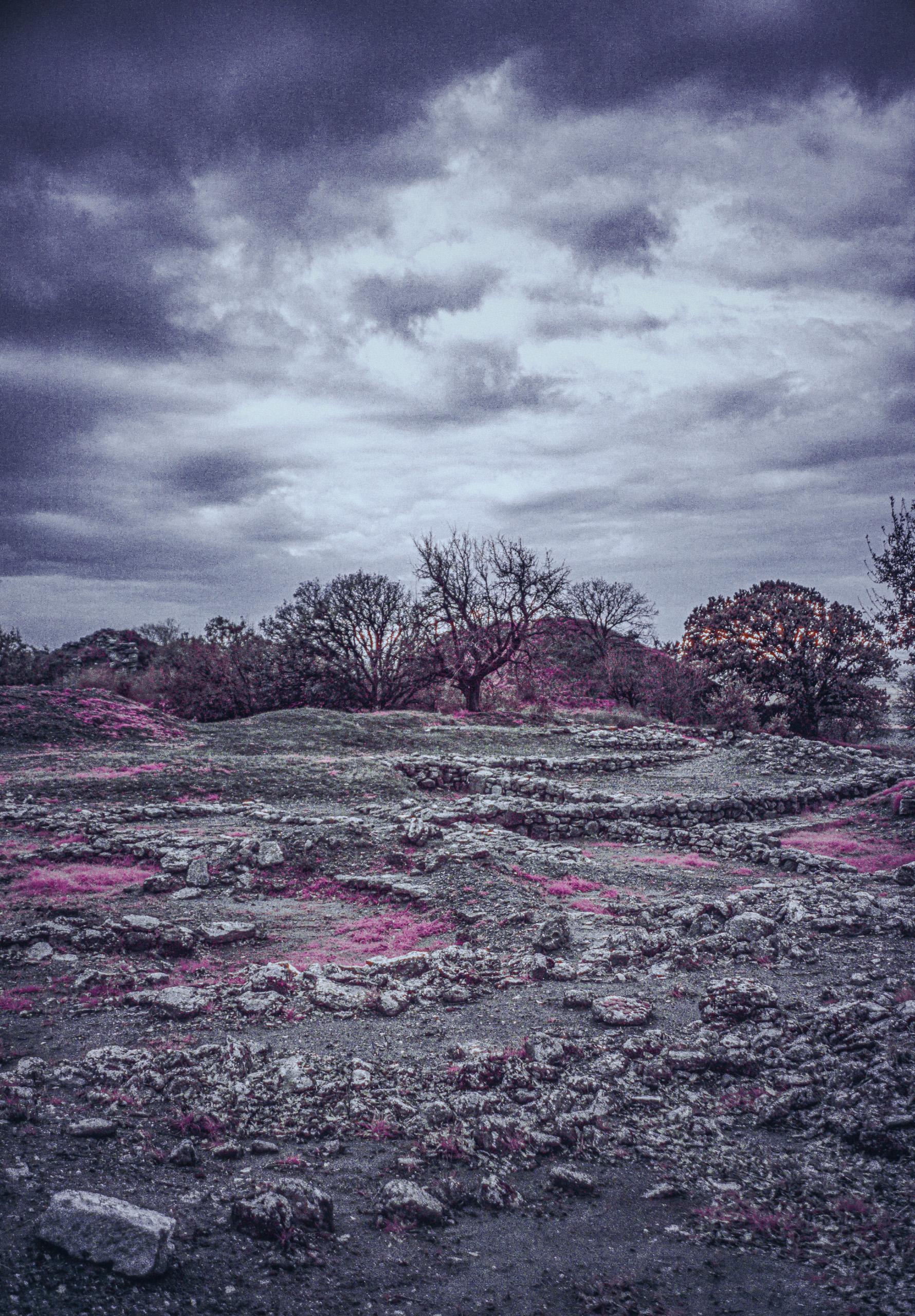
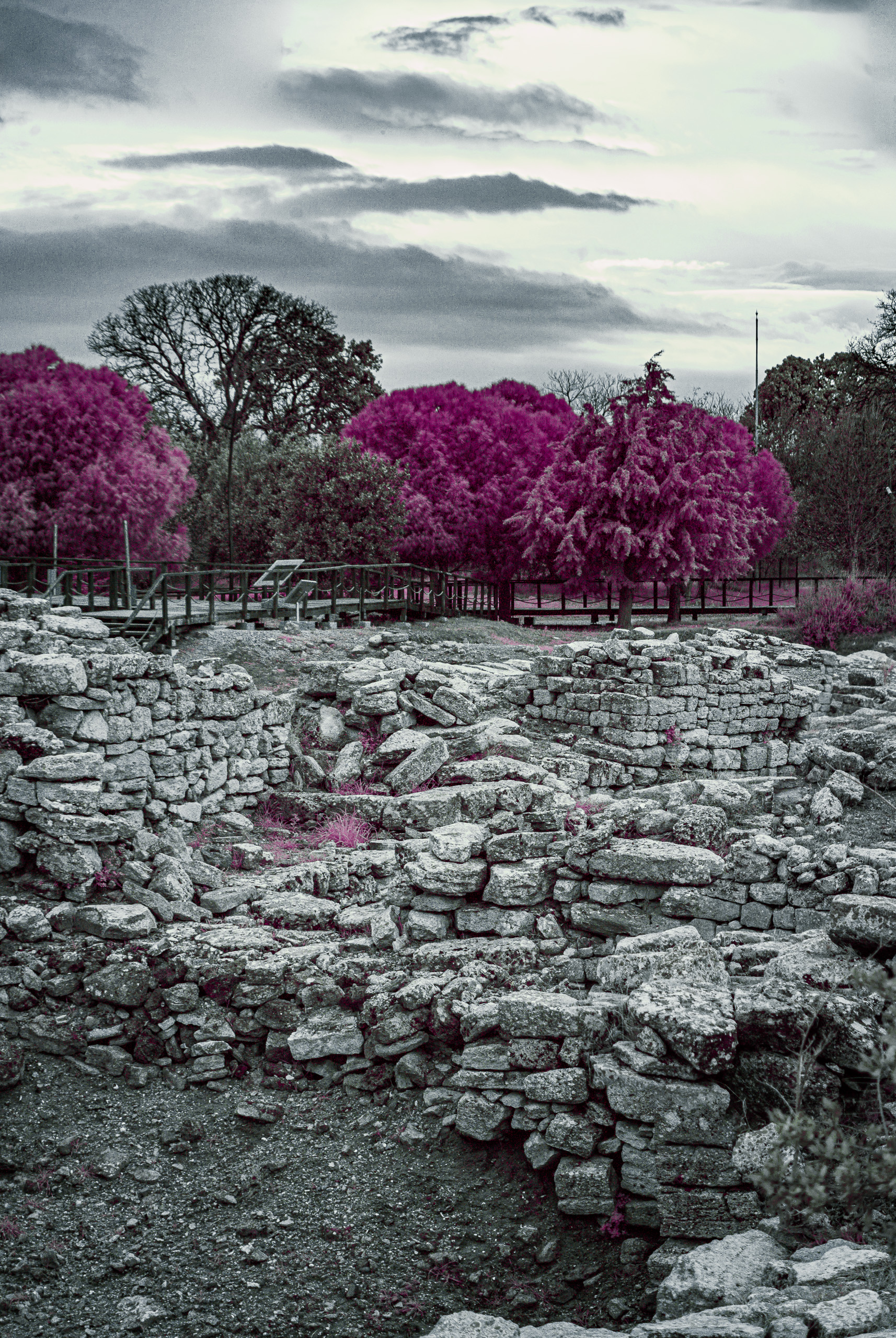
1 · The fortification wall of Troy VI, its stones leaning under their own age; a lone tree grows from the top.
2 · A paved street between the walls — the road every school telling of Troy imagines Schliemann walking, Iliad in hand.
3 · View from the excavation cut across the Trojan plain — the scale of a trench that reached the depth of a five-storey building.
4 · The Roman Odeon, Troy IX — the latest of nine cities stacked on this hill, seen from above its stone tiers.
5 · The Odeon at ground level: its tiers rising behind a wooden viewing platform.
6 · A wooden stairway through golden foliage, down to a round tower of the ruins — the same soil that gave up “Priam’s Treasure,” a thousand years too old for Priam.
7 · Bare masonry under a stormy sky — the cold, high-contrast register in which this hill kept the memory of a treasure scattered across four capitals.
8 · Overview of the excavation: foundations, altar-like structures, viewing platforms — a fraction of a city that turned out many times larger than Schliemann’s citadel.
9 · The outer rampart, beyond the citadel walls — the edge of the lower city Manfred Korfmann proved existed only in the 1990s.
10 · The excavation under a violet, indecisive sky — no single colour dominates, much like no single Troy does.
11 · Closing view: a wall of the ruins against improbably purple trees — the city of dreams every seeker of Troy eventually builds for himself.
PART III — Erebuni (Arin-Berd, Yerevan, October 2025)
In October 2025 I climbed the hill of Arin-Berd on the edge of Yerevan, where the fortress of Erebuni has stood since 782 BC — one of the few places on Earth with a birthday chiselled in stone. I shot it at 720 nanometres, and this time I decided not to be the narrator. The chronology of Urartu’s last kings is a tangle even by the standards of ancient history: the king-lists argue with each other, the dates drift by half a century, and the man I am handing the floor to cannot be named with any certainty. So let him speak nameless. And if he loses count of the years — be lenient: the academic literature loses count in exactly the same places.
My ancestor Argishti, son of Menua, built this fortress and had it proclaimed in stone: by the greatness of the god Haldi, for the might of the land of Biainili and for the terror of its enemies. “The land was deserted,” says the inscription, “mighty deeds I accomplished here.” The land was not deserted: there were people on it, and the people had objections. But the objections found no room on the stone. Every fortress begins as an advertisement — ours was simply carved to last.
I know this hill the way you know the house you grew up in. The temple of Haldi with its painted walls — the god was owed a share of every campaign, and he collected. The granaries — they swallowed the harvest of the whole Ararat plain and paid it back out in rations. Stone below, mudbrick above. And the water. Our masons cut pipes from tufa and basalt, tenon into socket, pipe into pipe, and the water walked into the citadel on its own — downhill from the springs, needing no slave and no wheel. A stone pipe is heavy, crude work; in Egypt they do the same thing in clay, and lighter. Clay breaks. Ours I would give another thousand years.
Then the accounts stopped balancing. Not the grain accounts — those always balanced; the accounts of years and borders. My predecessors lost battles I would rather not enumerate; the scribes are confused about which of us reigned when, and I have decided not to help them. One thing matters: the order was mine. The garrison leaves. There was no siege under these walls. Nothing was breached. We walked out of the fortress through its own gate, in marching order, and the gate did not even need repairing after us. The new capital was appointed: Teishebaini, the next hill over — newer walls, bigger storerooms. Everything that could be carried, we carried. What could not be carried — the walls, the water, the name — we left where it stood.
I remember every stone — not out of tenderness: those stones were my charge. Going down the hill, I did not look back. A king is required to know a manoeuvre from a farewell; the whole trick is that the column must not see the difference. I knew I would not return. The fortress built for the terror of enemies fell to no enemy at all. It simply stayed standing — full of water and empty of us.
About the manoeuvre he was right; about “never” he was wrong — though he had no way to check. The fall of Urartu happened elsewhere: Teishebaini, where the column went, was stormed and burned. Erebuni, surrendered without a fight, was the one that survived: the Persians patched the walls and lived in the fortress for about another century and a half — the satrap of the new province sat where the kings of Biainili had once been received. Then they left too. Around 330 BC, as Alexander was taking the Persian empire apart, somebody buried a clay jar at the foot of the citadel — three crumpled rhytons, a horse, a bull’s head, a horseman — and never came back for it. After that, twenty-three centuries of silence.
The stone water-line was never repeated after Urartu: the Hellenistic world switched to lighter materials, and the basalt pipes with their tenon-and-socket joints stayed in the ground — they are in the museum now. The hill itself kept its silence until the middle of the twentieth century, when stones with cuneiform turned up — about the founding of the city and the building of a granary; the excavations began with those, and the jar with the rhytons was found in 1968 by construction workers. The name outlived everyone: Erebuni became Yerevan. The fortress that surrendered without a fight is now a city of a million-plus — and it counts its birthdays from Argishti’s stones.
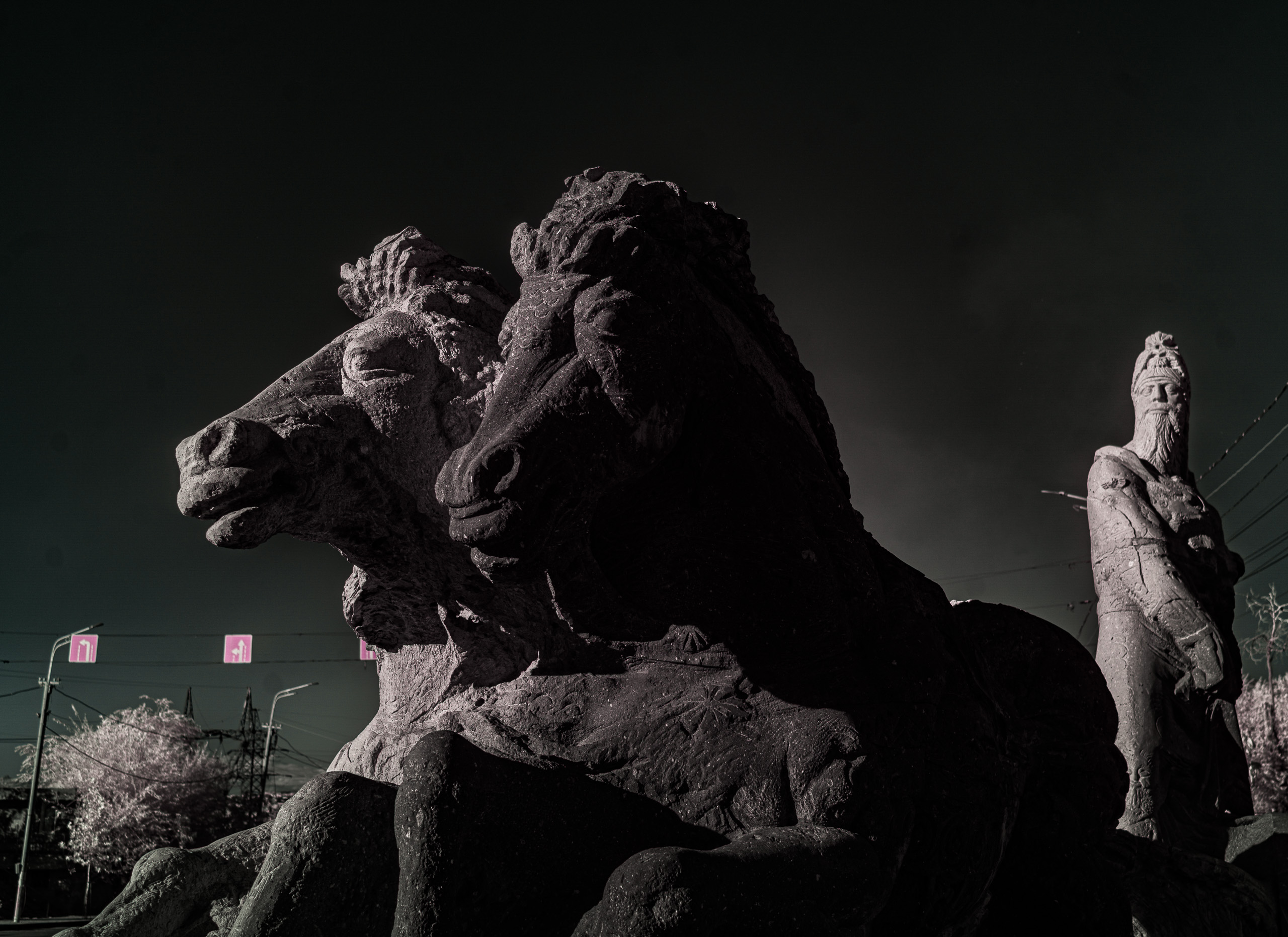
1 · Approaching Arin-Berd: a modern equestrian monument at the site entrance, horses’ heads catching what light there is.
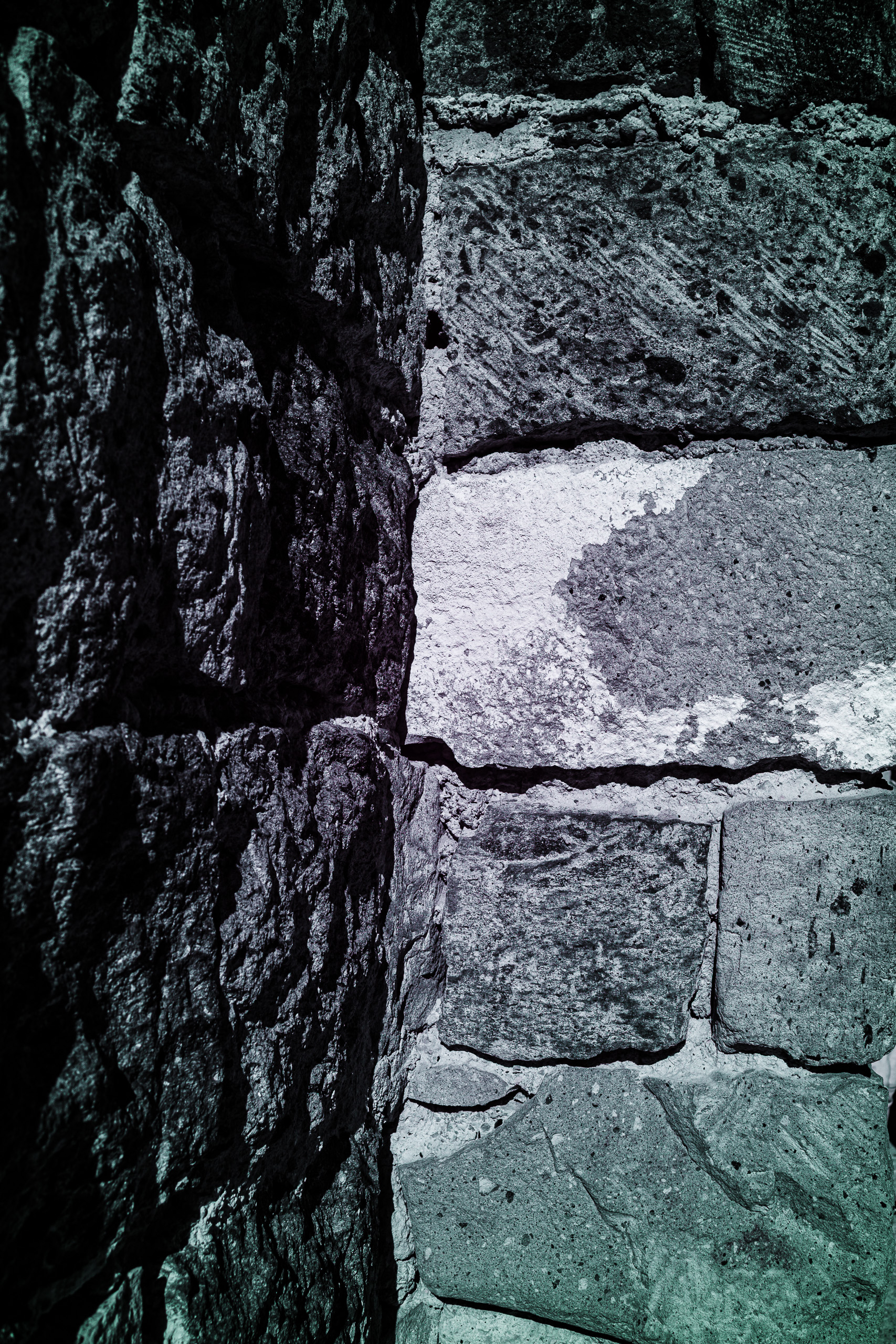
2 · Where the masonry changes: rough, untouched stone gives way to the even blocks of twentieth-century reconstruction.
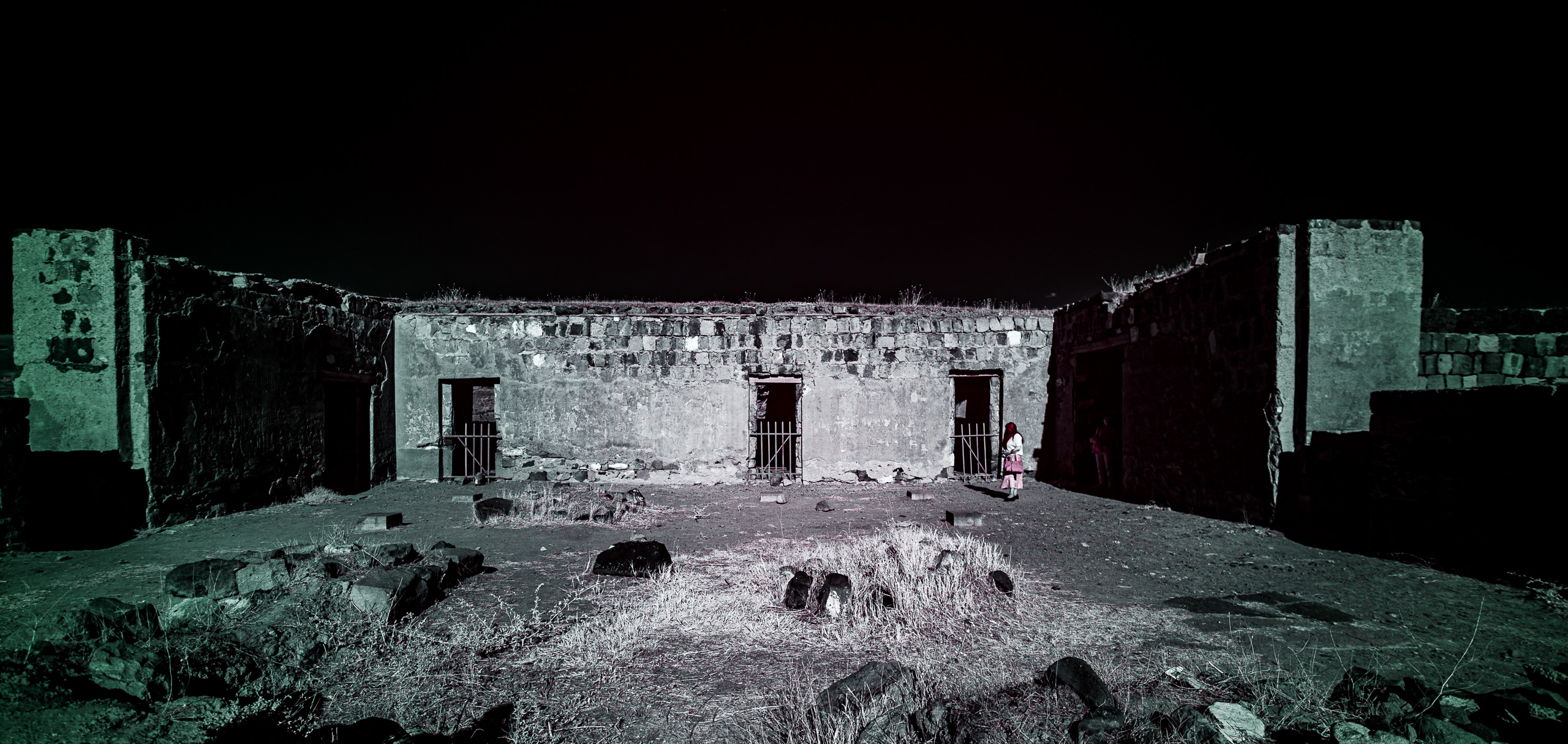
3 · The reconstructed inner courtyard, three doorways in the wall — a figure at the far one gives the scale of what stood here.
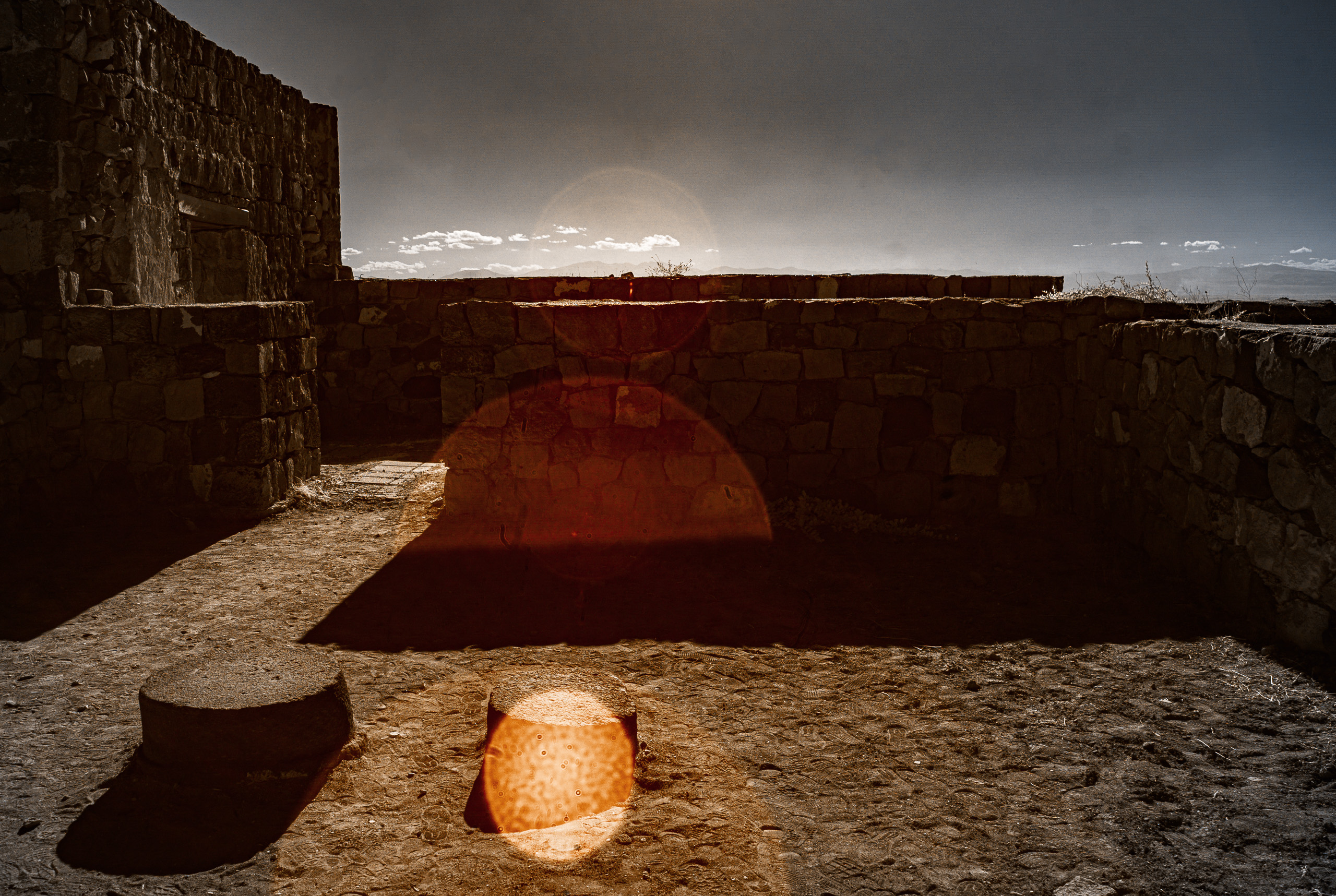
4 · Stone bases in the courtyard floor — the granaries once returned the Ararat plain’s whole harvest here, ration by ration.
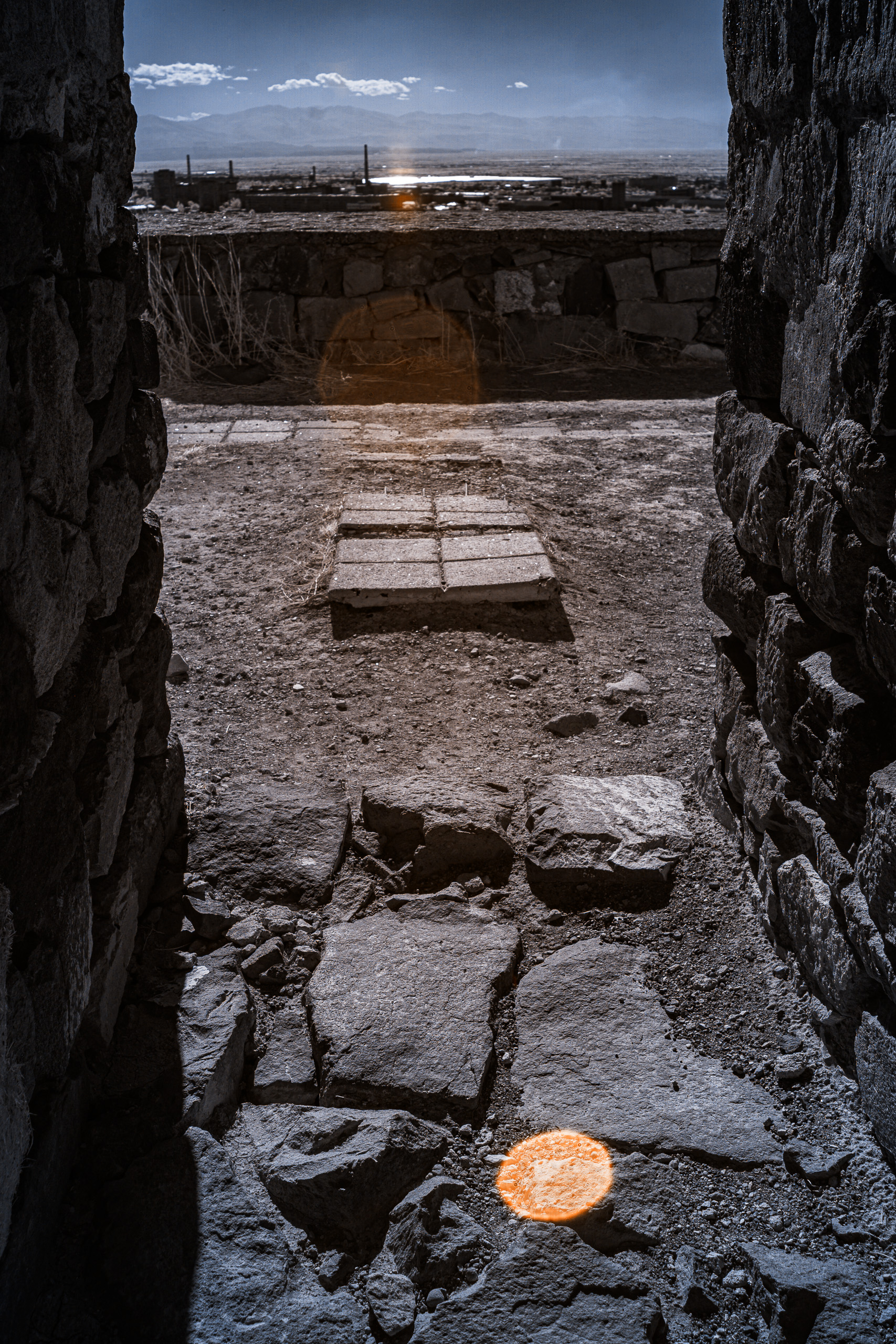
5 · A doorway in the fortress wall, looking out along the stone path to the city beyond — the view of a man walking out and not looking back.
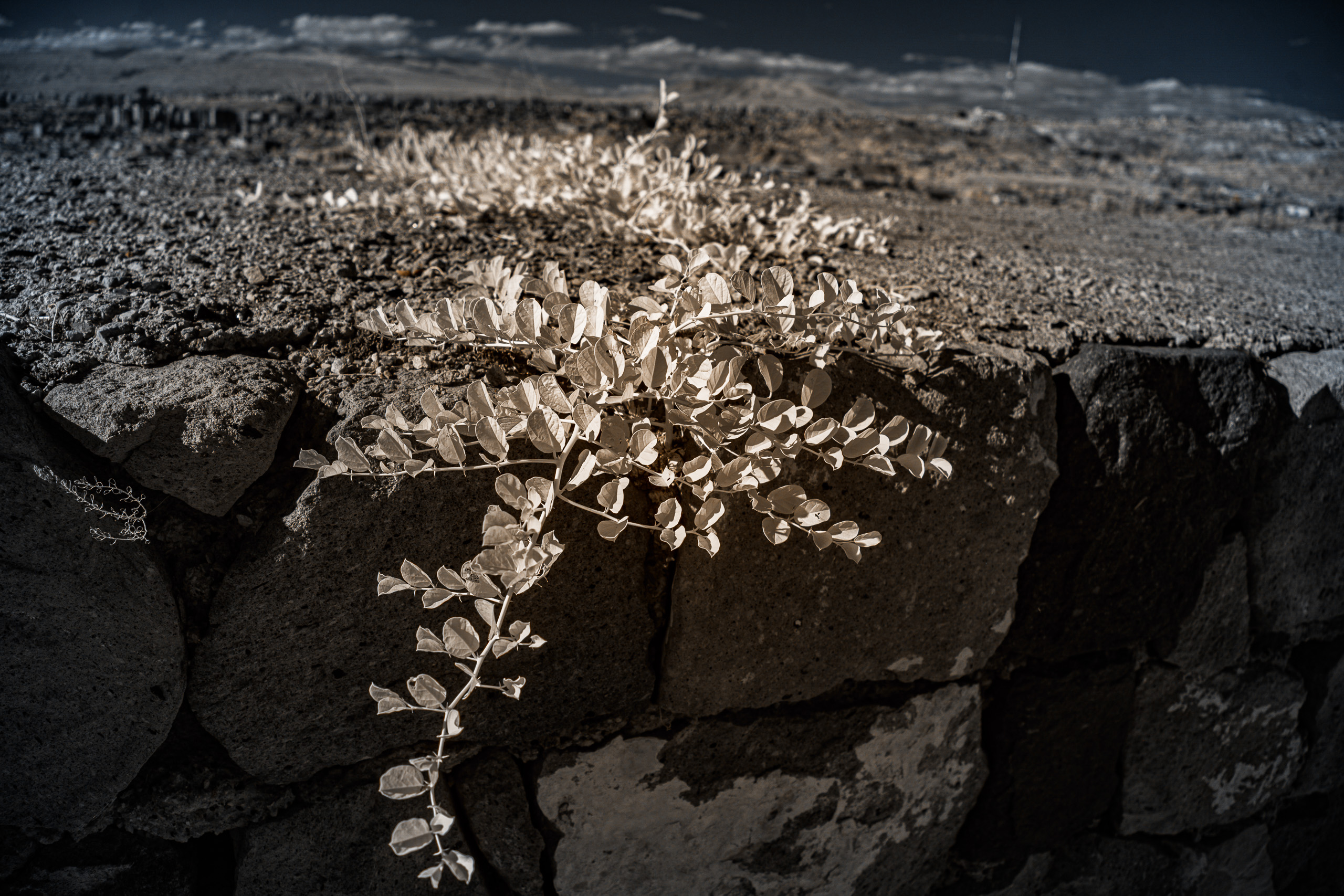
6 · A plant grown through the seam of the wall — twenty-three centuries of silence, measured in root and stone.
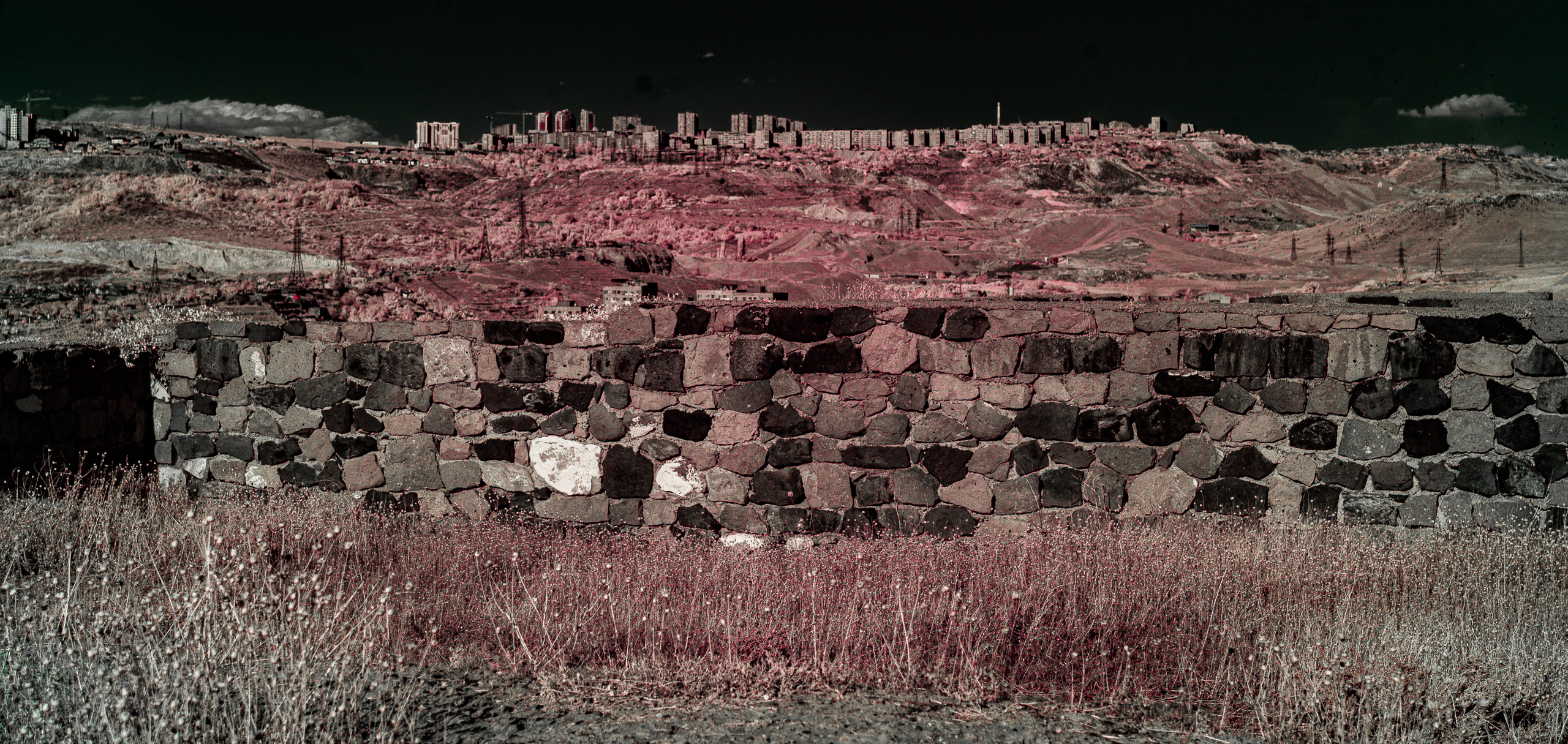
7 · Closing view: the fortress wall in the foreground, modern Yerevan rising on the hill beyond — the name that outlived the crown it was built for.
Read also
Road to Damascus · Generations of Damascus